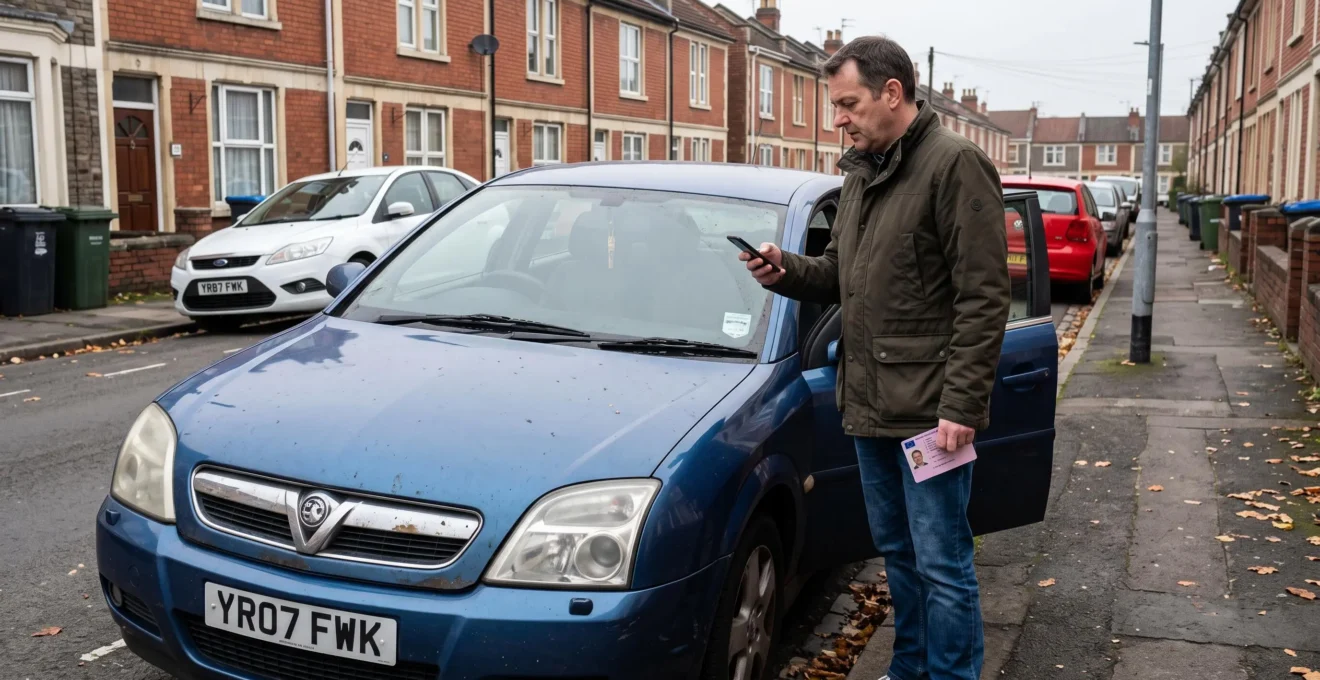
A car can look perfectly safe, start without difficulty and have a recent MOT certificate, yet still be illegal to drive on UK roads. Legal compliance depends on more than the vehicle’s mechanical condition. The driver’s licence, insurance cover, vehicle tax, registration details and applicable MOT requirements must also be correct.
These obligations do not end when a car is purchased or an insurance policy begins. Moving house, changing drivers, modifying a vehicle or leaving it unused for several months can create new requirements. Some problems remain unnoticed until a police check, insurance claim or automated enforcement action reveals them.
Understanding the difference between the registered keeper, legal owner and actual driver is equally important. Each may have different responsibilities, particularly with borrowed, leased or company vehicles.
This guide explains how UK motorists can check their position before driving, recognise administrative gaps and respond when circumstances change. It primarily follows the DVLA system used in Great Britain; some licensing, registration and testing procedures differ in Northern Ireland.
UK driving legality: the essentials
- A valid licence, appropriate insurance, vehicle tax and an MOT where required are separate legal requirements. None substitutes for another.
- A vehicle must remain roadworthy during use, even when its documents are current and it has passed an MOT.
- Changes involving ownership, address, insurance arrangements, vehicle condition or medical fitness can create duties that require prompt attention.
- What Must Be in Place Before You Can Legally Drive on UK Roads?
- Why Can a Roadworthy Car Still Be Illegal to Drive?
- How Can You Check a Used Car Is Legal to Drive Before the First Journey?
- Owner, Keeper or Driver: Who Is Responsible for Which Vehicle Duties?
- Which Administrative Oversights Can Make Everyday Driving Unlawful?
- When Must Drivers Update Vehicle or Licence Details After a Change?
- Why Can a Driver Become Non-Compliant After Starting a Legal Journey?
- How Can You Check Your Legal Duties Before Driving a Car You Rarely Use?
What Must Be in Place Before You Can Legally Drive on UK Roads?
Before driving on UK roads, a motorist must hold the appropriate driving licence, have insurance covering the actual driver and intended use, and ensure the vehicle is registered, taxed and covered by a valid MOT where required. The vehicle must also be roadworthy. These obligations operate independently, so satisfying one does not compensate for failing another.
The GOV.UK guidance on drivers’ legal obligations establishes the core requirements, including minimum driving age, eyesight standards and the driver’s responsibility to hold the correct licence.
It helps to treat compliance as an interconnected system rather than a collection of documents:
- Driving entitlement: the driver needs the correct licence category and must meet any applicable restrictions and medical requirements.
- Insurance: at least third-party cover must apply to the actual driver and the vehicle’s use.
- Vehicle tax: the vehicle must be appropriately taxed for road use, even where the applicable tax rate is zero.
- MOT: the vehicle needs a valid test certificate when the law requires one, subject to relevant exemptions.
- Roadworthiness: the vehicle must remain safe and legally compliant throughout its use.
In Great Britain, most cars require their first MOT three years after registration and further tests annually. Northern Ireland operates different testing arrangements. Having an MOT certificate does not remove the requirement to maintain the vehicle between tests.
Driving without insurance, driving otherwise than in accordance with a licence, and using an untaxed vehicle are different matters with distinct legal consequences. Insurance offences can lead to penalty points, while vehicle-tax enforcement can involve penalties or vehicle clamping. The relevant circumstances determine which enforcement powers apply.
There is also a separate obligation for vehicles that are not being driven. Under continuous insurance enforcement rules, a registered vehicle generally needs insurance unless an appropriate Statutory Off Road Notification (SORN) applies. Simply leaving an uninsured vehicle unused does not automatically make its status lawful.
The practical approach is to verify vehicle tax and MOT status through the relevant government services, then check the insurance policy documents and the driver’s entitlement. An insurance database entry is useful, but it does not establish that every individual driver or journey is covered.
Every journey depends on both the driver’s legal entitlement and the vehicle’s status at the time it is used. Even when these administrative requirements are satisfied, the car’s actual condition remains a separate concern.
Why Can a Roadworthy Car Still Be Illegal to Drive?
A mechanically sound car can still be illegal to drive because roadworthiness and administrative compliance are different legal requirements. A vehicle may have effective brakes, suitable tyres and working lights while its insurance, tax or MOT has expired. Conversely, a fully documented vehicle can still be unlawful to use if it has developed a dangerous defect.
An MOT test assesses specified aspects of the vehicle’s condition at the time of examination. It does not certify that the car will remain safe until the next test or protect the driver from prosecution for using a dangerous vehicle.
Consider a hypothetical motorist who passes an MOT in the morning but subsequently damages a tyre against a kerb. The existing certificate does not excuse continued driving if the damage makes the vehicle unsafe. The correct response is to assess the defect and arrange safe recovery or repair where necessary.
Vehicle modifications introduce another layer of responsibility. Altered suspension, non-compliant window tinting, incorrectly displayed registration plates or engine modifications may raise legal, safety or insurance questions.
Not every modification is unlawful, and a modification does not automatically invalidate an insurance policy. The critical questions are whether the alteration complies with applicable regulations and whether it must be disclosed to the insurer under the policy terms.
A useful way to judge legality is to examine three independent areas:
- Vehicle status: registration, insurance, taxation and MOT compliance.
- Vehicle condition: mechanical safety, tyres, lights and legally compliant equipment.
- Driver status: licence entitlement, eyesight, fitness to drive and relevant restrictions.
Failing any one of these checks can create a problem, regardless of how satisfactory the remaining elements appear.
For example, a car with a flawless MOT record may still be uninsured for a particular driver. Equally, a valid insurance policy does not authorise driving with dangerously defective tyres.
Looking beyond the MOT certificate is particularly important when buying a used vehicle, because a buyer must establish both its condition and its documentary status before driving it home.
How Can You Check a Used Car Is Legal to Drive Before the First Journey?
Before driving a newly purchased used car, compare its identity and registration details with official records, check its MOT status and history, inspect the V5C registration certificate and investigate any safety concerns. Once the purchase is completed, arrange insurance and tax the vehicle before using it on the road. The previous keeper’s tax does not transfer to the buyer.
The GOV.UK checks for buying a used vehicle provide a practical sequence for reviewing official vehicle information and preparing for lawful use.
Start by requesting the registration number, make, model and relevant MOT information. Compare these against DVLA records, examine previous MOT results and check whether the vehicle has any outstanding safety recalls.
The MOT history may reveal recurring defects, advisories or mileage entries that deserve investigation. A current pass does not guarantee that a vehicle is mechanically sound or free from undisclosed problems.
At the viewing, inspect the original V5C logbook. Compare its registration details, vehicle identification number and engine number with the physical car. Check the document’s security features and investigate unexplained inconsistencies.
The V5C identifies the registered keeper; it is not proof of legal ownership. A seller may legitimately be acting on another person’s behalf, but unexplained differences between the seller’s identity and the document warrant further checks.
An independent vehicle-history check may provide information about outstanding finance, theft records or insurance write-offs. These checks have limitations and should not be treated as guarantees. Outstanding finance can create ownership disputes, depending on the finance arrangement and the buyer’s legal position.
Five checks to complete before driving a used car home
- Compare the vehicle registration and identifying details with DVLA records; retain a record of any discrepancy requiring explanation.
- Review the MOT history and applicable expiry date; record the result and investigate significant advisories.
- Inspect the V5C and match the vehicle identification details; obtain the appropriate new-keeper documentation.
- Arrange insurance covering the actual driver and intended journey; retain confirmation of the policy’s effective date and time.
- Tax the vehicle immediately after purchase and before road use; keep the transaction confirmation.
Do not assume that the seller’s existing insurance covers the buyer. Even where a policy includes driving-other-cars cover, restrictions may apply, and it is not a substitute for checking the actual terms.
Likewise, the seller’s vehicle tax ends upon transfer under the relevant DVLA rules. It is the new keeper’s responsibility to arrange taxation before using the car on public roads.
Completing the transaction is only the beginning of vehicle compliance. The next question is who remains responsible for each obligation once the car is being used.
Owner, Keeper or Driver: Who Is Responsible for Which Vehicle Duties?
The owner, registered keeper and driver of a vehicle are not necessarily the same person. The owner holds the relevant ownership rights, the registered keeper is recorded for vehicle administration, and the driver is responsible for having the appropriate entitlement and driving lawfully. Understanding these roles helps prevent gaps in taxation, insurance, DVLA notifications and responsibility for offences.
The registered keeper is the person or organisation recorded on the V5C. This role is particularly relevant to vehicle-tax administration, SORN declarations, keeper records and statutory correspondence.
The legal owner may be different. A vehicle purchased under a finance arrangement, for example, can involve ownership rights that differ from the registered keeper’s day-to-day responsibilities. The precise position depends on the contract.
Meanwhile, the person behind the wheel must have valid driving entitlement, comply with road-traffic law and ensure that the vehicle is safe to use.
| Role | Typical responsibilities | Important qualification |
|---|---|---|
| Registered keeper | DVLA records, vehicle tax, SORN and keeper-related correspondence | May not own or personally drive the car |
| Legal owner | Ownership rights, sale and relevant contractual decisions | Ownership does not automatically establish driving entitlement |
| Driver | Licence, lawful driving, appropriate insurance and vehicle condition during use | May incur liability even when borrowing the vehicle |
| Insurance policyholder | Accurate policy information, premium payments and contractual notifications | Need not be identical to the owner or registered keeper, subject to insurer requirements |
Consider a hypothetical parent who registers and insures a car mainly driven by an adult child. If the policy incorrectly identifies the parent as the main driver to obtain a lower premium, the arrangement may amount to insurance fronting.
Misrepresenting who principally uses the vehicle can have serious consequences. The insurer may be entitled to take action under applicable insurance law and the policy terms, potentially affecting claims and cover. The actual driver must also have valid insurance for their use.
Borrowed and company vehicles require similar care. The fact that an employer or relative maintains a car does not automatically establish that another driver is insured. A driver should verify their permitted use, while the relevant keeper or fleet administrator should maintain the administrative records.
For a practical review, identify the V5C keeper, legal owner, insurance policyholder and principal driver. Then verify that the declared arrangements reflect reality.
Where responsibilities are clearly allocated, changes to vehicle use are less likely to be overlooked. Administrative details can nevertheless become inaccurate even when the parties understand their roles.
Which Administrative Oversights Can Make Everyday Driving Unlawful?
Everyday driving can become unlawful when motorists overlook administrative changes or expired requirements. Common problems include an expired photocard licence, unpaid vehicle tax, missing insurance cover, an overdue MOT or an undeclared medical condition affecting driving entitlement. Other failures, such as an outdated DVLA address, can create separate legal problems even when the vehicle remains otherwise lawful to use.
A photocard driving licence in Great Britain normally requires periodic renewal, commonly every 10 years, although shorter validity periods can apply. Drivers should distinguish the photocard’s expiry date from the underlying driving entitlement and any category-specific restrictions.
Renewal requirements can differ according to age, medical circumstances and licence type. An expired photocard should therefore be addressed promptly, without assuming that all forms of expiry have identical consequences.
Missed payments are another risk. If vehicle-tax Direct Debit arrangements fail, motorists should establish whether their vehicle remains taxed rather than assuming a previous payment instruction is sufficient.
Similarly, a missed insurance instalment can lead to cancellation or other action under the policy terms. The actual insurance status and the date any change takes effect need to be established with the insurer.
Reminders are useful, but they do not replace the motorist’s obligation to comply. A vehicle owner should maintain independent records of relevant expiry dates and confirm important renewals have been completed.
Administrative difficulties also arise after moving home or selling a vehicle. Updating the insurance address does not update the driving licence or V5C automatically, and notifying a buyer does not substitute for the required DVLA transfer notification.
These are not always offences of driving itself. Failing to maintain accurate statutory records can create a separate breach or cause enforcement correspondence to be sent to an old address.
Medical conditions also need individual assessment. Not every illness or prescription is reportable, but a driver must follow applicable DVLA notification rules and must not drive when unfit to do so.
Prevention depends on recognising which events trigger a legal notification or policy update, rather than relying exclusively on annual renewal dates.
When Must Drivers Update Vehicle or Licence Details After a Change?
Drivers must update relevant records when circumstances change in ways that affect their licence, vehicle registration or legal responsibilities. Moving permanently, changing name, transferring a vehicle, modifying it or developing a notifiable medical condition may require action. Insurers may also need to know about changes to drivers, addresses, occupations or vehicle use under the policy terms.
Official requirements differ according to the change. The GOV.UK DVLA address-change procedure explains that moving home can require separate updates to the driving licence, V5C and vehicle-tax Direct Debit details.
Completing one of these updates does not automatically complete the others.
| Change | Required or relevant action | When to act |
|---|---|---|
| Permanent house move | Update licence and V5C; check tax Direct Debit and insurance details | When the permanent address changes, without unnecessary delay |
| Name change | Update relevant DVLA documents and insurer records | Following the change, using the applicable procedures |
| Vehicle sale or transfer | Notify DVLA and retain confirmation of the transfer | At the point of transfer |
| Vehicle modification | Check DVLA notification requirements and disclose relevant changes to the insurer | Before using the modified vehicle where compliance or cover may be affected |
| Medical or eyesight change | Check fitness to drive and whether DVLA notification is mandatory | When the reportable condition or relevant change arises |
| New principal or additional driver | Confirm insurance arrangements and any necessary policy changes | Before the new driver uses the vehicle |
Statutory notifications and insurance disclosures are not the same obligation. DVLA changes arise under legal requirements, while insurance notifications are governed by applicable insurance law and policy terms.
An outdated address does not automatically invalidate motor insurance. However, an inaccurate material disclosure may affect the insurer’s available remedies, depending on the circumstances and the applicable law.
Likewise, an update submitted to DVLA does not necessarily mean the driver must stop using the car while waiting for replacement documents. Government guidance expressly allows continued driving during an address-document update where the motorist otherwise remains legally entitled to drive.
Keep a record of submitted changes, acknowledgements and replacement documents. If an expected confirmation does not arrive, follow up rather than presuming that the relevant record has been corrected.
When selling a vehicle, keep the appropriate transfer confirmation and relevant transaction records. This can help resolve later questions about keeper liability or correspondence sent after the vehicle changes hands.
Accurate records reduce avoidable disputes, but compliance must also continue during the journey itself. Vehicle defects and changes affecting fitness to drive can arise without advance notice.
Why Can a Driver Become Non-Compliant After Starting a Legal Journey?
A driver can begin a journey legally and encounter a compliance problem before reaching the destination. A vehicle may develop a dangerous defect, the driver may become medically unfit or insurance cover may cease under the applicable policy arrangements. The consequences depend on the specific requirement, the timing of the change and the circumstances of the incident.
For example, a tyre may suffer damage during a journey. Once the driver becomes aware of a serious defect, continuing to use the vehicle can create a road-safety offence even if its MOT was valid at departure.
Not every mechanical failure establishes an offence. The type of defect, applicable legal provision and evidence about the vehicle’s condition matter. Drivers should not assume either that every unexpected failure is automatically punishable or that an apparently hidden problem excuses every form of unsafe vehicle use.
Insurance presents a different issue. A policy might be cancelled following missed payments or for another reason, subject to its terms and applicable requirements. A driver who does not know about the cancellation may nevertheless be exposed to uninsured-driving enforcement if no valid cover applies.
Ignorance of an administrative lapse is not generally a reliable defence to a no-insurance allegation, although specific statutory defences and exceptions may apply in particular circumstances.
Driver fitness can also change quickly. Sudden illness, severe tiredness or medication affecting alertness may make continuing unsafe. Drivers should respond to the actual impairment instead of relying on having felt well at departure.
During a roadside stop, police may check driving entitlement and relevant vehicle documents. Depending on the circumstances, they may also use lawful procedures to investigate alcohol, drugs, eyesight or vehicle safety.
If requested driving documents are not immediately available, police may require their production at a police station within seven days. This does not mean an uninsured or otherwise unlawful journey becomes permitted simply because a document can be produced later.
Where insurance or tax problems are identified, enforcement outcomes depend on the offence and available powers. Some circumstances can result in vehicle seizure or clamping, with separate conditions applying to release.
A practical response is to stop safely when a serious issue arises, identify whether continued driving is lawful, and obtain suitable advice, repair or recovery before proceeding.
Cars that are driven infrequently deserve particular attention because mechanical deterioration and administrative lapses may accumulate unnoticed between journeys.
Key takeaways before your next journey
- Check the current legal status of the vehicle, rather than assuming last year’s documents remain sufficient.
- Distinguish an ordinary parked vehicle from one formally declared off road under SORN rules.
- Verify both vehicle condition and the actual driver’s insurance entitlement before returning a stored or borrowed car to use.
How Can You Check Your Legal Duties Before Driving a Car You Rarely Use?
Before driving a car that has been unused for an extended period, confirm its tax, MOT and insurance status, check that the driver is properly licensed and insured, and inspect the vehicle’s mechanical condition. If the car has a Statutory Off Road Notification, ordinary road use is prohibited until the necessary requirements are restored, subject to limited statutory exceptions.
Infrequently driven vehicles can develop two separate kinds of problems: administrative requirements may expire unnoticed, while tyres, batteries and other components may deteriorate during storage.
A vehicle stored on private property is not automatically exempt from insurance and taxation requirements. The keeper must consider whether an appropriate SORN has been made.
The GOV.UK rules on Statutory Off Road Notifications explain how a vehicle can be formally taken off the road and the restrictions that then apply.
When a valid SORN is in place, a vehicle kept off public roads does not ordinarily need vehicle tax or motor insurance under the usual continuous-insurance rules. This does not mean that driving it on public roads becomes unrestricted.
A particularly important exception permits a SORN vehicle to be driven to or from a pre-booked MOT or other qualifying testing appointment. The journey remains subject to applicable insurance, roadworthiness and driving-entitlement requirements.
Consequently, a motorist should not assume that a quick trip to a shop, a short test drive or a journey to a prospective buyer is permitted merely because the vehicle has been stored off road.
£2,500
Maximum fine identified in official SORN guidance for using a SORN vehicle on public roads outside the permitted testing exception. This is distinct from penalties for failing to make a required SORN.
GOV.UK, statutory off-road vehicle guidance.
If the vehicle is returning to normal road use, establish that it is appropriately taxed and insured, has an MOT where required, and is sufficiently roadworthy for the intended journey.
Inspect the tyres for damage, deterioration and suitable tread depth, not merely visible inflation. Check lights, fluid levels, warning indicators and other safety-critical components. A vehicle left standing for months may require professional attention before it can be driven safely.
Insurance also deserves careful examination. A policy may contain conditions relating to named drivers, declared use, storage circumstances or mileage. A driver borrowing a rarely used car should confirm their own cover rather than assuming that the vehicle’s existing policy extends to them.
Keep the results of the vehicle-status checks and the relevant policy confirmation accessible. Where the car remains in storage, record the next review date so the same checks can be repeated before its next use.
Before the next journey, confirm the registration and MOT information, check taxation and actual insurance cover, inspect the vehicle and verify the driver’s licence entitlement. Resolve any uncertainty before setting off rather than treating the first journey as a test of whether everything is still lawful.
Can you legally drive a car with a valid MOT but no insurance?
No. A valid MOT does not replace the requirement for insurance covering the actual driver and intended use. These are separate legal obligations, and an MOT certificate does not provide insurance protection.
Does vehicle tax transfer automatically when buying a used car?
No. Under the relevant DVLA vehicle-tax rules, the previous keeper’s tax does not transfer to the buyer. The new keeper must arrange vehicle tax immediately and before using the vehicle on public roads.
Can you drive while waiting for an updated V5C or driving licence after moving?
Generally, yes. Official DVLA guidance allows continued driving while replacement address documents are being issued, provided the driver remains legally entitled to drive and all other applicable requirements are satisfied. The change of address must still be reported correctly.
Does having a SORN mean a car can never be driven on public roads?
No. A limited exception permits journeys to or from pre-booked MOT or other qualifying testing appointments. This does not remove applicable insurance, driving-entitlement or vehicle-safety requirements. Ordinary journeys are not permitted while the vehicle remains SORN.
Is a V5C logbook sufficient proof that a seller legally owns a car?
No. The V5C identifies the registered keeper, not necessarily the legal owner. Buyers should verify vehicle identity, investigate unexplained discrepancies and consider independent history and finance checks before completing a purchase.