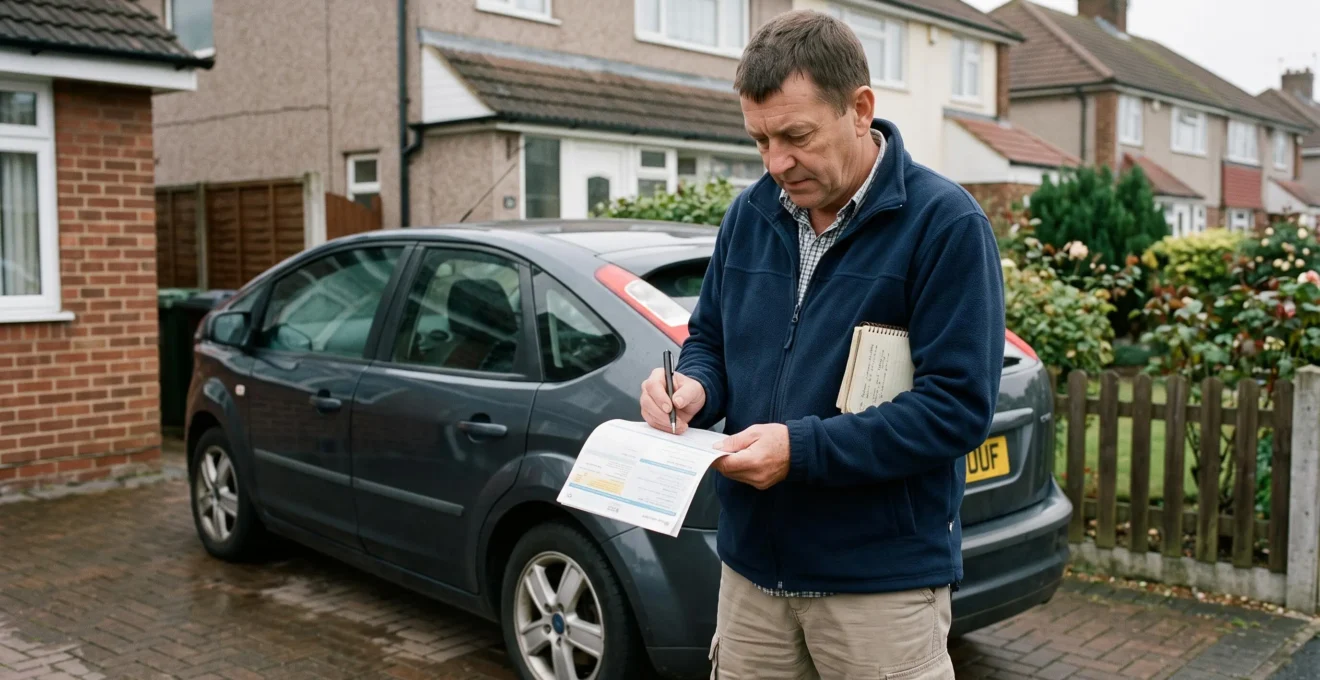
Vehicle registration details in the UK must accurately identify the registered keeper, their address and the vehicle itself. When you move home, sell a car, change your name or modify certain vehicle characteristics, you may need to notify the Driver and Vehicle Licensing Agency (DVLA). Keeping an insurance policy active does not remove these responsibilities.
The vehicle registration certificate, commonly called the V5C or log book, is central to these records. However, it does not prove legal ownership, replace motor insurance or establish that a vehicle is roadworthy. Each document serves a different purpose, and a change in circumstances can require several separate updates.
Administrative mistakes can have consequences beyond missing a letter. They may delay a vehicle tax refund, leave enforcement correspondence reaching a former keeper or create complications when a buyer tries to register and tax a recently purchased car.
The practical approach is to identify which records a change affects, notify the relevant organisations and confirm that each update has been processed. The guidance below primarily concerns DVLA procedures in Great Britain; Northern Ireland has different arrangements for some licensing, insurance and vehicle-testing matters.
UK vehicle registration: essential points
- Update your V5C when your registered keeper name or address changes, and notify DVLA when a vehicle is sold or transferred.
- A V5C identifies the registered keeper, not necessarily the legal owner. Vehicle tax, insurance and MOT requirements remain separate.
- After moving or changing vehicles, check your driving licence, insurance details, vehicle tax arrangements and any applicable MOT record.
- Why Does an Outdated Vehicle Registration Record Matter Even if the Car Is Insured?
- How Can You Update Vehicle Registration Details After Moving Home?
- V5C or Proof of Ownership: What Does Each Document Actually Show?
- Which Registration Mistakes Commonly Happen After Buying or Selling a Car?
- When Must You Notify the DVLA About Changes to a Vehicle or Keeper?
- When Must Vehicle Documents Be Updated After a Change in Circumstances?
- Insurance Certificate, V5C or MOT Record: Which Document Proves What?
- Which Vehicle Documents Must Be Valid Before You Drive?
Why Does an Outdated Vehicle Registration Record Matter Even if the Car Is Insured?
An outdated vehicle registration record matters because insurance and DVLA registration serve different purposes. An active insurance policy does not correct inaccurate keeper details or guarantee that official correspondence reaches the right person. Incorrect records can complicate tax administration, enforcement notices, vehicle transfers and the resolution of registration disputes.
The V5C identifies the person or organisation registered as the vehicle’s keeper. This information is used for administrative responsibilities, including vehicle tax and certain enforcement processes. It is not a certificate of legal ownership, and the keeper is not necessarily the person who pays for or owns the vehicle.
Consider a hypothetical situation: a driver moves home, informs their insurer but forgets to change the V5C address. Their insurance may remain in force, but correspondence relating to vehicle registration, taxation or an enforcement enquiry could still be sent to the previous address. Missing that correspondence can make an otherwise manageable issue significantly harder to resolve.
Continuous Insurance Enforcement (CIE) creates a further distinction between insured driving and the responsibilities of a registered keeper. In Great Britain, DVLA checks vehicle records against insurance information to identify vehicles that appear uninsured without a qualifying exemption. An inaccurate postal address does not itself prove that the vehicle is uninsured, but it can make enforcement correspondence difficult to receive.
Under GOV.UK guidance on uninsured vehicles, a registered keeper of an uninsured vehicle without a valid off-road declaration can face enforcement action. The guidance identifies a £100 penalty, possible clamping or impounding, and a maximum court fine of 1,000 £ in the circumstances described.
£1,000
Maximum court fine identified in official guidance for certain continuous insurance enforcement offences involving an uninsured vehicle without SORN. This is not the ordinary penalty for driving without insurance.
GOV.UK, Vehicle insurance: Uninsured vehicles.
A vehicle kept off the public road also requires attention. Where the statutory conditions are met, a Statutory Off Road Notification (SORN) removes the ordinary obligation to maintain vehicle tax and continuous insurance while the vehicle remains off-road. However, declaring SORN does not remove the need to maintain accurate keeper details.
An outdated record should therefore be treated as an administrative risk, not as automatic evidence that an insurance policy is invalid. The insurer’s records, DVLA registration and vehicle status must each be checked independently.
Once the registered keeper’s details are correct, the next priority is ensuring that a change of residential address has been reflected across the relevant vehicle documents.
How Can You Update Vehicle Registration Details After Moving Home?
After moving home, update the address on your V5C through the appropriate DVLA service or by post. You must also update your driving licence and vehicle tax Direct Debit where applicable. Tell your insurer separately and check that any personalised registration documents and correspondence arrangements reflect the change.
The DVLA’s V5C address-change guidance explains that updating the log book is normally free. Failing to notify DVLA of a change of address can result in a fine of up to £1,000, although this is a possible maximum penalty rather than an automatic charge.
For a straightforward address change, follow these steps:
- Locate your V5C. Check the registration number and document reference number before starting the online process.
- Submit the change. Use the official DVLA address-change service if eligible, or complete the relevant V5C section and send the document by post.
- Update your driving licence. This is a separate administrative process. Changing the V5C does not update the licence.
- Review vehicle tax payments. If you pay by Direct Debit, notify DVLA separately of the address change.
- Contact your insurer. Confirm your residential address, the place the vehicle is normally kept and any consequences for your premium.
Postal changes generally use section 3 of the newer V5C or section 6 of an older-style certificate. If both your name and address have changed, a different postal procedure applies. If vehicle tax is due shortly, follow the specific DVLA instructions before sending away the log book.
Changing address does not ordinarily alter the amount of vehicle excise duty simply because you have moved. Motor insurance is different: insurers may consider where the vehicle is kept when calculating risk and premiums. Failing to disclose relevant changes can create coverage or claims complications depending on the policy terms and applicable insurance law.
For an ordinary address change, a new V5C requested online should generally arrive sooner than one processed by post. Check the current processing guidance and contact DVLA if the replacement has not arrived within the period it specifies. Keep the confirmation or submission reference until the updated document has been received.
If the vehicle remains at another household or is on SORN, do not assume that its storage location automatically replaces the keeper’s correspondence address. The registered keeper’s address and the information an insurer requests about where the vehicle is kept serve different purposes.
Updating the address establishes where official correspondence should reach the keeper. It does not establish who legally owns the vehicle, which is a separate issue.
V5C or Proof of Ownership: What Does Each Document Actually Show?
A V5C vehicle registration certificate shows who is registered as the vehicle’s keeper, but it does not prove legal ownership. A purchase invoice, bill of sale or relevant financial documentation may help establish ownership rights. Registration, ownership, insurance and roadworthiness must therefore be assessed using different records.
The UK Department for Transport explicitly addressed this misconception in its statement on V5C certificates and buyer protection. Although published in 2010, its explanation of the distinction between registration and legal ownership remains relevant.
The following comparison shows how the principal documents differ.
| Document | What it shows | What it does not conclusively establish |
|---|---|---|
| V5C registration certificate | The vehicle’s recorded keeper and registration details. | Legal ownership, valid insurance or roadworthiness. |
| Bill of sale or purchase invoice | Evidence of a transaction, the parties involved and the agreed purchase details. | Uncontested title or the absence of outstanding finance. |
| Finance agreement | Contractual rights, obligations and potentially the financial interests of another party. | That the keeper owns the vehicle outright or that all finance has been settled. |
| Insurance certificate | Evidence of insurance under specified terms, including the insured vehicle, period and permitted use. | Registered keeper status, legal title or an MOT pass. |
The distinction matters particularly when buying a used vehicle. A seller may appear as the registered keeper without necessarily having an unrestricted right to sell it. For example, a vehicle subject to hire purchase may involve ownership rights held by a finance company until contractual conditions are satisfied.
Similarly, a company vehicle may be registered to one organisation while another party has a contractual or financial interest. A driver may be insured to use the vehicle without being either its keeper or its legal owner.
Before purchasing, compare the V5C details with the vehicle identification number and the seller’s information. Request reasonable evidence of the sale and investigate outstanding finance where appropriate. A V5C alone cannot resolve a disputed chain of ownership.
The records should be consistent where they describe the same facts, but they need not identify the same person in every role. This becomes especially important during a sale or transfer.
Which Registration Mistakes Commonly Happen After Buying or Selling a Car?
The most common vehicle registration mistakes after a sale involve failing to notify DVLA, assuming vehicle tax transfers automatically, losing the new keeper slip or overlooking a personalised registration number. These errors can cause unwanted correspondence, delayed refunds and problems when the new keeper tries to use the vehicle legally.
The seller and buyer have different responsibilities. The seller must notify DVLA of the change, while the buyer must arrange vehicle tax and suitable insurance before driving. The vehicle’s previous tax does not transfer with the purchase.
The DVLA’s vehicle sale and keeper-transfer service allows eligible transactions to be reported online. Once DVLA has been notified, the previous vehicle tax is cancelled and the former keeper can receive a refund for any full remaining months.
Typical problems include:
- The seller does not notify DVLA. The former keeper may continue receiving registration-related correspondence or enquiries until the records are corrected.
- The buyer assumes the vehicle is already taxed. The previous keeper’s tax does not carry over, even when the vehicle has a valid MOT.
- The new keeper slip is missing. This can complicate the immediate tax or registration process.
- Outstanding finance is ignored. A valid V5C does not guarantee that the seller has an unrestricted right to transfer ownership.
- A private registration number is overlooked. Retaining a personalised number requires a separate DVLA process before the sale if the seller wishes to keep it.
For a UK sale involving an ordinary V5C, the seller should give the buyer the appropriate green new keeper slip and notify DVLA. If the transaction is reported online, retain the confirmation. Where there is no V5C, the published DVLA procedures differ for the buyer and seller.
The handover date and the DVLA notification date should not be confused. Reporting the transaction promptly helps establish an accurate administrative history, but it does not mean every form of legal liability is determined solely by the notification date. Responsibility for a particular offence depends on the applicable law and evidence.
A practical division of responsibilities is straightforward: the seller records the transaction and completes the required notification, while the buyer verifies the vehicle’s identity, finance position, tax, insurance and MOT status. Both should retain evidence of the transaction.
A change of keeper should be reported as part of the transaction itself, rather than being left until another letter arrives. Other events can create a similar duty to notify DVLA.
When Must You Notify the DVLA About Changes to a Vehicle or Keeper?
You must notify DVLA when specified registration details change, including the registered keeper’s name or address, a sale or transfer, and certain changes to the vehicle. Permanent export, scrapping and off-road status also have dedicated notification procedures. The correct method depends on the event and the vehicle’s circumstances.
In practice, notify DVLA promptly when a relevant change takes effect. Do not assume that telling your insurer, signing a sales receipt or transferring money automatically updates the vehicle register.
The principal situations are:
| Change or event | Required registration action | When to act |
|---|---|---|
| Vehicle sold, gifted or transferred | Notify DVLA of the keeper change using the relevant transfer procedure. | At the transaction or handover. |
| Registered keeper moves home | Update the V5C address. | When the residential address changes. |
| Registered keeper changes name | Use the appropriate V5C name-change procedure. | Following the change of name. |
| Relevant vehicle modification | Check whether the change must be recorded on the V5C and whether supporting evidence is required. | When the vehicle’s recorded characteristics change. |
| Vehicle permanently exported | Complete the applicable permanent-export notification procedure. | In connection with taking the vehicle permanently abroad. |
| Vehicle scrapped or transferred to a trader | Use the relevant disposal or trade notification process. | At disposal or transfer. |
| Vehicle taken off the public road | Declare SORN where applicable. | When the vehicle is to be kept off-road without vehicle tax. |
Transfers within a family should not be overlooked. Giving a car to a relative, transferring it to a company or dealing with an inherited vehicle can change the registered keeper even though no conventional purchase takes place.
Vehicle modifications require additional care. Changes to information recorded by DVLA, such as certain alterations to engine or body details, may require updating the registration certificate and providing evidence. Not every accessory or cosmetic change triggers an identical administrative procedure.
Notifications about the vehicle and notifications to the insurer are also distinct. A change in how the vehicle is used, for example adding business use, can be significant to insurance even where the registered keeper remains unchanged.
For inheritance, company transfers and unusual ownership arrangements, identify the correct DVLA procedure before submitting the change. Do not treat the ordinary private-sale process as universally applicable.
After DVLA has been notified, the remaining task is to ensure that other affected documents and service providers have also been updated.
When Must Vehicle Documents Be Updated After a Change in Circumstances?
Vehicle documents should be updated whenever a personal, ownership or vehicle-related change makes their recorded information inaccurate. Moving home, changing your name, selling a vehicle, modifying it or changing how it is used can affect different documents. Updating one record does not automatically update every other record.
A useful approach is to separate mandatory administrative notifications from contractual and practical changes. DVLA handles vehicle registration and driving licence information in Great Britain, while the insurer maintains policy details. MOT information relates to the vehicle and its recorded tests rather than the keeper’s postal address.
The following examples show how a single event can affect several records.
| Circumstance | Registration and licence records | Other records to review |
|---|---|---|
| Moving home | V5C, driving licence and relevant personalised registration documents. | Insurance address, vehicle storage location, tax Direct Debit and reminder contact details. |
| Marriage or legal name change | V5C and driving licence, following their respective procedures. | Insurance policyholder information and other relevant financial records. |
| Buying or selling a vehicle | Registered keeper change and new V5C arrangements. | Insurance, vehicle tax, MOT status and finance documents. |
| Vehicle modification | V5C where the alteration affects recorded vehicle details. | Insurance disclosure, technical requirements and relevant inspection records. |
| Change of vehicle use | DVLA details if the change affects the vehicle’s recorded information or classification. | Insurance cover for commuting, business use or other relevant activities. |
| Long-term move abroad | Applicable export, registration and licensing procedures. | Insurance, foreign registration requirements and any remaining UK vehicle obligations. |
Inconsistencies can create practical difficulties even when they do not automatically amount to an offence. Different names or addresses may require clarification during an insurance claim, a vehicle sale or an administrative enquiry.
For insurance, the distinction between an administrative discrepancy and a material change in risk matters. A mismatch does not necessarily invalidate a policy, but inaccurate information about the vehicle’s use or where it is kept may have consequences under the applicable insurance terms and law.
Five checks to complete after your circumstances change
- Identify which details changed and write down the effective date, creating a clear change record.
- Check the V5C and submit any required DVLA notification, retaining the submission confirmation or postal evidence.
- Review your driving licence and vehicle tax arrangements, recording which updates have been completed.
- Confirm the relevant information with your insurer and retain the updated schedule or written acknowledgement.
- Check your vehicle’s current DVLA and MOT information, then keep a record of any outstanding discrepancy to resolve.
Confirmation is important: submitting an application and having an updated record are not necessarily the same stage. A simple record of submission dates, reference numbers and resulting documents helps identify anything that remains unresolved.
Once those updates have been submitted, understanding exactly what each vehicle document proves makes future checks much easier.
Insurance Certificate, V5C or MOT Record: Which Document Proves What?
An insurance certificate provides evidence of motor insurance for the specified vehicle, driver or permitted use, subject to the policy terms. A V5C identifies the registered keeper. An MOT record confirms the vehicle’s test result at a particular time. None of these documents replaces the others or guarantees that every legal requirement is satisfied.
The separation matters because the documents answer different questions. Police and enforcement authorities may use electronic insurance and vehicle-registration data, while buyers and vehicle owners can review MOT history to understand previous test outcomes.
For example, a vehicle may have passed its MOT but have no valid insurance. It may also be insured while the V5C still records a previous keeper. Both situations require attention, but the underlying problems are different.
An MOT pass is also not a guarantee of continuing roadworthiness. A vehicle can develop a serious defect after passing its test. The driver remains responsible for ensuring that it is safe and legal to use.
Digital services make much of this verification possible without relying solely on paper documents. DVLA vehicle enquiry services can show recorded tax and MOT information. The official MOT history service provides previous test results, while insurance documents and the relevant insurance checking service can help establish the recorded cover position.
However, an online database result and an insurance contract are not interchangeable. If insurance information appears missing or incorrect, contact the insurer and verify the policy rather than assuming that a website display conclusively determines whether cover exists.
Before buying or driving a car, compare its registration number across the available records. Check the relevant insurance dates and permitted use, confirm the tax position and inspect the applicable MOT status. Where something does not match, resolve the discrepancy with the organisation responsible for that record.
For a purchase, it is also sensible to review the available MOT history and the vehicle’s identifying details rather than relying on an isolated certificate or photograph supplied by a seller.
These records become especially important immediately before driving, when the relevant requirements must already be satisfied rather than merely awaiting an administrative update.
Key takeaways before driving
- A current V5C does not establish that the driver is insured, licensed or that the vehicle is roadworthy.
- Vehicle tax and MOT status must be checked independently, with the appropriate exemptions considered.
- After a purchase or change in circumstances, confirm that the conditions for lawful road use are satisfied before setting off.
Which Vehicle Documents Must Be Valid Before You Drive?
Before driving in the UK, you must have the appropriate driving entitlement, valid motor insurance covering your use of the vehicle, the required vehicle tax and a valid MOT where legally applicable. The vehicle must also be roadworthy. These requirements are separate from possessing a V5C, and some exceptions depend on the vehicle and circumstances.
The relevant checks concern legal status, not simply whether paper certificates are physically present. Police and enforcement authorities can use electronic records, although drivers may still be required to produce documentation in particular circumstances.
A practical pre-drive routine covers four essential areas:
- Driving entitlement. Confirm that your licence is valid and covers the vehicle category. Any applicable licence restrictions or conditions must also be met.
- Motor insurance. Ensure the vehicle and the intended driver are covered for the proposed journey, including its purpose. Third-party insurance is the minimum ordinary requirement for road use.
- Vehicle tax. Check that the vehicle is correctly taxed, or that an applicable exemption has been properly dealt with. A new keeper cannot rely on the previous keeper’s tax.
- MOT and roadworthiness. Check that an MOT is valid if required for the vehicle, and assess its actual condition before use.
A SORN is not a substitute for vehicle tax when making an ordinary journey on public roads. A vehicle declared off-road must remain off the public road except where a specific legal exception applies, such as certain journeys to or from a pre-arranged MOT test. Other requirements, including appropriate insurance and roadworthiness, still need consideration.
MOT requirements vary according to vehicle type, age and jurisdiction. Ordinary cars in Great Britain generally require an MOT once they reach the applicable age threshold, subject to exemptions. Northern Ireland operates its own vehicle-testing arrangements.
There is also a difference between having the correct documents and ensuring they contain current details. A driver might be entitled to drive and properly insured while the keeper has failed to update the V5C address. That registration issue remains an obligation to correct, but the legal consequences should not be confused with driving uninsured or without the appropriate licence.
After buying a vehicle, moving home or changing insurance arrangements, repeat the checks before the next journey. Confirm the status directly with the relevant authority or insurer if the available records disagree.
Keep a record of completed notifications, review the remaining documents and resolve discrepancies promptly. The aim is not simply to possess paperwork, but to ensure that the vehicle, keeper and driver meet the requirements relevant to their circumstances.
Can you drive while waiting for an updated V5C?
Generally, you do not have to wait for a replacement V5C merely because you have submitted an address change. You must still have the appropriate licence, insurance, vehicle tax and MOT where required. If you have recently bought the vehicle, make sure the new keeper’s tax arrangements are in place before driving.
Does changing the V5C automatically update your insurance?
No. DVLA registration and motor insurance are maintained separately. Contact the insurer when relevant details change, particularly your address, the place where the car is usually kept, the drivers covered or the intended use of the vehicle.
What should you do if you bought a car without a V5C?
DVLA provides a procedure for applying for a registration certificate using form V62. Before proceeding, investigate why the document is missing, verify the vehicle’s identity and check for potential ownership or finance problems. Do not assume that a missing log book removes the need to arrange vehicle tax and insurance.
Must the registered keeper and the insurance policyholder be the same person?
Not necessarily. The registered keeper, legal owner and insurance policyholder can be different parties. The insurance arrangement must accurately disclose the relevant circumstances and cover the driver and intended use. Check the insurer’s requirements rather than assuming that matching names are always compulsory.
Do you need to update the V5C when moving temporarily?
A temporary stay does not necessarily require a V5C address change if the registered permanent address remains appropriate and official correspondence can still reach you. A genuine change of address should be reported. Inform your insurer where a temporary relocation changes the information relevant to your policy, such as where the car is usually kept.