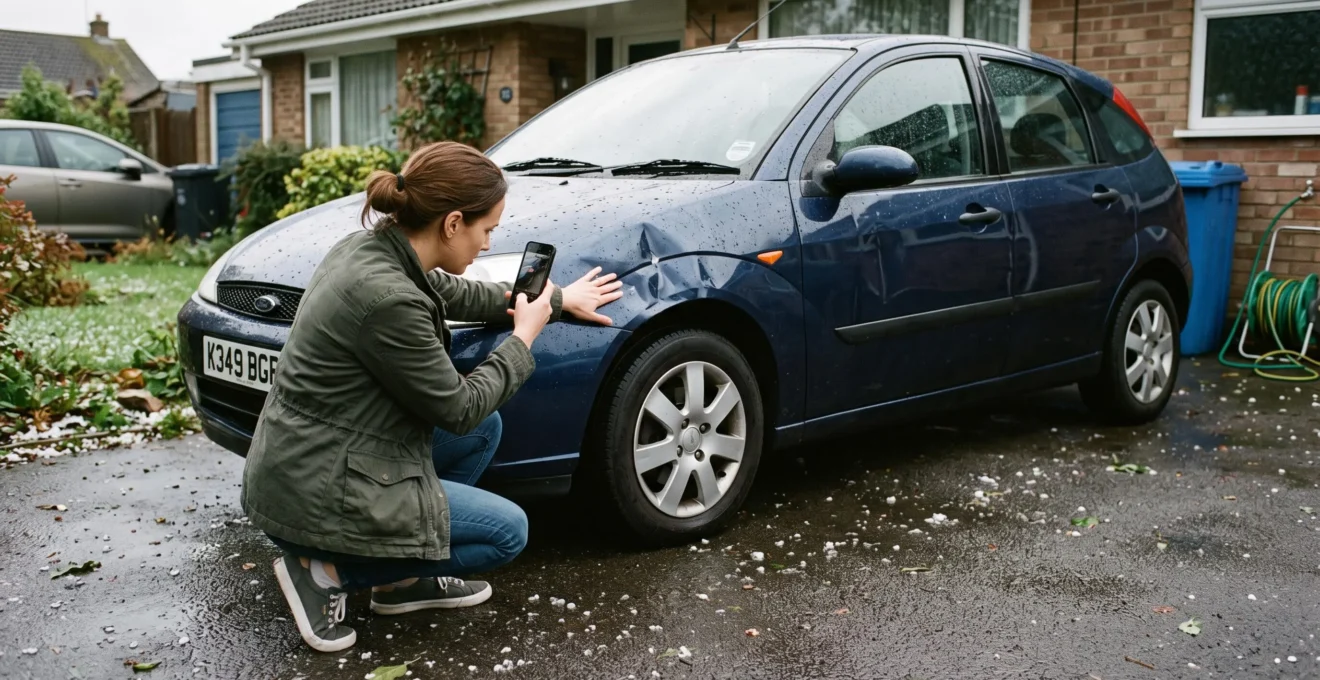
Comprehensive car insurance becomes most valuable when an incident damages your vehicle and there is no other insurer responsible for paying the bill. A collision with a wall, a stolen car or severe weather damage can leave you facing a repair or replacement expense that third-party-only insurance would not cover.
Yet the word “comprehensive” does not mean every claim will be paid in full. Excesses, exclusions, settlement valuations and optional benefits can all change what you receive. A policy that appears generous when purchased may provide considerably less financial assistance than expected when a claim occurs.
The practical question is therefore not simply whether comprehensive insurance offers broader protection. It is whether the additional premium buys protection against losses you would struggle to finance yourself.
The distinctions below follow UK motor insurance terminology, including third-party, third-party fire and theft, and comprehensive cover. Drivers elsewhere in the English-speaking world should check their local policy definitions, legal requirements and claims arrangements rather than assume that the same terms provide identical protection.
Comprehensive cover: what matters most
- Own-vehicle protection: Comprehensive insurance generally covers accidental damage to your car, including incidents where no other driver is liable, subject to policy conditions.
- Actual claim value: Excesses, exclusions, no-claims discount changes and market-value settlements can substantially reduce the financial benefit.
- Financial resilience: The strongest reason to maintain comprehensive cover is that replacing or repairing your car without an insurance payout would cause financial difficulty.
- Why Can Comprehensive Cover Help After Damage With No Other Driver Involved?
- How Can You Check Whether Comprehensive Benefits Are Worth the Premium?
- Comprehensive or Third-Party Cover: Which Better Protects a Newer Car?
- Which Comprehensive Cover Benefits Often Come With Important Limits?
- When Should You Reassess the Benefits of Comprehensive Motor Cover?
- How Can You Decide Whether Comprehensive Cover Matches Your Car’s Value?
- How Can You Decide Whether Third-Party Cover Is Enough for Your Car?
- When Is Comprehensive Car Insurance Worth Paying More For?
Why Can Comprehensive Cover Help After Damage With No Other Driver Involved?
Comprehensive cover can protect your own vehicle when damage occurs without another driver being responsible. This includes many single-vehicle accidents and potentially events involving weather, vandalism or falling objects. Third-party-only insurance generally provides no payout for your own car in these circumstances, making your policy’s specific damage benefits particularly important.
Consider accidentally reversing into a wall. The damage may be entirely your responsibility, with no other motorist’s insurer available to compensate you. If your comprehensive policy covers the accident, you can potentially claim for repairs after the applicable excess and other conditions.
The distinction also matters when a car is damaged while parked. A falling branch, attempted theft or hailstorm may produce a substantial repair bill without creating a straightforward claim against another driver.
The Association of British Insurers‘ motor insurance information explains the differences between motor insurance coverage levels and emphasises that comprehensive policies do not necessarily cover everything.
Individual incidents need careful assessment because different policy sections may apply:
- Windscreen damage: Glass repairs or replacement may have a separate excess. Some qualifying claims do not affect the no-claims discount.
- Pothole damage: Tyre, wheel or suspension damage may be assessed under accidental damage cover, subject to exclusions. A separate claim against a responsible authority may sometimes be possible.
- Fire and flood: These may fall within insured damage risks, depending on the contract and circumstances.
- Falling objects and animal collisions: Coverage can depend on the cause of damage, the wording of the policy and any relevant exclusions.
One easily overlooked cost is the excess. If no legally responsible third party can be identified, there may be nobody from whom to recover it. Other uninsured losses, such as alternative transport expenses, may also remain your responsibility.
Even where another party might ultimately be liable, identifying them and successfully recovering compensation can be uncertain. Comprehensive cover may provide a route to resolving the insured vehicle damage without relying entirely on that recovery process.
A useful test is to consider your most plausible incidents: storm damage, a collision with a stationary object or an unidentified parking incident. If you cannot reasonably rely on compensation from someone else, the value of your own damage protection becomes much clearer.
How Can You Check Whether Comprehensive Benefits Are Worth the Premium?
To assess whether comprehensive insurance is worth its premium, compare actual quotes for different coverage levels, calculate the cost you would retain after a claim and identify which additional benefits you would realistically use. The strongest comparison measures financial protection against plausible losses, not simply the number of features advertised.
Start with the annual price difference between comprehensive insurance and third-party or third-party fire and theft cover. That difference represents the additional annual cost of the broader policy, provided the quotes use comparable drivers, vehicles, usage details and periods.
Then examine the benefits individually rather than treating them as equally valuable.
| Benefit | Potential practical value | What to verify |
|---|---|---|
| Own-vehicle accidental damage | Protection against expensive repairs or a covered total loss | Excess, exclusions and settlement basis |
| Windscreen cover | Reduced cost of qualifying glass damage | Repair and replacement excesses |
| Courtesy car | Temporary mobility during eligible repairs | Eligibility, vehicle class and duration |
| Personal belongings | Limited reimbursement for eligible items | Item limits, overall cap and exclusions |
| Legal expenses | Assistance with eligible legal costs | Whether included or optional |
| Breakdown assistance | Support after qualifying mechanical problems | Separate purchase, recovery limits and territorial scope |
For each benefit, consider how likely you are to need it, what it would reasonably cost without insurance and what the policy would actually pay. These estimates are personal decision aids, not reliable actuarial probabilities.
A particularly important calculation is the true cost of claiming. A hypothetical £1,500 covered repair subject to a £400 total excess might produce a £1,100 insurer contribution before considering any future premium effects.
If making the claim also reduces your no-claims discount, the overall financial advantage may be smaller. The renewal impact is not fixed: insurers calculate premiums using multiple factors, and protecting a discount does not guarantee an unchanged premium.
MoneyHelper’s car insurance guidance explains excesses, no-claims bonuses and an important pricing misconception: third-party or third-party fire and theft cover is not necessarily cheaper than comprehensive insurance.
This means the comparison must start with real quotes rather than an assumption about which coverage level costs more.
Five checks before choosing your insurance policy
- Obtain comparable quotes: Save annual prices for comprehensive, third-party fire and theft, and third-party-only cover using consistent vehicle and driver details.
- Calculate the applicable excess: Record the compulsory, voluntary and relevant claim-specific excesses in one comparison sheet.
- Inspect benefit limits: Note the courtesy-car conditions, windscreen terms, belongings limits and important exclusions for each policy.
- Model a plausible claim: Write down an illustrative repair or total-loss scenario and estimate the amount remaining after the excess, noting any possible renewal implications.
- Document the decision: Produce a one-page comparison identifying the additional premium, meaningful benefits and financial exposure you would retain.
The best-value policy is not necessarily the one with the lowest excess, the longest list of extras or the lowest annual premium. It is the one whose conditions provide the most useful financial protection for your circumstances.
Comprehensive or Third-Party Cover: Which Better Protects a Newer Car?
Comprehensive insurance generally offers stronger protection for a newer car because it can cover accidental damage to your own vehicle as well as covered theft and fire losses. With third-party-only insurance, you may have to fund major repairs or replacement yourself. Finance agreements and total-loss settlement conditions make this distinction especially significant.
A newer vehicle can represent a substantial financial commitment, even after its market value begins to depreciate. A single accident may destroy much of that remaining value, leaving its owner with an expensive replacement problem.
Third-party-only insurance protects against covered liabilities to others. It does not generally pay for damage to your own car when you cause an accident, nor does it ordinarily provide theft or fire protection for that vehicle.
Comprehensive cover changes this exposure, although it does not guarantee a payout equal to the purchase price.
The distinction is particularly important for vehicles purchased through hire purchase, personal contract purchase (PCP) or other finance arrangements. Finance and lease providers may contractually require comprehensive insurance, so the agreement needs checking before considering reduced coverage.
A second issue arises if the car is written off. Standard policies commonly settle a covered total loss using the car’s market value immediately before the incident, rather than what the owner originally paid.
The Financial Ombudsman Service‘s motor valuation guidance explains how valuation guides, comparable vehicles and individual circumstances can affect the assessment of total-loss settlements.
Consider a hypothetical car bought for £24,000 that has a market value of £18,000 immediately before a covered total loss. Subject to the contract, the insurer’s starting settlement figure may be based on £18,000 rather than the purchase price. The applicable excess and any outstanding finance must also be considered.
Some comprehensive policies offer new-car replacement for qualifying relatively new vehicles. Eligibility may depend on vehicle age, the nature of the loss, repair costs, mileage or finance arrangements. The specific wording matters more than the benefit’s marketing name.
Where a total-loss settlement is lower than an outstanding finance obligation, Guaranteed Asset Protection (GAP) insurance may help address certain shortfalls. Different GAP products serve different purposes, and their conditions must be assessed separately.
For an outright-owned newer car, the decision is more straightforward: compare the market value and likely repair costs with the amount of financial loss you could comfortably absorb.
As the vehicle depreciates, the calculation changes. The original purchase price becomes less relevant than the current replacement exposure and the actual insurance premium.
The key consideration is whether you could replace the vehicle and meet any outstanding contractual obligations following a loss. A newer car often strengthens the argument for comprehensive protection, but its real value depends on the policy and the owner’s finances.
Which Comprehensive Cover Benefits Often Come With Important Limits?
Comprehensive insurance frequently includes restrictions on courtesy cars, windscreen claims, personal belongings and repair arrangements. Excesses can also make small claims less worthwhile, while optional protections may not form part of the standard policy. Understanding these conditions before buying is essential because the comprehensive label does not guarantee unlimited reimbursement.
Courtesy cars provide a good example. A policy may supply a temporary vehicle only when an approved repairer is handling an eligible claim. The replacement may be a basic model, with restrictions on availability or duration. Some policies also distinguish between a repairable vehicle and a total loss.
For someone who needs a large vehicle for work or family transport, a small courtesy car may not fully replace their normal mobility.
Windscreen protection can be similarly conditional. Repair and replacement may attract different excesses, and eligibility can depend on using an approved repair provider.
The excess is another major limitation. Many policies combine an insurer-set compulsory excess with a driver-selected voluntary excess. Some claims carry additional or alternative excess conditions for particular drivers or types of damage.
For example, a hypothetical £600 repair with a total applicable excess of £450 would leave only £150 payable by the insurer, assuming the claim is otherwise accepted. The potential effect on future premiums may make claiming even less attractive.
Check whether separate excesses actually apply together; the precise structure depends on the contract.
Several widely advertised protections may be optional rather than automatically included:
- Legal expenses: May assist with defined legal costs, but can have eligibility conditions and funding restrictions.
- Breakdown cover: Commonly requires a separate policy or add-on, with its own recovery and assistance limits.
- Protected no-claims discount: May preserve a discount entitlement after certain claims without preventing premium increases.
- Personal injury benefits: May provide specified compensation but should not be assumed to cover every injury or financial consequence.
- Driving abroad: Insurance protection in other countries may differ from domestic comprehensive benefits and may be restricted by duration or territory.
Repairer restrictions also deserve attention. Choosing a garage outside an insurer’s approved network can affect excesses, repair guarantees, courtesy-car eligibility or other claim conditions.
Finally, declarations matter. Modifications, changes in vehicle use, parking arrangements and permitted drivers can all affect the insurer’s assessment of risk and cover.
For example, a vehicle insured only for social and commuting use may not be appropriately covered for certain business activities. Undeclared changes can cause claim disputes, reduced payments or other policy consequences depending on the circumstances and applicable rules.
A worthwhile policy is one whose restrictions you understand and can accept. The strongest protection is not the broadest marketing description, but the combination of insured events, practical benefits and contractual conditions that would genuinely help after a claim.
When Should You Reassess the Benefits of Comprehensive Motor Cover?
Reassess comprehensive insurance whenever your vehicle’s value, financial commitments or driving circumstances change significantly. Finishing a finance agreement, moving home, changing parking arrangements or making a claim can all affect the value of your protection. Annual renewal is an appropriate minimum checkpoint, but major changes justify an earlier review.
Vehicle depreciation is an obvious trigger. A car that previously justified broad protection because of its high replacement cost may eventually reach a value that you could fund from savings.
However, depreciation alone should not determine the decision. A lower-value car may remain essential for commuting, caring responsibilities or earning an income. Losing it could still create substantial disruption.
Financial agreements create another important transition. Once a loan or lease arrangement ends, insurance requirements may change, and you may have more freedom to select a coverage level based on your own financial risk.
Changes in vehicle use and storage also deserve attention:
- Moving to a different address or postcode can change the insurer’s assessment of risk.
- Switching between secure off-street parking and regular street parking can affect relevant exposures.
- Increasing annual mileage may alter driving exposure and the appropriate declared mileage.
- Adding another driver can influence premiums, excesses and permitted use.
- Starting business use may require a different classification of cover.
A claim itself provides valuable evidence about the quality of the policy. After settlement, compare what happened with what you expected when purchasing it.
Record the excess paid, the final settlement, repair experience, any courtesy-car assistance and the effect on your renewal price. A policy that delivered effective support during a difficult incident may justify a different assessment from one whose important benefits proved inaccessible.
At each renewal, obtain fresh comparable quotes rather than automatically retaining the existing level of cover. Pricing can change independently across comprehensive, third-party fire and theft, and third-party-only products.
Changes in claims history, vehicle characteristics, insurer pricing and local risk assessments mean last year’s cheapest policy type may no longer be the cheapest.
The most important transitions are often straightforward: buying a newer vehicle, ending finance, experiencing a claim or becoming financially able to replace an older car yourself. Each changes the balance between premium cost and protection.
How Can You Decide Whether Comprehensive Cover Matches Your Car’s Value?
Compare your car’s current market value with the annual cost of comprehensive insurance, the applicable excess and the amount you could afford to lose. A high-value car may justify broader protection, but even a modest-value vehicle can warrant comprehensive cover if its loss would seriously disrupt your finances or daily life.
Start by estimating what your car would be worth immediately before a potential loss. Its original purchase price is not necessarily relevant to the amount an insurer would pay.
Check independent valuation tools, motor trade guides and advertisements for comparable vehicles with a similar registration year, model, mileage and condition.
Dealer listings can provide useful context, although asking prices do not establish the precise amount an insurer would accept. A trade-in valuation may also differ from the cost of buying a comparable replacement.
Once you have a reasonable valuation range, compare it with the policy’s potential total-loss settlement.
Consider this explicitly hypothetical example:
Illustrative comparison: an older vehicle
A driver estimates that an older car has a market value of £3,500. Their hypothetical comprehensive policy costs £600 annually and carries a £400 excess applicable to a total-loss claim.
Ignoring other contractual adjustments, a covered write-off settled at £3,500 could leave £3,100 after that excess. This illustrates the potential protection against a large loss, not the probability of receiving a claim payment or whether the premium is competitively priced.
The example highlights why neither the annual premium nor the car’s value should be considered alone. The driver must also compare the additional cost of comprehensive protection with alternative coverage quotes.
Financed vehicles add another complication. A car’s market value may fall below the outstanding amount owed.
MoneyHelper’s explanation of GAP insurance describes how particular GAP products can address specified differences between a standard motor insurance settlement and a purchase price, replacement cost or qualifying finance obligation.
As an illustrative financial scenario, a car worth £15,000 with £18,000 outstanding on finance would leave a £3,000 shortfall before considering any other relevant adjustments. Comprehensive cover alone does not necessarily eliminate that obligation.
The final decision should include a catastrophe test: if the vehicle disappeared tomorrow and no insurer paid compensation, could you replace it without borrowing heavily, exhausting essential savings or disrupting work and family responsibilities?
This is a more meaningful measure of financial resilience than the car’s age alone.
Do not cancel comprehensive protection merely because the annual premium seems large compared with the vehicle’s valuation. Theft, fire and serious damage remain relevant risks, and a narrower policy might offer little premium saving.
How Can You Decide Whether Third-Party Cover Is Enough for Your Car?
Third-party-only insurance may be sufficient if your vehicle is paid off, its replacement cost is manageable and you can comfortably fund damage or total loss yourself. It generally covers liability to other people rather than damage to your own car. The decision depends on your savings, vehicle use and willingness to accept an uninsured loss.
The principal advantage of third-party-only insurance is its narrower scope of protection, which may suit drivers willing to retain their own vehicle risk. However, it should not be confused with guaranteed lower premiums.
Evaluate the decision using a consistent set of personal circumstances:
- Market value: Would replacing the vehicle require a substantial withdrawal from savings?
- Finance status: Does any lender or leasing agreement impose minimum coverage requirements?
- Parking conditions: Is the car regularly exposed to theft, vandalism or weather damage?
- Driving exposure: How frequently and under what conditions is the vehicle used?
- Financial reserves: Could you replace or repair the car without compromising essential expenditure?
- Risk tolerance: Would you accept paying the full cost of an uninsured incident?
There is also an intermediate option: third-party, fire and theft insurance.
This generally extends third-party liability protection to certain losses caused by theft or fire affecting the insured vehicle, while leaving ordinary accidental collision damage to that vehicle outside the cover.
For an older, paid-off car, this may offer a useful compromise if theft and fire are the main losses the driver wants to insure against.
However, secure parking and low mileage do not remove collision risk or guarantee that any narrower policy is financially preferable.
The distinction is easier to assess side by side.
| Incident | Third-party only | Third-party, fire and theft | Comprehensive |
|---|---|---|---|
| Covered liability for damage to someone else’s vehicle | Generally covered | Generally covered | Generally covered |
| Damage to your own car in an at-fault collision | Not covered | Generally not covered | Generally covered |
| Theft of your insured vehicle | Not covered | Generally covered | Generally covered |
| Fire damage to your insured vehicle | Not covered | Generally covered | Generally covered |
| Own-car damage from other specified incidents | Generally not covered | Generally not covered | Depends on the incident and wording |
The table describes typical UK cover distinctions rather than guaranteeing claim acceptance. Every product remains subject to its definitions, conditions and exclusions.
Always compare actual premiums for all available coverage levels. Choosing third-party-only insurance without requesting a comprehensive quote can result in less protection without the expected financial saving.
Third-party-only cover is most defensible when an unreimbursed vehicle loss would be inconvenient rather than financially damaging. If losing the car would create serious hardship, broader protection deserves consideration even when the vehicle is relatively old.
Key takeaways before making your decision
- Use the car’s current market value and your ability to replace it, not its age or original purchase price, to assess potential financial loss.
- Compare actual policy prices, applicable excesses and claim conditions before deciding whether broader cover offers value.
- Give greater weight to comprehensive insurance when a vehicle is financed, essential to your income or difficult to replace from available savings.
When Is Comprehensive Car Insurance Worth Paying More For?
Comprehensive car insurance is generally worth a higher premium when a covered loss could leave you facing repair bills, replacement costs or outstanding finance that you cannot comfortably afford. It is particularly relevant for newer vehicles, financially essential cars and drivers exposed to significant own-vehicle damage risks, provided the policy offers meaningful protection.
The main value of comprehensive insurance is financial certainty rather than a guarantee of making an insurance claim.
By paying a known premium, the driver transfers specified risks of potentially substantial loss to an insurer, while retaining the excess, exclusions and other financial obligations set out in the contract.
This distinction matters most when the consequences of one incident could seriously affect household finances.
A driver who relies on their vehicle for work may have little flexibility to absorb an expensive accident. A family with limited replacement savings may also value the protection highly, even if the likelihood of a total loss is uncertain.
Conversely, a driver with an older, paid-off vehicle, adequate savings and the willingness to replace it personally may find the extra premium harder to justify.
These profiles should guide the decision, not determine it automatically. Actual prices, vehicle circumstances and policy conditions can reverse what initially appears to be the obvious choice.
One practical approach is to distinguish three costs:
- The cost of protection: The annual difference between comparable comprehensive and narrower-policy quotes.
- The cost of claiming: The applicable excess, any uninsured costs and possible future pricing consequences.
- The cost of going uninsured for own-vehicle damage: The amount you would need to fund after a major accident or other event outside your selected protection.
The third amount often matters more than the first two when a vehicle is essential and replacement savings are limited.
For an evidence-based choice, repeat the same routine at renewal: estimate the vehicle’s current value, review all relevant excesses and benefit limits, obtain comparable coverage quotes and assess whether a total unreimbursed loss would threaten your financial stability.
Do not place too much weight on optional benefits with strict conditions or limited personal usefulness. Give priority to the protection that addresses your largest realistic financial exposures.
A policy with fewer advertised extras may be more valuable if its own-vehicle protection, excess and settlement conditions better match your needs.
Before renewing, request quotes for the coverage levels available to you and read the relevant policy wording. Select the option whose additional cost is justified by the financial loss you would otherwise have to absorb, rather than simply renewing the same cover out of habit.
Does comprehensive insurance always pay for accidental damage?
No. Comprehensive policies generally cover eligible accidental damage to the insured vehicle, including certain incidents caused by the policyholder. However, exclusions, driver restrictions, permitted-use conditions and other contractual requirements can affect whether a claim is accepted. The policy wording determines the actual protection.
Will a comprehensive insurance claim always increase my next premium?
Not necessarily. A claim can affect your no-claims discount and future premium, but the outcome depends on the insurer, claim circumstances and renewal pricing. Some windscreen claims may leave the no-claims discount unchanged. A protected discount does not guarantee that the overall premium will stay the same.
Can you choose your own repair garage after a comprehensive claim?
Some insurers permit repairs at a garage chosen by the policyholder, but using a non-approved repairer can affect the excess, repair arrangements, guarantees or courtesy-car benefits. Check the repair conditions and obtain the insurer’s agreement where required before authorising work.
Does comprehensive insurance repay the full amount owed on car finance?
Not automatically. Following a covered total loss, a standard settlement is generally based on the car’s market value immediately before the incident, subject to policy terms. If the outstanding finance exceeds the settlement, a shortfall can remain. An appropriate GAP insurance product may address certain differences, subject to its eligibility conditions and exclusions.
Can comprehensive car insurance be cheaper than third-party insurance?
Yes. UK insurance pricing does not follow a guaranteed order in which broader cover always costs more. Premiums reflect insurer pricing decisions and individual risk characteristics, including vehicle details, location and claims history. Comparing actual quotes is the reliable way to establish which coverage level offers the lowest price for your circumstances.