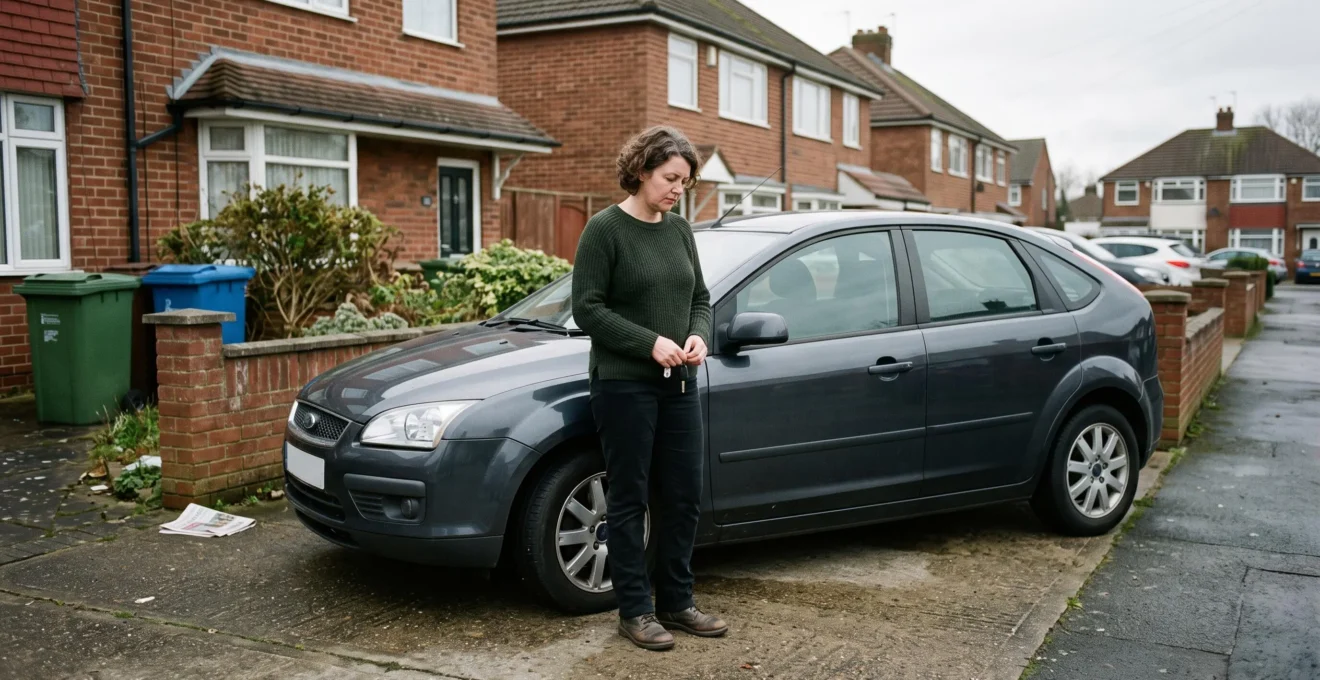
Losing the right to drive can affect far more than the journeys you make. A licence suspension, revocation or court-imposed disqualification can disrupt work, family responsibilities, vehicle arrangements and motor insurance. Even after a restriction ends, getting back behind the wheel may involve additional administrative steps.
In the UK, the consequences depend on the type of restriction, why it was imposed and whether you must apply for a new licence. A court ban lasting 56 days or longer normally requires a new licence application before driving resumes. Other restrictions follow different rules, particularly where medical fitness or newly qualified drivers are involved.
Insurance also needs separate attention. Being entitled to drive again does not automatically mean an existing insurance policy covers you, and previous driving convictions or restrictions may affect future quotations.
This guide focuses primarily on the Great Britain licensing framework administered by the Driver and Vehicle Licensing Agency (DVLA). Northern Ireland has separate licensing arrangements in several areas, so drivers there should check the applicable Driver and Vehicle Agency (DVA) requirements.
Driving licence restrictions: the essentials
- A restriction can remove your legal entitlement to drive immediately, even if your vehicle remains taxed, insured and roadworthy.
- Suspension, revocation and court disqualification have different consequences for licence restoration and insurance declarations.
- Before driving again, confirm your entitlement, insurance cover, vehicle tax, MOT status and any additional conditions.
- What Must Be in Place Before You Can Legally Drive on UK Roads?
- Suspension, Revocation or Disqualification: What Is the Practical Difference?
- How Should You Handle Vehicle Use After Your Licence Is Suspended?
- Which Mistakes Can Make a Licence Restriction More Serious?
- When Can You Drive Again After a Licence Restriction?
- Why Can Licence Suspension Affect Insurance Even After Driving Resumes?
- When Must You Notify the DVLA About Changes to a Vehicle or Keeper?
- What Can Happen if You Forget Your MOT Expiry Date?
What Must Be in Place Before You Can Legally Drive on UK Roads?
To drive legally on UK roads, you need the correct driving entitlement, insurance covering your use of the vehicle, and a vehicle that meets registration, tax, roadworthiness and applicable MOT requirements. You must also satisfy relevant age, eyesight and medical fitness conditions. Meeting one requirement does not remove the obligation to meet the others.
These requirements operate independently. A car can be fully taxed and insured while its owner is legally prohibited from driving it. Equally, someone with a valid driving licence cannot lawfully use a vehicle without the insurance cover required for that particular journey.
The GOV.UK guidance on legal obligations for drivers and riders sets out the core responsibilities that motorists must satisfy.
- Driving entitlement: You must hold the appropriate entitlement for the vehicle category and must not be subject to a restriction preventing you from driving.
- Motor insurance: At least third-party insurance must cover your actual use of the vehicle.
- Vehicle registration and tax: The vehicle must be correctly registered and taxed unless a lawful exemption or off-road arrangement applies.
- MOT certification: A valid MOT is required where the vehicle falls within the applicable testing rules, subject to limited exceptions.
- Roadworthiness: The vehicle must remain safe and compliant, even when it has a valid MOT certificate.
- Driver fitness: Applicable eyesight, medical and age requirements must be satisfied.
Different organisations have responsibilities within this framework. The DVLA manages driving licences and vehicle registration in Great Britain, while the Driver and Vehicle Standards Agency (DVSA) oversees the MOT testing system. Insurance cover is arranged with insurers, and police can enforce relevant road traffic requirements.
A licence disqualification may therefore create several separate problems. The driver loses the legal ability to drive, the insurer may need to be informed under the policy terms, and another lawful driver may need suitable cover to use the vehicle.
The problem is not solved simply because the car remains legally on the road. Returning to driving requires both personal entitlement and a compliant vehicle.
Once these separate obligations are understood, the next question is which type of licence restriction actually applies, because the procedure for recovering entitlement depends on that distinction.
Suspension, Revocation or Disqualification: What Is the Practical Difference?
A suspension generally describes a temporary interruption of driving entitlement, revocation means that a licence or entitlement has been withdrawn, and disqualification is a legal prohibition on driving, commonly imposed by a court. These terms are not interchangeable under UK law. The exact decision determines whether you need a new application, further tests or other approval before driving again.
The word “suspended” is frequently used informally to describe different kinds of driving restrictions. However, it is not a single uniform DVLA legal category with one standard procedure for reinstatement. A driver should identify the actual restriction from the official notice rather than relying on everyday terminology.
The distinctions have practical consequences:
| Restriction | How it arises | Returning to driving |
|---|---|---|
| Temporary suspension or restriction | Depends on the specific legal or administrative process | Follow the relevant decision notice; restoration is not necessarily automatic |
| Licence revocation | DVLA action under applicable legislation, including certain new-driver or medical circumstances | A fresh licence application or evidence of eligibility may be required |
| Court disqualification | A court order following relevant driving offences or other qualifying circumstances | Wait for the ban to end and reapply where the rules require it |
For court-imposed disqualifications, the duration matters. Under the GOV.UK overview of driving disqualifications, a ban lasting 56 days or longer requires an application for a new licence before driving resumes. A ban shorter than 56 days does not normally require a new application solely because of that ban.
Neither rule permits driving before the disqualification ends. Additional requirements, including a retest ordered by the court, may also apply.
Driving during a court disqualification is a criminal offence. Driving after a licence has been revoked can also constitute an offence, but the precise legal consequences depend on the circumstances. A revoked licence must not be treated as though it were simply an expired photocard awaiting routine renewal.
Insurance declarations create another important difference. A driving conviction associated with a court ban is not the same thing as an administrative or medical licence restriction. When an insurer asks about convictions, endorsements, disqualifications or previous licence refusals, the answer must match the actual question and the driver’s records.
To establish which restriction applies, examine the court order, DVLA correspondence and your official driving record. The document should identify the nature of the decision and any requirements for recovering entitlement.
Once the restriction is identified, the immediate priority is making sure the vehicle is not used unlawfully while deciding what should happen to its insurance, tax and everyday use.
How Should You Handle Vehicle Use After Your Licence Is Suspended?
If your licence restriction prevents you from driving, stop driving immediately and arrange alternative transport. You may keep the vehicle, travel as a passenger or allow another legally entitled and appropriately insured person to drive it. Depending on where the vehicle is kept and whether it will be used, maintaining insurance, changing the policy or making a Statutory Off Road Notification (SORN) may be appropriate.
The first decision is whether the vehicle will remain available for lawful road use. A disqualified driver does not necessarily have to sell their car or transfer its registered keeper details. Ownership, registered keeper status and driving entitlement are separate matters.
Several options may be available:
- Keep the vehicle parked but ready for lawful use: Maintain the necessary tax and insurance arrangements, while checking that the insurer knows about any change it requires you to disclose.
- Allow someone else to drive: Confirm that the person has valid driving entitlement and insurance covering their actual use. Being a named driver may provide cover, subject to the policy terms.
- Travel as a passenger: A licence restriction preventing you from driving does not ordinarily prevent you from riding in the vehicle while someone else drives legally.
- Take the vehicle off the road: Consider a SORN if it will be kept off public roads and the applicable conditions can be satisfied.
- Sell or transfer the vehicle: Notify the DVLA where a registered keeper change occurs, and deal separately with insurance and tax.
Adding another driver to a motor insurance policy should be agreed with the insurer. The person who will actually use the vehicle must be correctly described. A disqualified individual must not misrepresent another person as the main driver to obtain insurance on misleading terms.
Cancelling insurance is another decision that requires care. A vehicle kept on a public road generally needs to remain insured and appropriately taxed even when its usual driver cannot legally drive. If the vehicle is declared SORN, it must be kept off public roads and must not be used on them except where a specific legal exception applies.
Registering a SORN can lead to a refund of qualifying full months of remaining vehicle tax. However, a SORN does not automatically cancel an insurance policy, nor does cancelling insurance automatically declare a vehicle off-road.
A driver might choose to retain cover for theft or accidental damage while a vehicle is stored, but this depends on what insurance products and terms are available. Conversely, cancelling a policy may interrupt the accumulation of a no-claims discount or affect how long an existing discount remains recognised by an insurer.
There is also a serious distinction between temporarily storing a vehicle and driving it during a ban. Driving while disqualified is a criminal offence that can result in further penalties and create additional complications for future insurance.
The safest arrangement is one that reflects what will actually happen to the vehicle, with the insurer informed where required and every intended driver individually entitled and covered to drive.
Which Mistakes Can Make a Licence Restriction More Serious?
The most serious mistake is driving when a legal restriction prohibits it. Other avoidable problems include ignoring DVLA correspondence, misunderstanding reapplication requirements, missing important administrative deadlines and giving inaccurate information to an insurer. These mistakes do not all carry the same consequences: some create criminal liability, while others delay reinstatement or cause insurance disputes.
Driving during a court-imposed ban can lead to prosecution and additional penalties. The consequences depend on the offence and court decision; a further or longer ban is possible, but it is not an automatic outcome in every case.
Administrative mistakes produce different risks. If an application is needed before entitlement can be restored, failing to complete it may leave the driver unable to resume driving even after the original restriction period has passed.
Incorrect insurance declarations can be particularly costly because an error may not become apparent until a claim is made.
The Financial Ombudsman Service guidance on insurance misrepresentation explains that consumers must take reasonable care when answering insurers’ questions. The clarity of those questions and the effect of any incorrect response on underwriting are relevant when assessing disputes.
Not every incorrect declaration automatically invalidates a policy. Depending on the circumstances, an insurer may seek a higher premium, apply different terms, reduce a claim payment or avoid the policy. The distinction between careless and deliberate or reckless misrepresentation matters.
For example, a question asking about criminal motoring convictions should not automatically be interpreted as covering every medical or administrative licence restriction. Conversely, a question explicitly asking about all previous licence restrictions may require a broader answer.
The period covered by disclosure questions also matters. Drivers should check the exact wording and relevant time window rather than assuming that every insurer asks about the same period. Existing policies may impose separate contractual duties to report relevant changes after cover has begun.
Five checks to prevent licence and insurance mistakes
- Collect the restriction notice: Save the DVLA letter or court order and record its stated effect on your entitlement.
- Verify your driving record: Obtain the available official record and retain confirmation of the restriction or disqualification end date.
- Review insurer correspondence: Identify the exact questions asked about convictions, restrictions and changes in circumstances, keeping copies of your answers.
- Establish the restoration requirements: Record whether an application, supporting evidence, fee or further driving test is required.
- Prepare a driving-readiness record: Keep confirmation of valid entitlement, applicable insurance cover, vehicle tax and MOT status before returning to the road.
Keeping these documents together makes it easier to resolve differences between your understanding of the restriction and the information held by an insurer or licensing authority.
Once the records and obligations are clear, preparing to drive again becomes a matter of confirming that each outstanding legal requirement has actually been satisfied.
When Can You Drive Again After a Licence Restriction?
You can drive again only when the restriction no longer prevents you from doing so, you have the required driving entitlement and every other legal requirement is satisfied. A short court disqualification may end without a fresh licence application, whereas longer bans and revocations can require reapplication, medical assessment or further tests. Insurance must also cover you before driving.
For a court disqualification lasting less than 56 days, a new licence application is not normally required solely because of the ban. However, you must wait until the disqualification has finished, and any other conditions affecting entitlement must still be met.
For a ban of 56 days or longer, the driver must apply for a new licence before returning to the road. Depending on the offence, the court may also require a further driving test or an extended test.
Revocation follows another route. For example, under the new-driver rules, someone whose licence is revoked within two years of passing their driving tests must apply for a new provisional licence and pass the relevant tests again. Medical revocation may require additional evidence that the driver meets the applicable fitness-to-drive standards.
In relevant drink- or drug-driving cases, the DVLA can issue a D27 reapplication form before the ban ends. The supplied government guidance identifies 56 days before the end for applicable cases and 90 days for high-risk offenders. These notification periods should not be confused with guaranteed application-processing times.
The exact procedure depends on the reason for the restriction and the licence category. Car and motorcycle drivers may need form D1, while lorry and bus drivers may need form D2 where the applicable postal application procedure requires it. Fees can also apply.
The practical approach is to work backwards from the anticipated return date. First confirm the official end date and the steps necessary to recover entitlement. Then allow time for any applications, medical evidence or tests. Finally, arrange suitable insurance and confirm that the vehicle is taxed, roadworthy and covered by a valid MOT where applicable.
These stages should not be treated as interchangeable. An insurance quotation does not establish driving entitlement, and an application submitted to the DVLA does not necessarily mean a licence has been granted.
If your record or correspondence does not clearly establish when you can drive, verify the position with the DVLA before making plans. Do not rely on an estimated date or assume that a document arriving in the post is the only factor determining entitlement.
Confirming eligibility early also leaves time to investigate insurance options, which may be more expensive or restrictive after certain motoring convictions.
Why Can Licence Suspension Affect Insurance Even After Driving Resumes?
A previous licence restriction can affect motor insurance after driving entitlement has been restored because insurers assess the circumstances of past driving offences, convictions and other relevant information when deciding whether to offer cover and on what terms. The impact depends on the reason for the restriction, the insurer’s questions and underwriting criteria. Higher premiums are possible but not inevitable.
Insurers consider numerous risk factors when assessing motor insurance applications. A disqualification linked to a serious motoring offence may influence an insurer’s decision differently from an administrative licence revocation arising from a medical issue.
The legal and contractual categories therefore matter. A driver should not describe a non-criminal administrative decision as a criminal conviction, nor omit a court disqualification when an insurer asks about it.
Applications may ask about motoring convictions, penalty points, previous bans, licence restrictions or declined insurance. The relevant disclosure period and scope of each question can differ. Drivers must answer the actual questions carefully rather than relying on a universal disclosure assumption.
Even where a conviction is no longer within a particular question’s stated period, other questions or policy conditions may still be relevant. The appropriate response depends on the wording, the applicable law and the facts.
There can also be indirect financial effects. A disqualification may leave a motorist without a suitable insurance policy for an extended period. An interrupted policy can affect the accumulation or later recognition of a no-claims discount, depending on the insurer’s rules.
Where an insurer discovers incorrect information, the outcome is not necessarily automatic cancellation or rejection of every claim. Under the consumer insurance principles described by the Financial Ombudsman Service, the assessment includes the care taken when answering, the insurer’s questions and whether the information would have changed its underwriting decision.
Drivers approaching a return to motoring can prepare by:
- Obtaining an accurate copy of their driving record.
- Recording the nature, dates and circumstances of any relevant convictions or restrictions.
- Checking what an existing insurer requires them to report.
- Comparing quotations based on the same accurate information.
- Considering specialist insurers alongside standard providers without assuming either will necessarily be cheaper.
A clear, consistent description of the restriction reduces the risk of discrepancies between insurance applications and official records. Where a question remains unclear, seeking clarification from the insurer is preferable to guessing.
Insurance arrangements are only part of the administrative picture. Keeping the correct address and vehicle keeper details with the DVLA helps ensure that essential licensing correspondence reaches the right person.
When Must You Notify the DVLA About Changes to a Vehicle or Keeper?
You must notify the DVLA about relevant changes to vehicle registration details, including a change of registered keeper, sale or transfer, and applicable vehicle alterations. Drivers must also report certain changes affecting their licence, such as a change of address or notifiable medical condition. These are separate records, and losing driving entitlement does not automatically remove registered keeper responsibilities.
It is important to distinguish the registered keeper from the person who drives the vehicle. The registered keeper is the person recorded for vehicle registration purposes and is responsible for relevant administrative duties, including vehicle tax arrangements. That person is not necessarily the legal owner or the vehicle’s regular driver.
For example, someone serving a driving disqualification may remain the registered keeper of their car. If another household member starts driving it, the registered keeper does not automatically change. The new driver’s entitlement and insurance must nevertheless be appropriate for the intended use.
If the vehicle is sold or transferred to another keeper, the registration must be updated through the appropriate DVLA process. Vehicle tax does not simply transfer with the vehicle to the new keeper.
Declaring a vehicle SORN is another distinct process. It concerns whether the vehicle is being kept off public roads, not whether the registered keeper personally holds driving entitlement.
Licence records require attention as well. An address change during a restriction can be particularly problematic if DVLA correspondence containing important instructions is sent to an outdated address.
Where medical conditions are concerned, reporting duties depend on the condition and applicable driving fitness rules. A vehicle registration update is not a substitute for notifying the DVLA about a relevant medical issue affecting driving.
A useful approach is to maintain two separate sets of records: one for the driver and one for the vehicle. The first covers entitlement, personal details and relevant medical requirements. The second covers the registered keeper, vehicle status, tax and applicable changes.
Even when licence and registration records are accurate, an expired MOT can prevent an otherwise lawful return to regular driving.
Key points before returning to the road
- Check the vehicle’s MOT expiry independently of the date on which driving entitlement is restored.
- Do not assume that an active insurance policy or valid tax proves the vehicle is roadworthy.
- Use official MOT records and available reminders to make vehicle compliance part of your return-to-driving preparations.
What Can Happen if You Forget Your MOT Expiry Date?
If your vehicle needs an MOT and its certificate expires, using it on a public road can lead to enforcement and a fine, subject to limited legal exceptions. An expired MOT does not automatically invalidate every insurance policy, but it may create insurance difficulties depending on the circumstances and policy terms. A valid driving licence does not remove MOT obligations.
For most cars in Great Britain, MOT testing becomes necessary once the vehicle reaches the applicable testing age, with subsequent tests required at the prescribed intervals. Different vehicle categories and specific exemptions can affect the rules.
The MOT system checks defined aspects of vehicle safety and environmental compliance. However, the presence of an MOT certificate does not guarantee that a car remains roadworthy throughout its validity period.
Driving without a required valid MOT can result in a fine. Some vehicle defects can also lead to separate offences and penalties, including penalty points in relevant circumstances. Such points should not be described as an automatic consequence of an expired MOT alone.
There are limited exceptions allowing a vehicle without a current MOT to be driven for particular purposes, such as an authorised journey to a pre-arranged MOT test, provided the relevant legal conditions are met. Any applicable insurance and roadworthiness requirements still matter.
Insurance needs careful treatment. An expired MOT certificate does not, by itself, establish that all cover has ceased. Nevertheless, an insurer may examine the vehicle’s condition, policy requirements and circumstances of an incident when assessing a claim.
This is particularly relevant after a driving restriction. Someone concentrating on recovering their licence may overlook the fact that a car kept unused for several months has also passed its MOT expiry date.
The most reliable routine is to use the official GOV.UK MOT status service to check the vehicle’s recorded test information. Where available, DVSA MOT reminders by email or text message can provide additional notice before expiry.
Before returning to regular driving, check the MOT alongside the vehicle’s tax status, insurance cover and general roadworthiness. If a vehicle has been declared SORN, the necessary arrangements to return it lawfully to road use must also be addressed.
Before your first journey, verify your driving entitlement directly, obtain confirmation of insurance covering your intended use, and check the vehicle’s legal and mechanical condition. If any requirement remains uncertain, resolve it before driving rather than relying on assumptions.
Can you keep a car registered in your name while disqualified?
Yes. A driving disqualification does not automatically require you to sell the vehicle or change its registered keeper. You must continue to meet relevant vehicle registration, tax and insurance requirements, and anyone using the vehicle must be legally entitled and appropriately insured to drive it.
Does a driving disqualification automatically cancel car insurance?
Not necessarily. The effect depends on the policy wording, the circumstances of the disqualification and any obligations to notify the insurer. You should check the policy and contact the insurer where required. The existence of a policy does not mean a disqualified person is covered to drive unlawfully.
Can you apply for motor insurance before your driving ban ends?
You can seek quotations and discuss future cover before a ban ends. The insurer must be given accurate information about your current circumstances and the intended start of cover. Arranging or purchasing insurance does not authorise you to drive before entitlement has been restored.
Does a disqualification of less than 56 days require a new driving licence?
Under the Great Britain rules described in the government guidance, a court disqualification lasting less than 56 days does not normally require a new licence application solely because of that ban. You must nevertheless wait until it ends and satisfy any other applicable driving conditions. Longer disqualifications generally require a new application.
What should you do if you disagree with an insurer’s response to a previous disqualification?
Ask the insurer to explain its decision and identify the questions, policy terms or underwriting information on which it relied. Keep copies of your application and correspondence. Where an eligible consumer complaint cannot be resolved through the insurer’s complaints process, the Financial Ombudsman Service may be able to consider the dispute.