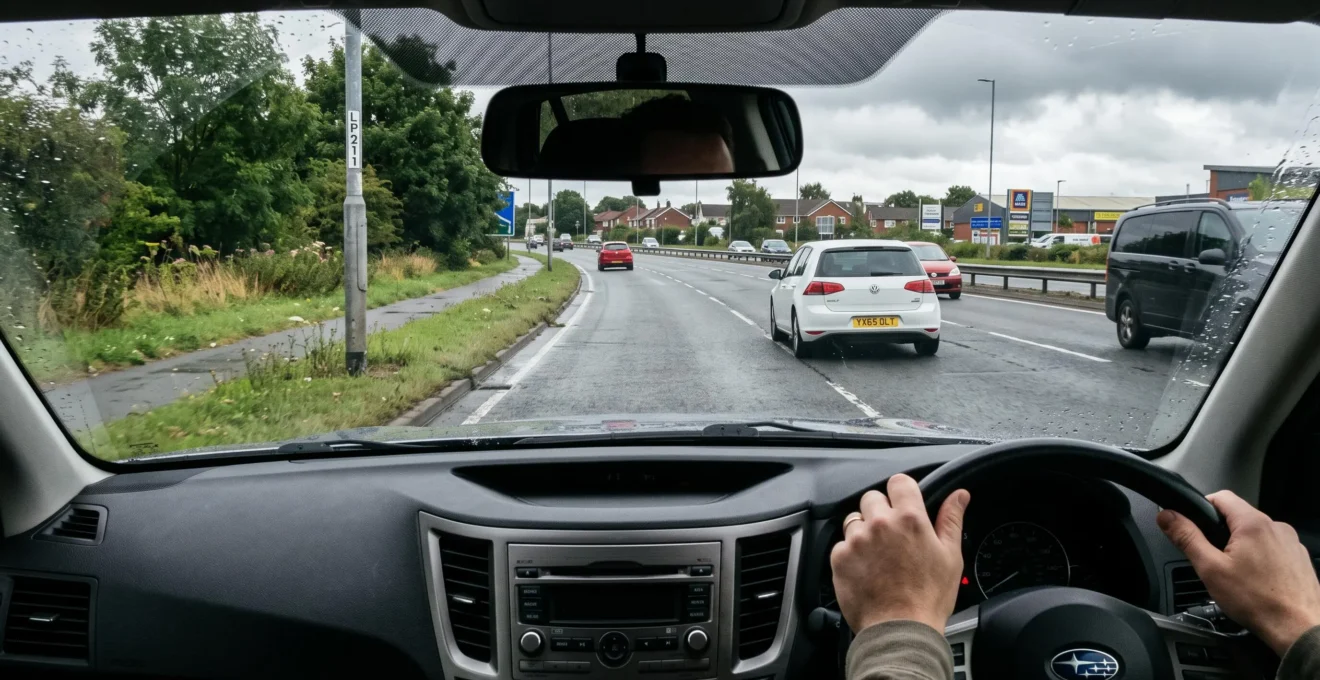
Many everyday collisions begin with an ordinary driving situation: traffic slowing unexpectedly, a vehicle emerging from a junction, a blind spot during a lane change or a parking manoeuvre performed without a complete view. The outcome often depends on whether a driver has preserved enough time and space to respond.
Rear-end impacts, junction conflicts, parking bumps and low-speed traffic collisions offer practical opportunities for prevention. Maintaining separation, checking blind spots, adjusting speed and removing distractions can interrupt the chain of events before contact occurs.
Not every crash is avoidable by an individual driver. Road design, other motorists, visibility, vehicle condition and unpredictable hazards also influence outcomes. However, defensive habits can reduce exposure to common risks, including situations where another road user makes the initial mistake.
The most useful approach is to identify recurring situations in your own driving and adopt a small set of actions that directly address them. Those actions may also help protect your insurance record, although financial consequences depend on the policy and jurisdiction.
Common preventable collisions: the essentials
- Rear-end collisions become less likely when drivers maintain adequate following distances, anticipate braking and remain attentive.
- Junction and manoeuvring crashes can often be avoided through fresh visual checks, careful gap assessment and low-speed control.
- Distraction-free driving, appropriate speed and larger safety margins provide protection across many everyday situations.
- Why Are So Many Rear-End Collisions Avoidable?
- How Can You Approach a Busy Junction to Reduce Avoidable Collision Risk?
- Low-Speed or High-Speed Crashes: Which Risks Can Drivers Influence Most?
- Which Manoeuvring Mistakes Most Often Turn Near-Misses Into Collisions?
- When Should You Increase Your Safety Margin to Prevent a Crash?
- Which Everyday In-Car Tasks Should Wait Until You Stop?
- Why Do Low-Speed Traffic Jams Still Produce So Many Minor Collisions?
- How Can Defensive Driving Reduce the Risk of Everyday Collisions?
Why Are So Many Rear-End Collisions Avoidable?
Many rear-end collisions are potentially avoidable because the following driver can control several important factors: attention, speed and distance from the vehicle ahead. When a leading vehicle brakes unexpectedly, a sufficiently large gap provides more time to recognise the hazard and respond. Prevention becomes harder when these safety margins disappear.
A rear-end collision typically develops through a sequence of events. Traffic slows, the following driver notices the change late, and the remaining distance becomes too short for effective braking. Distraction, excessive speed or close following can each contribute to this sequence.
The leading driver’s actions matter too. Sudden unnecessary braking or unpredictable manoeuvres may create hazards. Nevertheless, a following driver has substantial control over the separation that makes ordinary changes in traffic speed manageable.
A three second following gap is a practical conservative starting point under favourable conditions. To measure it, choose a stationary roadside object such as a sign or lamppost. When the vehicle ahead passes the object, count three seconds. Your vehicle should not reach the same point before the count finishes.
This is not a universal legal minimum. The UK Highway Code’s guidance on stopping distances and safe driving recommends at least two seconds on high-speed roads and in tunnels with reduced visibility, with that interval at least doubled on wet roads and increased considerably on ice. A three-second baseline provides an additional buffer, but difficult conditions may require substantially more.
The useful response also depends on the road environment:
- At traffic lights: watch the traffic ahead rather than only the signal, anticipate vehicles stopping and brake progressively when safe.
- On motorways: look beyond the nearest vehicle for developing queues, maintain a substantial gap and avoid unnecessary speed changes.
- In slow traffic: remain attentive during repeated starts and stops, and keep enough room to stop without contacting the vehicle ahead.
If another driver follows too closely, avoid brake-checking or sudden attempts to communicate frustration. Instead, gradually enlarge the space ahead of your own vehicle, maintain a predictable speed and allow the tailgating driver to pass when conditions permit.
Insurance responsibility varies by jurisdiction and circumstances. Following too closely can be an important factor in a liability assessment, but a rear-end impact does not automatically establish the same legal outcome everywhere.
Once adequate separation becomes habitual, the next challenge is recognising conflicts arriving from directions other than directly ahead, especially at busy junctions.
How Can You Approach a Busy Junction to Reduce Avoidable Collision Risk?
Approach a busy junction by scanning for conflicts, reducing speed when visibility is limited, choosing a predictable road position and checking that your intended path is clear. A green signal or priority sign does not guarantee an empty intersection. Drivers should verify surrounding traffic before entering and avoid committing to uncertain gaps.
Junction safety deserves particular attention because several traffic streams may intersect within a small area. The Federal Highway Administration reports that US traffic fatalities involving intersections 12,036 in 2022, including US traffic fatalities involving signalised intersections 4,204 in 2022. These figures describe fatalities associated with intersections, not the proportion preventable through specific driving habits.
A useful approach has four phases:
- Scan: assess traffic signals, pedestrians, cyclists, turning vehicles and approaching traffic from both directions.
- Adjust: choose a speed that allows you to stop safely if a potential conflict develops.
- Position: maintain the correct lane and avoid late corrections near the junction.
- Preserve options: avoid entering a space that may leave your vehicle stationary across another traffic stream.
At a green signal with restricted sightlines, covering the brake can reduce the physical movement needed to begin braking if a hazard appears. This means positioning the foot ready to brake without unnecessarily applying pressure or activating the brake lights. It is a situational technique, not a substitute for slowing down appropriately.
A green light that has been showing for some time may change as you approach. Read the situation early, use a speed appropriate for the available stopping distance and follow the applicable signal rules. Do not accelerate merely to avoid waiting through another signal cycle.
Turning across oncoming traffic presents a different problem: judging whether an approaching vehicle will reach the conflict point before the turn can be completed. Closing speed may be difficult to estimate, particularly for motorcycles or vehicles approaching at an unexpected speed.
A practical decision rule is to proceed only when the available space and time are clearly sufficient to complete the entire turn without making anyone brake or swerve. If the gap is doubtful, wait. The safe gap depends on visibility, speed, road layout and vehicle performance; no universal time interval guarantees a safe turn.
Drivers must also consider traffic behind them. When slowing for a changing light, check mirrors where practical, begin slowing in good time and let normal brake-light operation communicate deceleration. Never delay necessary braking solely because another vehicle is following closely.
The Federal Highway Administration’s intersection safety statistics also identify red-light running as an important contributor to fatalities at signalised junctions. Fresh visual checks therefore complement, rather than replace, signal compliance.
These habits are valuable at any speed, although the balance between preventing contact and limiting injury changes considerably between parking areas and faster roads.
Low-Speed or High-Speed Crashes: Which Risks Can Drivers Influence Most?
Drivers can influence collision risk at both low and high speeds, but the most useful prevention measures differ. Low-speed incidents often involve limited visibility, close spacing and manoeuvring mistakes. At higher speeds, maintaining appropriate speed and separation becomes especially important because there is less opportunity to recover from a developing hazard.
Low-speed driving includes parking, reversing, moving through congested streets and following traffic in queues. Although such incidents may cause relatively minor physical damage, repairs can still be expensive and inconvenient.
Many of these situations provide an opportunity to prevent contact by slowing further, stopping to obtain a better view or declining an uncertain manoeuvre. The important advantage is often not faster reactions but avoiding the need for an emergency reaction altogether.
Higher-speed driving has different consequences. A vehicle carries more kinetic energy as speed rises, while the distance required to stop increases markedly. Braking distance is strongly affected by speed, road grip, vehicle condition and gradient, alongside the distance travelled during the driver’s reaction.
Choosing a lower, appropriate speed before encountering a hazard can be more effective than relying on rapid braking after it appears. The posted limit is not necessarily the right travelling speed in rain, darkness, congestion or restricted visibility.
The following grid can help identify where to direct your personal prevention efforts.
| Driving environment | Situations to prioritise | Useful prevention habits |
|---|---|---|
| Urban streets | Junction conflicts, parking manoeuvres and close traffic | Fresh visual checks, low manoeuvring speed and pedestrian awareness |
| Rural roads | Restricted sightlines, unexpected hazards and misjudged bends | Appropriate approach speed, longer sight-distance margins and caution when overtaking |
| Motorways | Sudden queues, lane changes and closing speeds | Measured following gaps, distant scanning and early speed adjustment |
| Car parks | Reversing conflicts, pedestrians and stationary objects | Walking-around checks, slow movement and direct observation of blind areas |
From an insurance perspective, avoiding repeated minor collisions may protect a driver’s claims history. The Insurance Information Institute‘s explanation of claims and premiums notes that primarily at-fault claims can affect premiums and that several accidents may influence renewal decisions.
However, there is no universal rule that several minor claims cost more than one moderate claim. The outcome depends on claim history, insurer practices, local regulations and policy provisions.
For drivers who regularly use car parks or crowded urban roads, the next improvement often comes from eliminating small observation errors during manoeuvres.
Which Manoeuvring Mistakes Most Often Turn Near-Misses Into Collisions?
Manoeuvring collisions commonly become possible when drivers act without a complete view of the surrounding space. Reversing with obstructed visibility, changing lanes after checking only mirrors and making late lane corrections all create potential conflicts. Slower movement, direct blind-spot checks and the willingness to pause can interrupt these situations before contact occurs.
These examples are important prevention scenarios rather than a statistically established ranking of the most frequent manoeuvring crashes. Their common feature is the decision to move based on incomplete information.
Reversing out of a parking space illustrates the problem. The driver may see parked vehicles on either side but not a pedestrian, cyclist or approaching car entering the aisle behind them.
Where it is permitted, practical and safe, reversing into a parking bay on arrival may improve visibility when leaving forwards. However, reversing into a space must itself be performed carefully, and the best choice depends on the layout, traffic and pedestrian conditions.
Before moving, inspect areas that cannot be seen clearly from the driver’s seat. If necessary, get out and check the surroundings while the vehicle is safely secured. Reverse slowly, pause when the view becomes uncertain and use short controlled movements rather than assuming the path remains clear.
Lane changes require comparable discipline. Mirrors show important areas but cannot reveal every vehicle beside or slightly behind your car. Blind-spot monitoring systems can provide useful warnings, yet they have operating limits and do not replace direct observation.
Use a consistent routine: check mirrors, signal in good time, look directly into the relevant blind spot and move only when the lane is clear. Continue monitoring traffic during the manoeuvre and check mirrors again once settled safely into the new lane.
This approach reflects the Highway Code’s emphasis on effective mirror use, direct blind-spot checks and controlled reversing, including seeking assistance when visibility is inadequate.
Late lane corrections inside intersections are particularly undesirable because drivers nearby may already be responding to the vehicle’s original path. If a turn or lane choice has been missed, continue legally and safely, then find another route.
After a near-miss, resist the urge to accelerate away or immediately correct everything at once. Maintain control, re-establish awareness of the surroundings and pause in a safe location if you need to recover your concentration.
Even a careful manoeuvre can become unsafe when grip, visibility or the movements of surrounding road users change, making adaptable safety margins essential.
When Should You Increase Your Safety Margin to Prevent a Crash?
Increase your safety margin whenever road conditions, visibility, vehicle handling or surrounding traffic make an unexpected event harder to manage. A safety margin includes more than following distance: it also means adequate lateral space, an appropriate speed and sufficient visibility to recognise hazards. The less predictable the situation, the greater the margin required.
A driver on a familiar dry road may have a clear view and predictable traffic movement. That same road becomes more demanding when rain reduces grip, glare interferes with vision or a large vehicle blocks the view ahead.
Margins should therefore change with circumstances rather than remaining fixed throughout a journey.
- Reduced grip: allow more stopping distance in rain, snow, ice or on contaminated road surfaces.
- Darkness or glare: reduce speed when the visible, clear road ahead becomes shorter.
- Tailgating: increase the space ahead where possible and make gradual, predictable speed changes.
- Unfamiliar roads: approach bends, junctions and lane choices with additional caution.
- Heavy loads or towing: account for altered braking, stability and manoeuvring characteristics.
- Vulnerable road users: leave appropriate lateral space and be prepared for unexpected movement by pedestrians, cyclists and motorcyclists.
A useful decision test is to ask: If a hazard appeared ahead now, would there be a safe response available? That response might be controlled braking, maintaining the current lane while stopping or using an unobstructed escape path where safe and lawful.
If no plausible safe response is available, reassess speed, positioning and separation. An escape route should never be treated as guaranteed: adjacent lanes, shoulders and pavements may contain people or other hazards.
Consider a hypothetical urban scenario. A driver approaches a row of parked vehicles with limited visibility between them. By reducing speed and allowing additional lateral clearance where possible, the driver creates more opportunity to respond if someone emerges. The scenario illustrates the purpose of a margin, not a guaranteed outcome.
For insurance-minded motorists, these habits may also reduce the likelihood of harsh braking, parking contact and at-fault claims. They cannot guarantee stable premiums, because insurers consider many factors unrelated to a single driving habit.
Margins are only useful when drivers notice changes in time, which is why everyday distractions inside the vehicle deserve the same attention as external hazards.
Which Everyday In-Car Tasks Should Wait Until You Stop?
Tasks that require prolonged visual attention, manual interaction or substantial concentration should wait until the vehicle is safely stopped. Typing a destination, reading messages, searching for dropped objects and managing complex controls interrupt the driver’s ability to monitor traffic. Even familiar tasks can become hazardous when they coincide with sudden changes on the road.
Driving requires continuous observation. When attention shifts to a screen or an object inside the car, the driver may miss the beginning of a braking event, a pedestrian stepping towards the road or a vehicle moving into the same lane.
The interruption can also affect what happens immediately afterwards. Returning your eyes to the road does not instantly restore full awareness of every vehicle and hazard that may have moved while you were distracted.
The distinction is not simply between using a phone and avoiding one. Consider the attention demands of common activities:
| Task | Main distraction | Safer choice |
|---|---|---|
| Entering a navigation destination | Extended screen interaction and mental workload | Set the route before moving or stop safely to change it |
| Reading or composing a message | Visual, manual and cognitive attention | Leave messages until parked |
| Searching for a dropped item | Looking away and reaching outside normal driving control | Retrieve it after stopping safely |
| Eating a meal | Handling food and dividing attention | Plan a break |
| Attending physically to a child or pet | Turning away, reaching backwards or leaving the driving position | Stop somewhere safe before intervening |
Brief glances at necessary vehicle instruments are different from prolonged interaction with an infotainment screen. However, even a short glance becomes poorly timed if it occurs during a demanding traffic situation. Drivers should avoid nonessential interactions while moving.
Hands-free controls may reduce manual involvement without removing cognitive distraction. Voice conversations, complicated commands and troubleshooting can still compete with the attention required to drive.
Five checks to complete before driving
- Enter the destination and review the route. Verify that navigation is ready before selecting a driving gear.
- Set the phone to an appropriate driving or do-not-disturb mode. Confirm that unnecessary notifications will not demand attention.
- Adjust the seat, mirrors and steering position. Confirm that the normal driving position provides a clear view and comfortable control.
- Set essential climate and audio preferences. Check that no immediate adjustment is required after departure.
- Secure loose objects, passengers and pets appropriately. Confirm that nothing can roll into the driver’s footwell or require attention during the journey.
When an unexpected issue requires more than a moment’s attention, find a safe and lawful place to stop. Do not attempt to resolve a distracting situation simply because traffic appears slow or the road looks empty.
One of the most deceptive environments for distraction is a traffic jam, where low speeds can make drivers feel that sustained observation is unnecessary.
Why Do Low-Speed Traffic Jams Still Produce So Many Minor Collisions?
Slow traffic can still produce collisions because short gaps, frequent braking and repeated movement leave little room for inattention. Drivers may perceive a queue as less demanding than faster travel, even though vehicles continually change speed. A momentary failure to notice the car ahead stopping can be enough to cause contact.
Low speed reduces the energy involved in a typical impact, but it does not eliminate collision risk. Closely spaced traffic creates repeated opportunities for vehicles to contact one another during braking, starting or lane changes.
Three recurring mechanisms deserve attention:
- Rolling-start inattention: traffic begins moving, but the vehicle ahead stops again before the following driver notices. The countermeasure is to maintain a sufficient gap and watch the vehicle’s actual movement rather than assuming the entire queue is accelerating.
- Stop-and-go waves: uneven acceleration and braking travel backwards through traffic. Watching several vehicles ahead, where visible, and avoiding unnecessary acceleration can make speed adjustments smoother.
- Lane changes between queues: vehicles may move into gaps that appear open but close unexpectedly. Staying in a suitable lane and avoiding unnecessary weaving reduces these conflicts.
The same principles become more urgent when approaching the end of a standing queue on a fast road. Traffic beyond a hillcrest or bend may be stationary even while approaching vehicles continue at speed.
Scan far ahead, respond promptly to warning signs and visible deceleration, and brake progressively when circumstances permit. If sudden strong braking is necessary, safety takes priority over smoothness.
Hazard-warning lights may help alert following drivers to an unexpected obstruction or rapidly forming queue, but their lawful use varies by jurisdiction. Follow local rules and avoid using hazard lights in ways that could obscure intended signals. They do not replace normal braking or adequate distance.
Maintaining some space ahead while stopped may also preserve room for a safe manoeuvre if circumstances change. Such space must be balanced against the need not to obstruct crossings, junctions or other road users.
After a minor queue collision, the precise sequence of movements may be disputed. Once everyone is safe, relevant photographs, vehicle positions where practical and lawful, and witness details can help establish what happened. Follow applicable reporting and insurance requirements rather than assuming a small impact requires no action.
There is no basis for attributing a precise proportion of traffic-jam collisions to inattention alone. Congestion creates overlapping risks, including short separation, poor visibility, unexpected braking and unnecessary lane changes.
The wider lesson is that preventing everyday collisions requires consistent habits, not isolated techniques used only when a hazard already appears.
Key takeaways for safer everyday driving
- Look for developing hazards before they demand an emergency response; early recognition preserves more options.
- Make your movements understandable to other road users through clear positioning, timely signals and predictable speed changes.
- Use near-misses as opportunities to identify which safety margin or observation habit needs improving.
How Can Defensive Driving Reduce the Risk of Everyday Collisions?
Defensive driving reduces everyday collision risk by combining anticipation, predictable behaviour and adequate separation. Instead of relying solely on the right of way or reacting after another driver makes a mistake, defensive motorists look for emerging conflicts and preserve options. These habits can help prevent collisions even when someone else creates the initial hazard.
The approach rests on three complementary principles.
Anticipation means observing how traffic may develop rather than concentrating exclusively on the nearest vehicle. Where visibility allows, scan three or four vehicles ahead. Watch brake lights, changing gaps, vehicle positioning and traffic movements near junctions.
Other useful clues include a vehicle’s wheels beginning to turn, a car edging towards a junction or a parked vehicle showing signs of imminent movement. These observations can suggest that a road user may move, but they are not proof of what will happen.
A flashing indicator communicates an intention; it does not guarantee that the driver will make the signalled turn. Wait for sufficient confirmation before entering a potentially conflicting path.
Predictability makes your own actions easier for other people to understand. Signal early, avoid abrupt lane changes, maintain a steady speed when appropriate and use clear road positioning. These behaviours reduce ambiguity without requiring other drivers to guess your intentions.
Eye contact may sometimes help establish awareness at low speeds, but it cannot confirm that another driver has understood you or intends to yield. Never rely on eye contact alone when deciding whether to proceed.
Separation provides the physical room needed to manage uncertainty. Maintain appropriate distances ahead and beside your vehicle, increase margins when conditions deteriorate and avoid entering spaces with no safe response to an unexpected hazard.
Each principle addresses a different preventable failure: anticipation counters late hazard recognition, predictability reduces misunderstandings, and separation allows time and room to respond.
These habits are particularly powerful when combined. For example, a driver who notices several cars braking ahead can ease off the accelerator early, alert following traffic through predictable deceleration and use the existing following gap to avoid abrupt braking.
Defensive driving should not mean excessive hesitation, unpredictable stopping or surrendering priority in a way that creates new confusion. It means making lawful, proportionate decisions based on the conditions actually present.
After a near-miss, consider what happened before the immediate danger became obvious. Was the vehicle ahead too close? Was a junction approached without checking the sides? Did a screen interrupt observation? Was a blind spot overlooked?
The most effective improvement is usually a concrete adjustment to the behaviour that contributed to the risk, rather than a general resolution to be more careful.
Choose one recurring risk from your normal commute and practise its corresponding prevention habit consistently over the next few journeys. Review the outcome after any near-miss, adjust when conditions change and build on the habits that give you more time, visibility and control.
Can a driver prevent a collision caused by someone else’s mistake?
Sometimes. Maintaining adequate separation, scanning junctions and avoiding another vehicle’s blind spot can create opportunities to respond when another road user makes an error. However, some incidents develop too suddenly or leave insufficient space for avoidance. A driver’s ability to prevent contact does not automatically determine legal responsibility for the incident.
Is a three-second following distance always enough?
No. Three seconds is a useful conservative baseline for many favourable conditions, not a guarantee of safety. Wet or icy surfaces, reduced visibility, higher speeds, heavy loads and towing can require substantially greater separation. The appropriate gap must allow a driver to stop safely under the actual circumstances.
Do reversing cameras and blind-spot monitors prevent parking collisions?
These systems can help drivers recognise obstacles or approaching vehicles, but they have limitations. Camera views may not cover every area, sensors can miss certain objects, and warnings may depend on operating conditions. Direct observation, mirror checks and slow controlled movement remain essential.
Can a minor collision increase car insurance premiums?
Yes, depending on the circumstances. An at-fault claim may influence premiums, discounts or renewal decisions, but insurers use different criteria. Policy terms, claim severity, claims history and local regulations all matter. A minor collision does not automatically produce a premium increase, and accidents should be reported as required by the policy and applicable law.
What should drivers do immediately after a near-miss?
Maintain control and avoid sudden acceleration, unnecessary braking or an emotional reaction. Once the immediate hazard has passed, restore a safe gap and check surrounding traffic. If concentration is affected, stop in a safe and lawful place. Later, identify the specific observation, speed or separation habit that could reduce the risk of a similar event.