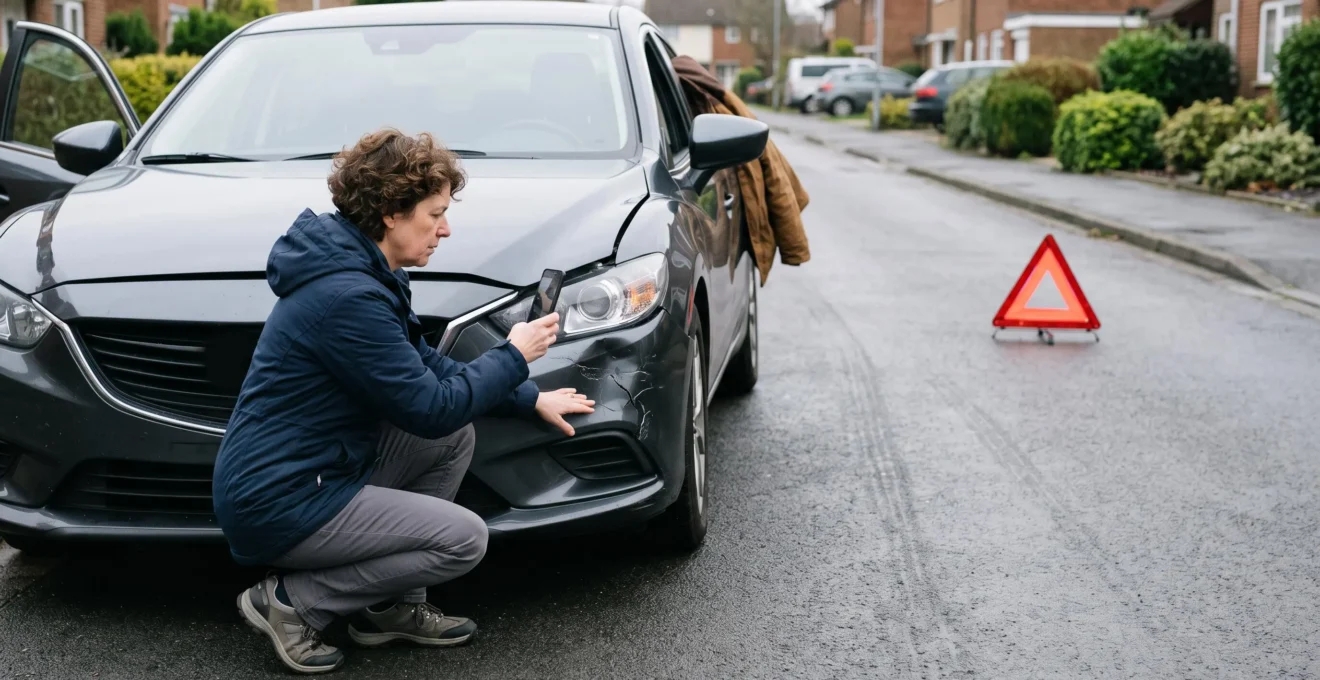
A damaged vehicle can look perfectly drivable while hiding problems that affect steering, braking, occupant protection or the cost of repairs. A cracked bumper might be cosmetic, but the same impact could also affect components underneath the bodywork. Knowing how to distinguish these possibilities helps prevent unsafe decisions and unnecessary expenses.
The first priority after an incident is safety, not estimating the repair bill. Once everyone is safe, the next steps are to identify visible damage, check for warning signs, preserve evidence and determine whether a professional inspection is necessary. The vehicle’s condition, the location of the impact and the behaviour of its mechanical and electronic systems all matter.
Damage assessment also affects insurance decisions. A repair estimate based only on photographs may not identify every affected component, while accepting a settlement before hidden damage has been considered can create complications. A systematic approach helps vehicle owners decide whether to leave the car parked, arrange recovery, request a detailed inspection or proceed with repairs.
Vehicle damage assessment: the essentials
- Visible dents and scratches do not reliably indicate the extent of structural, mechanical or electronic damage.
- Do not drive when there are signs of compromised steering, braking, tyres, restraint systems or fluid containment.
- Photograph the damage, arrange appropriate inspections and clarify potential hidden repairs before finalising an insurance settlement.
- Why Can Minor-Looking Vehicle Damage Hide a Bigger Repair?
- How Can You Inspect a Damaged Car Before Driving It Again?
- Repair or Replace: Which Option Makes Sense for Damaged Car Parts?
- Which Damage Signs Mean You Should Stop Using the Car Immediately?
- When Should Hidden Damage Be Checked After a Collision?
- Why Can Low-Speed Collision Damage Cost More Than It Looks?
- How Should You Report a Stolen Car Without Delaying the Insurance Claim?
- What Should You Do When a Collision Leaves Your Car Damaged?
Why Can Minor-Looking Vehicle Damage Hide a Bigger Repair?
Minor-looking vehicle damage can conceal expensive repairs because exterior panels do not reveal everything beneath them. Bumper covers, reinforcement structures, mounting brackets and electronic sensors may absorb or transmit collision forces without showing obvious external deformation. Damage severity therefore depends on the components affected, not simply the size of the visible dent.
Modern vehicle construction uses several layers of components to manage impact energy. A bumper assembly may include a painted plastic cover, an energy absorber, a reinforcement beam and mounting structures. The cover can flex during a collision and return close to its original position even when underlying components have cracked, bent or shifted.
This explains why a superficial inspection can underestimate the extent of damage. Broken attachment points, compressed energy absorbers or displaced reinforcement components may become apparent only after a repairer removes the exterior covering.
Electronic equipment adds another dimension. Parking sensors, radar units and cameras may sit within or behind vulnerable body panels. Even if the device itself survives, its mounting position can change enough to require inspection or recalibration.
Up to 37.6%
The share of estimated collision repair costs attributable to advanced driver-assistance system work in certain scenarios examined by AAA. This was a scenario-specific finding involving three 2023-model-year vehicles, not an average for all collision repairs.
AAA research on advanced driver-assistance system repair costs, December 2023.
Vehicle owners can also look for indirect indications that the impact reached deeper components. These include uneven gaps between body panels, doors that require more force to close, a bonnet that no longer sits flush or a vehicle that pulls to one side after an incident.
None of these observations independently proves structural damage. However, each justifies further investigation, especially when the affected area is close to a wheel, suspension mounting point or load-bearing structure.
Insurance decisions should reflect this uncertainty. An initial estimate may cover only accessible damage, so owners should ask whether further inspection and supplementary estimates are possible before accepting a final settlement. The availability of additional payment depends on the policy, the insurer’s procedures and applicable local rules.
The practical distinction is between what can be seen immediately and what requires professional examination. That distinction should guide the inspection before the car is used again.
How Can You Inspect a Damaged Car Before Driving It Again?
Inspect a damaged car by working systematically from the impact point towards surrounding panels, wheels, tyres and visible underbody components. Check for leaks, loose parts, lighting defects and changes in how doors or the bonnet operate. If any safety-related condition is uncertain, do not drive; arrange a professional inspection or vehicle recovery instead.
Begin only after the vehicle is in a safe location, away from moving traffic. If the incident occurred on a busy road, prioritise personal safety and follow local emergency procedures rather than attempting a roadside inspection.
Start with the area that received the impact. Look for cracked paint, broken plastic, displaced trim and unusual gaps. Continue along adjacent panels because collision forces can travel beyond the point of contact.
Move towards the wheels and tyres. Examine accessible sidewalls for cuts, bulges or exposed internal material. Check whether a wheel appears displaced within its arch or whether the car sits unusually low at one corner. Any such finding calls for professional assessment before driving.
Without crawling underneath the vehicle, look from a safe position for dangling covers, damaged exhaust components or fresh fluid on the ground. Do not touch unidentified fluids, reach near moving parts or work beneath a vehicle supported only by a jack.
When the stationary inspection reveals no concerning signs, check exterior lights, indicators, doors and the luggage compartment. Observe the dashboard for new warnings when the ignition is switched on. If the vehicle manufacturer permits a normal engine-start check and there is no evidence of leakage or mechanical damage, note any unusual sounds or warning messages.
A short, low-speed functional check may be appropriate only when the vehicle is reasonably believed to be safe, local conditions allow it and no impact-related safety concerns remain. It should not be used to test a car with suspected steering, brake, suspension or tyre damage. Stop immediately if abnormal vibration, noise, steering behaviour or braking response appears.
Five checks to document before deciding to drive
- Photograph the impact area: save wide views and close-ups showing the damage and surrounding panels.
- Inspect wheels and tyres: record any visible cuts, bulges, displacement or unusual ride height.
- Check for leaks and loose parts: photograph suspicious fluid spots or hanging components without touching them.
- Verify basic functions: record the condition of lights, accessible closures and any dashboard warnings.
- Write a condition summary: note the incident location, inspection findings and whether professional recovery or assessment is needed.
Completing these checks does not certify roadworthiness. Their purpose is to identify obvious risks and establish when professional intervention is necessary before choosing between repair and replacement.
Repair or Replace: Which Option Makes Sense for Damaged Car Parts?
Repairing a damaged component makes sense when an approved method can restore its intended function, safety and durability. Replacement is generally more appropriate when damage compromises a critical system or when the manufacturer specifies replacement. The decision should account for repairability, total cost, parts availability, insurance coverage and the vehicle’s value.
The function of the component matters more than its appearance. A scratched decorative panel and a damaged suspension component cannot be assessed using the same criteria.
Safety-critical systems require particular caution. Airbags, seatbelt pretensioners, structural crash-management components, steering mechanisms and braking equipment must be evaluated using the vehicle manufacturer’s procedures. Some damaged parts require replacement; others may have approved inspection or repair methods. A generic rule that every safety-related component must always be replaced would be too broad.
Cosmetic components offer more flexibility. A repairer may be able to restore certain surface scratches, small dents or removable trim pieces without replacing the entire assembly, provided the method is suitable for the material and component.
The following comparison helps organise the decision.
| Assessment factor | Repair may be appropriate | Replacement may be appropriate |
|---|---|---|
| Component function | Cosmetic or non-critical part | Safety-critical part requiring replacement under approved procedures |
| Damage extent | Localised and fully accessible damage | Cracking, significant deformation or concealed damage affecting function |
| Manufacturer instructions | An approved repair method exists | Repair is prohibited or cannot meet the required standard |
| Total cost | Durable restoration is economically reasonable | Repair complexity, repeat work or associated costs exceed replacement value |
| Insurance assessment | The repair method is accepted under the applicable claim | The policy, assessment or applicable rules require a different outcome |
Replacement parts themselves introduce choices. Original-equipment parts, aftermarket alternatives and appropriately sourced recycled components may differ in cost, compatibility, warranty terms and availability. Their suitability should be confirmed for the particular vehicle and safety system, rather than judged solely by price.
Insurance can also influence the larger repair decision. When restoring the entire vehicle becomes economically impractical relative to its pre-incident value, it may be classified as a total loss or written off.
The National Association of Insurance Commissioners provides consumer information on auto insurance, including considerations affecting total-loss claims in the United States. Thresholds and procedures differ across jurisdictions and policies; there is no universal percentage that determines every write-off decision.
A seemingly inexpensive repair can become costly if it fails to restore the affected component or triggers further work. Warranty consequences also depend on the actual component, the repair method and applicable warranty terms; replacement with a non-original part does not automatically invalidate an entire vehicle warranty.
Before authorising work, request an itemised estimate that identifies safety-related repairs, parts choices, calibration requirements and any components awaiting further inspection. That becomes especially important when the vehicle shows signs it should not be driven.
Which Damage Signs Mean You Should Stop Using the Car Immediately?
Stop using a damaged car when an impact may have compromised steering, braking, tyres, suspension, structural integrity or occupant protection. Deployed airbags, significant fluid leaks, smoke, burning smells, abnormal wheel positions and safety-system warning lights are strong reasons not to drive. Arrange professional recovery and inspection rather than relying on whether the engine still runs.
The following warning signs deserve immediate attention:
- Deployed airbags: the restraint system has operated and requires professional restoration before normal use.
- Brake or steering abnormalities: unusual pedal response, significant pulling, unexpected steering effort or related dashboard warnings.
- Wheel or suspension deformation: visible displacement, damaged tyres, abnormal ride height or components contacting the bodywork.
- Fluid leaks: unidentified oil, coolant, brake fluid or fuel escaping from damaged components.
- Smoke, unusual heat or burning smells: possible mechanical, electrical or fuel-system hazards.
- Distorted closures or body structures: doors that jam, a bonnet that cannot latch securely or visible deformation near structural joints.
An airbag deployment is particularly significant. Airbags are single-use devices, so deployment leaves the affected restraint equipment unable to provide its intended protection in another collision until properly restored.
The US National Highway Traffic Safety Administration advises that deployed airbags should be replaced at an authorised repair centre before the vehicle is driven again, as explained in its guidance on airbag safety and replacement.
Deployment does not, by itself, establish a specific impact speed, the amount of structural damage or whether the vehicle is beyond economic repair. Those questions require separate assessment.
Not every puddle is a mechanical leak. Water from an air-conditioning system can appear beneath an otherwise functioning car, for example. After a collision, however, an unfamiliar fluid should not be assumed harmless. If its origin is uncertain, avoid starting or moving the vehicle until the situation is assessed.
On electric or hybrid vehicles, additional precautions apply. A damaged high-voltage battery enclosure, exposed electrical components, unusual fumes or signs of battery overheating require specialist attention. Do not touch damaged high-voltage equipment or attempt to inspect it yourself.
The less obvious warning signs are equally relevant. A car may move normally at parking speed despite compromised suspension geometry, damaged crash structures or an insecure bonnet latch. These defects can become dangerous under braking, at higher speeds or during another collision.
Continuing to drive a vehicle known to be unsafe may also create roadworthiness and insurance complications. The precise consequences depend on local law, policy wording and the circumstances of any subsequent incident.
When safety is uncertain, professional recovery is the more prudent choice. Once the vehicle is secure, the next question is how thoroughly hidden damage needs to be investigated.
When Should Hidden Damage Be Checked After a Collision?
Hidden damage should be considered as soon as a collision occurs and investigated more thoroughly when the vehicle reaches a qualified repair facility. Initial checks identify urgent safety concerns, while dismantling can expose damage concealed by outer panels. New symptoms appearing after repairs also justify further inspection and documentation.
These are different stages of the same assessment process rather than interchangeable inspections.
Immediately after the incident, record the impact location, visible deformation, dashboard warnings and any unusual behaviour. This provides an initial account of the vehicle’s condition and helps a repairer identify which systems deserve attention.
At the repair facility, the inspection can become more specific. Removing a bumper cover may reveal damage to energy absorbers, reinforcement beams, brackets or wiring. Wheel impacts may justify suspension and alignment measurements, while damage around driver-assistance equipment may call for diagnostic checks or calibration under manufacturer procedures.
The inspection depth should match the collision characteristics.
| Impact area | Potentially affected components | Inspection priority |
|---|---|---|
| Front or rear bumper | Reinforcement, absorbers, mounts, sensors | Examine concealed bumper components and relevant electronics |
| Wheel or corner of vehicle | Tyres, wheels, suspension, steering | Check geometry, mechanical components and related mounting points |
| Underbody | Protective panels, fluid systems, structural parts, battery housing where fitted | Inspect affected underbody systems using appropriate equipment |
| Door or side panel | Door structures, hinges, latches, adjacent sensors | Check fit, operation, local structure and fitted safety systems |
| Collision with airbag deployment | Restraints, sensors, control components, surrounding structures | Undertake a manufacturer-guided safety and structural assessment |
Some problems may emerge only after ordinary use resumes. Intermittent electrical faults, unexplained driver-assistance warnings, new noises or small leaks can indicate components missed during the initial assessment.
For example, a camera or radar system may require attention after repairs affect its mounting position. A warning that appears days later should be documented rather than dismissed simply because the exterior panel looks correct.
Owners should notify the repairer and insurer promptly when additional damage is suspected. Where the claim procedure allows, a supplementary estimate can document new findings before further work is authorised.
Late discoveries can be more difficult to connect to the original event, particularly after substantial additional use or a final settlement. That does not establish that later claims are automatically excluded, but it makes contemporaneous evidence valuable.
A detailed assessment should be completed before relying on an initial cosmetic estimate as the final repair scope. This matters especially in collisions that appear too minor to cause expensive damage.
Why Can Low-Speed Collision Damage Cost More Than It Looks?
Low-speed collision repairs can be unexpectedly expensive because impact-absorbing parts, electronic equipment and calibration requirements may be affected even when exterior damage is limited. A bumper that looks lightly scratched can conceal broken mounting points or damaged sensors. Repair cost reflects the systems involved, not just collision speed or visible damage.
Vehicle bumpers serve several purposes. Their components can help manage low-speed impact energy and contribute to pedestrian protection, while also accommodating styling, lighting and electronic equipment.
Some components are intended to deform or absorb energy. A bumper cover may conceal damage to an absorber, a reinforcement beam or the brackets connecting those components to the vehicle.
Repairing these parts can require removal and refitting of the outer assembly, replacement of affected components and checks to confirm that everything is positioned correctly.
The electronic equipment fitted to modern vehicles can substantially increase the work involved. Parking sensors, cameras and radar units may require replacement, diagnostic procedures or recalibration depending on the damage and the manufacturer’s instructions.
AAA study: Advanced systems in minor collision repairs
In research published in December 2023, AAA evaluated three 2023-model-year vehicles across four repair scenarios, including minor front and rear collisions.
The estimated average advanced driver-assistance component replacement cost was $684 in the minor rear-impact scenario, representing 40.9% of the average total estimate of $1,698. In the minor front-impact scenario, the corresponding component cost averaged $1,540, or 13.2% of the total estimate. These were historical US estimates for the tested vehicles and scenarios, not universal repair prices.
This illustrates why repair costs cannot always be predicted from the size of a dent. The same visible damage can involve different repair requirements depending on equipment, impact location and vehicle construction.
An older car with fewer electronic systems may have a simpler repair scope, but age alone is not a reliable predictor of cost. Parts availability, corrosion, structural damage and vehicle-specific procedures can still complicate repairs.
Likewise, not every small collision damages sensors. The correct approach is to identify potentially affected equipment and confirm whether inspection, replacement or calibration is required.
When obtaining an estimate, ask the repairer to separate confirmed visible damage from components requiring examination after dismantling. This helps distinguish an initial estimate from a completed damage assessment and supports a clearer insurance discussion.
Collision damage is not the only situation in which prompt documentation and insurance communication matter. Vehicle theft requires a different reporting process, with its own evidence and timing considerations.
How Should You Report a Stolen Car Without Delaying the Insurance Claim?
Report a stolen car promptly to the police and notify your insurer without unnecessary delay, following the reporting requirements in your location and policy. Keep the police reference, vehicle identification details and relevant key information available. Accurate, consistent documentation helps the insurer investigate the loss and reduces avoidable requests for clarification.
Theft claims differ from collision claims because the vehicle may not be available for inspection. Instead of documenting physical damage at the scene, the owner must establish the vehicle’s identity, the circumstances in which it disappeared and the information relevant to the reported theft.
Start by contacting the appropriate law enforcement authority. Provide factual details about where the vehicle was last seen, when it was noticed missing and who had legitimate access to it.
Obtain a report or reference number where available. If the formal police document has not yet been issued, do not automatically delay notifying the insurer. Many claims processes can begin while supporting paperwork is being obtained.
The US National Insurance Crime Bureau explains these initial steps in its instructions for reporting a stolen vehicle. The guidance is US-focused, so owners elsewhere should also follow their local police procedures and insurance conditions.
Before contacting the insurer, collect the information reasonably available:
- The vehicle identification number (VIN), registration number, make, model and colour.
- The approximate date, time and location of the suspected theft.
- The police report or reference number, if already issued.
- The number and whereabouts of known vehicle keys, including spare keys.
- Relevant information about authorised drivers or other individuals with access to the vehicle.
- Available photographs, tracking records, dashcam footage or other potentially relevant evidence.
Keep copies of submitted documents and a record of communications. If information is uncertain, say so rather than estimating with unwarranted confidence. Correct any discovered errors promptly so the insurer and police have consistent factual accounts.
Service records, proof of ownership, modifications and additional documentation may be requested depending on the insurer and circumstances. These requirements should not be treated as identical across policies.
Unlike a straightforward physical damage assessment, a theft claim may involve a recovery investigation, verification of ownership and additional checks before settlement. No universal investigation or payment period applies across English-speaking countries.
If the vehicle is recovered, inform the insurer and police promptly and ask how to arrange safe inspection and recovery. Do not assume that a recovered car is mechanically safe or that previous ownership and settlement arrangements remain unchanged.
Whether the incident involves theft or collision damage, the most useful principle is the same: prioritise safety, preserve accurate evidence and follow the relevant claim procedures before making irreversible decisions.
Key takeaways before taking action
- Establish personal safety and vehicle roadworthiness before deciding whether the car can be moved or driven.
- Preserve photographs, incident details and inspection findings before repairs or settlement decisions change the available evidence.
- Use professional assessments and the applicable insurance process to decide what should be repaired, replaced or investigated further.
What Should You Do When a Collision Leaves Your Car Damaged?
After a collision, check for injuries, secure the scene and contact emergency services when necessary. Assess whether the vehicle can be moved safely, document the damage and exchange relevant details with other parties. Notify your insurer promptly, then arrange professional inspection and repair authorisation according to the vehicle’s condition and your policy.
The correct sequence prevents the repair discussion from distracting from immediate hazards.
First, stop safely and check whether anyone needs medical assistance. Follow local requirements for emergency reporting and roadside safety. If there is smoke, a fuel leak, fire risk, exposed electrical equipment or another serious hazard, move people to a safe location rather than examining the vehicle.
Next, determine whether the vehicle is obstructing traffic. Moving an otherwise safe-to-move car out of danger may be appropriate or required in some jurisdictions. However, a car with suspected steering, suspension, brake or tyre damage should not be driven simply to preserve traffic flow.
Photographs of the vehicles’ original positions can help document the incident when taking them is safe and does not delay necessary action. Do not remain in an active traffic lane to obtain evidence, and do not move a person who may have a serious injury unless necessary to avoid immediate danger.
Once the scene is secure, photograph the relevant evidence. Include general views showing road layout, vehicle positions where still available, visible damage, debris and surrounding conditions. Capture close-ups of affected panels, wheels and other components without disturbing unsafe areas.
Exchange factual details with the other parties as required locally. These may include names, contact information, vehicle registrations and insurance information. Where applicable, record witness details and obtain the official incident reference.
Avoid speculating about causes, injuries or responsibility. Describe what you directly observed, distinguish those observations from assumptions and follow the applicable reporting obligations. Accurate factual information is more useful than an immediate attempt to determine legal fault at the roadside.
Notify the insurer within the timeframe required by your policy or local rules. Ask how to obtain an assessment, whether a particular repair facility must be used, how recovery costs are handled and what happens if hidden damage is identified during repairs.
A useful decision sequence is:
- Protect people: check for injuries and immediate hazards.
- Secure the scene: follow local safety and emergency procedures.
- Determine whether movement is safe: arrange recovery if vehicle condition is uncertain.
- Preserve evidence: capture relevant photographs and factual details.
- Report the incident: complete necessary police and insurance notifications.
- Arrange an appropriate assessment: identify visible and potentially hidden damage.
- Review repair options: confirm repair methods, parts, costs and claim authorisation before proceeding.
These steps also reduce the risk of authorising an incomplete repair. A clear record of the incident helps the repairer investigate damage consistently with the impact, while prompt notification gives the insurer an opportunity to assess the claim before evidence changes.
Not every incident requires the same level of professional inspection. A superficial scratch with no other indications of damage may justify a limited assessment, whereas a wheel impact, deployed airbag, fluid leak or malfunctioning safety system demands a more thorough response.
Before driving or approving repairs, document what you know, identify what still needs professional verification and confirm the next step with the appropriate repairer or insurer. The aim is not to make every damaged vehicle undergo the most extensive possible repair, but to choose a response proportionate to the actual risks and evidence.
Can a car be unsafe even if the dashboard shows no warning lights?
Yes. Some mechanical and structural problems do not trigger electronic warnings. A damaged wheel, tyre, suspension component or body structure may remain undetected by onboard monitoring systems. The absence of warning lights does not establish that a vehicle is roadworthy after a collision.
Should a damaged bumper always be removed for inspection?
Not necessarily. The need to remove a bumper cover depends on impact severity, visible deformation, the vehicle’s construction and the equipment fitted behind it. A qualified repairer can determine whether concealed components require closer examination. A visibly small dent does not automatically justify dismantling, but it also cannot rule out hidden damage.
Can additional damage be added to an insurance claim after the first estimate?
Potentially. Some claims processes allow supplementary estimates when repairers discover additional damage during dismantling. Approval depends on the policy, the relationship between the new findings and the incident, settlement status and applicable rules. Notify the insurer promptly and retain photographs and repairer documentation before authorising additional work.
Does a vehicle need an alignment check after every minor collision?
No. An alignment check is particularly relevant when an impact involves a wheel, suspension or steering component, or when the vehicle develops pulling, uneven steering behaviour or other geometry-related symptoms. The need for measurement should follow the impact circumstances, inspection findings and manufacturer procedures.
Who should decide whether a collision-damaged car is safe to drive?
A qualified automotive professional should assess roadworthiness whenever structural, mechanical or safety-system damage is suspected. Vehicle owners can identify obvious warning signs, but a visual walk-around cannot replace appropriate professional inspection, diagnostic testing or manufacturer-specified procedures. If there is reasonable doubt about safety, arrange recovery rather than driving to the workshop.