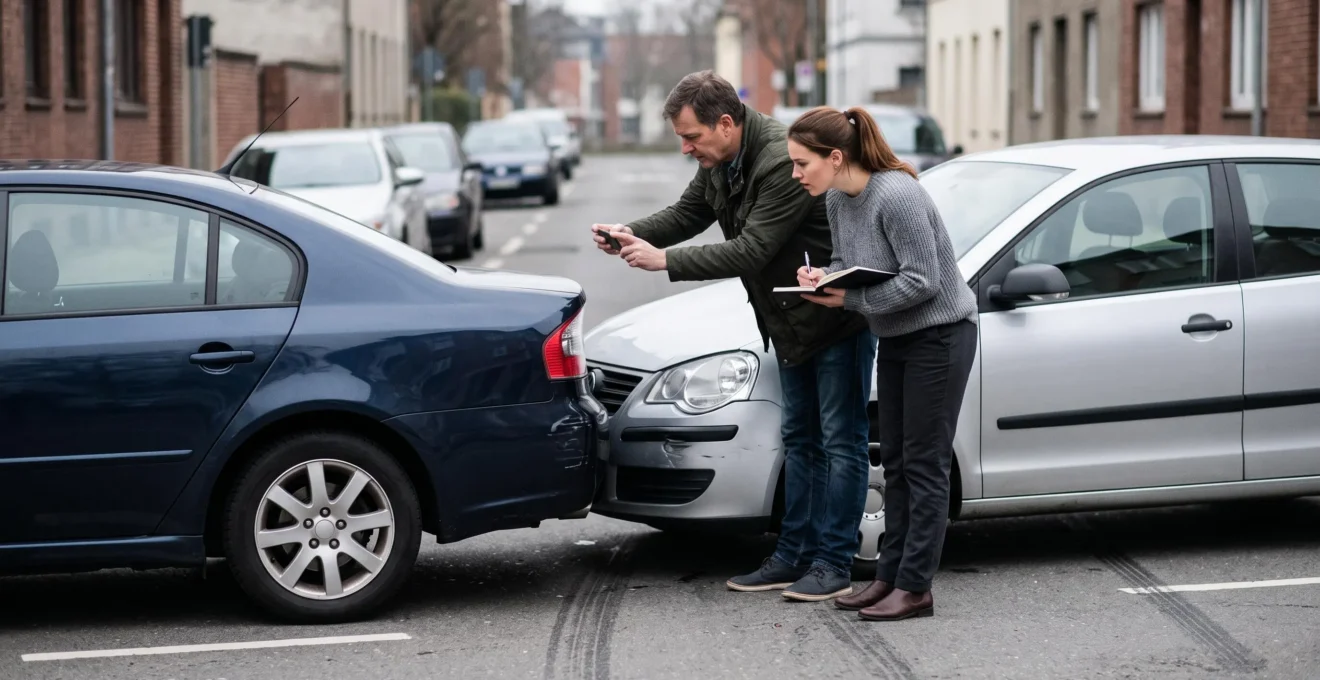
Two drivers can experience the same collision and leave with entirely different explanations. One recalls having the right of way; the other remembers a vehicle moving unexpectedly into their path. Neither account, by itself, establishes who was legally responsible.
When drivers disagree about a crash, insurers investigate what happened, compare the available evidence and assess how applicable road rules and each driver’s conduct affect responsibility. They may accept a claim, dispute it, negotiate a settlement or conclude that responsibility is shared.
The outcome can influence which insurer pays, whether a policyholder must initially pay an excess or deductible, and how the claim affects future insurance costs. However, liability standards, claims procedures and financial consequences differ across jurisdictions and policies.
Understanding the assessment process helps claimants provide reliable information, recognise weaknesses in a decision and challenge an outcome using relevant evidence rather than competing assertions.
Crash liability assessment: essential points
- Insurers compare driver accounts with physical evidence, road conditions, independent observations and applicable traffic rules.
- No single evidence type automatically establishes fault. Consistency, context and reliability determine its usefulness.
- A disputed liability decision may be reviewed when relevant evidence was overlooked, new information emerges or the insurer’s assessment appears unreasonable.
- Why Can Liability Remain Unclear After a Seemingly Simple Collision?
- How Can You Describe an Accident Clearly for a Liability Assessment?
- Dashcam, Witness or Vehicle Damage: Which Can Clarify Liability Best?
- Which Statements Can Complicate a Liability Assessment After a Crash?
- When Can an Insurer Reconsider an Earlier Liability Decision?
- Police Report, Witness or Dashcam: Which Evidence Can Clarify Responsibility?
- When Can a Vehicle Need a Second Insurance Assessment?
- How Is Driver Responsibility Decided After a Road Incident?
Why Can Liability Remain Unclear After a Seemingly Simple Collision?
Liability can remain uncertain after a straightforward-looking collision because the visible damage does not necessarily reveal what each driver did beforehand. Insurers must establish the sequence of events, consider applicable duties of care and determine whether either driver’s conduct contributed to the loss. Conflicting accounts and incomplete evidence can make that assessment difficult.
Consider a hypothetical collision between a vehicle reversing from a parking space and another travelling along the access lane. The reversing driver says the approaching vehicle was moving too quickly. The other driver says there was insufficient warning before the reversing manoeuvre.
Both descriptions might contain accurate observations. Neither alone establishes the relevant road positions, available visibility or whether either driver had a reasonable opportunity to avoid impact.
Differences between accounts are not automatically evidence of dishonesty. Drivers may see different parts of an incident because of viewing angles, obstructions, movement and the limited time available to observe the developing hazard. Stress and imperfect recollection can further affect descriptions.
A useful liability assessment separates three layers:
- Observable facts: road layout, vehicle positions, damage locations, markings and recorded movements.
- Interpretations: whether a manoeuvre was safe, whether one driver had priority or whether there was sufficient time to react.
- Conclusions: whether the evidence supports full responsibility, shared responsibility or an outcome that cannot confidently be resolved.
In a negligence-based system, responsibility generally involves examining duties, breaches and the causal contribution of conduct to the damage. Other legal frameworks and insurance arrangements may apply different rules. Even where the physical circumstances appear obvious, the relevant legal test must still be considered.
The UK’s Financial Ombudsman Service guidance on fault claims explains that insurers commonly have contractual authority to make liability decisions using evidence such as driver accounts, witness statements, engineering reports and CCTV footage.
An unresolved claim may involve further investigation, negotiations or a settlement reflecting litigation risk. Repair payment and recovery of costs can remain uncertain, while the eventual effect on premiums or no-claims discounts depends on the policy and market.
The practical priority is therefore to establish the sequence of events before drawing conclusions about responsibility. A precise accident description provides the starting point.
How Can You Describe an Accident Clearly for a Liability Assessment?
A useful accident description explains what happened in chronological order, identifies what the driver personally observed and separates known facts from estimates. It should cover the location, direction of travel, road position, relevant movements, visibility and point of impact. Neutral, specific wording allows the insurer to compare the account with independent evidence.
Begin immediately before the incident, not at the moment of impact. Identify the road or junction, the direction of travel and the lane or position occupied. Describe what changed, what you noticed, what action you took and where the vehicles came to rest.
Include the approximate time, weather, lighting, road surface and any signs or markings that affected the manoeuvre. If speed is relevant, explain whether the figure comes from a speedometer reading, a recording or an estimate. Do not turn an estimate into a stated measurement.
For example, “The other vehicle came out of nowhere” offers little reconstructable information. A more useful description might be: “As I approached the junction, I saw a vehicle enter from the side road. I applied the brakes before the vehicles collided.” The second formulation identifies observations and actions without claiming knowledge of the other driver’s intentions.
Accurate statements can include unfavourable facts. Neutrality does not mean concealing a distraction, a missed observation or an unsuccessful manoeuvre. It means reporting what actually occurred without speculation or unsupported conclusions about legal fault.
At the scene, photographs should capture both close-up damage and the wider environment. Where safe and lawful, record final vehicle positions, road markings, signs, sightlines and relevant surface conditions before vehicles are moved. Never delay emergency assistance or obstruct traffic merely to preserve photographs.
The US National Association of Insurance Commissioners provides NAIC advice on filing an auto insurance claim, including documentation of accident circumstances, vehicle information, witnesses, photographs and communication with claims representatives.
Prepare a five-part accident evidence file
- Write a chronological account from the approach to the final vehicle positions. Deliverable: a dated statement distinguishing observations from estimates.
- Identify the road layout, relevant markings and visibility conditions. Deliverable: an annotated scene sketch.
- Organise photographs showing the surrounding road, each vehicle and the impact areas. Deliverable: a labelled photo folder containing the original files.
- Record the other driver’s identification and insurance information, together with any independent witness contacts. Deliverable: a verified contact sheet.
- Preserve the original report and subsequent correspondence. Deliverable: a chronological claims record identifying any corrections or additional information.
Do not sign a joint description or diagram that you know is inaccurate simply to conclude the exchange quickly. If the document has already been signed, preserve it and promptly explain any specific error in a separate, dated correction. The effect of a signed statement depends on the jurisdiction and circumstances.
Once the factual account is clear, the next question is which evidence can verify it and which details remain open to interpretation.
Dashcam, Witness or Vehicle Damage: Which Can Clarify Liability Best?
Dashcam footage, independent witnesses and vehicle damage can each clarify responsibility, but none is universally superior. Footage may establish movements, witnesses may describe events outside the camera’s view, and damage can test whether competing accounts fit the physical impact. Their combined consistency is usually more useful than relying on a single source.
A recording can reveal lane movements, traffic signals, vehicle trajectories and the interval between a developing hazard and the collision. However, camera position, field of view, missing frames and obstructed sightlines may limit what it establishes. An apparently clear recording can still leave questions about speed, visibility or events occurring outside the frame.
Independent witnesses can supply observations from another position, particularly where the drivers’ views were restricted. Their usefulness depends on what they actually saw and whether their account describes the moments before impact rather than only the aftermath.
Vehicle damage provides a different kind of evidence. The point of contact, distribution of deformation and any associated marks can help assess the relative positions and movements of the vehicles. An appropriately qualified assessor may compare damage on both vehicles with the proposed collision sequence.
Damage patterns still require interpretation. Pre-existing defects, secondary contact and movements after the initial impact can complicate the assessment. An isolated photograph of a dent cannot reliably establish every aspect of the collision.
The relative usefulness of the available evidence can be considered according to the disputed question:
| Collision issue | Potentially useful evidence | Important limitation |
|---|---|---|
| Rear-end impact | Damage locations, vehicle positions and footage | Impact location alone does not establish every preceding manoeuvre. |
| Intersection priority | Traffic signal footage, independent witnesses and road markings | A witness may not have seen the relevant signal or approach. |
| Disputed lane change | Dashcam footage, lateral damage and lane markings | The contact pattern may not establish when the manoeuvre began. |
| Reversing collision | Camera footage, positions and independent observations | Final positions may differ from positions at first contact. |
These are investigative examples, not automatic rules for assigning fault. Insurers must still consider the relevant traffic laws and the overall evidence.
Evidence is most persuasive when independently obtained information supports the same reconstruction. Conversely, contradictions should be examined rather than ignored, especially when they affect the proposed sequence of events.
Which Statements Can Complicate a Liability Assessment After a Crash?
Statements complicate liability assessments when they conflict with earlier accounts, contain unsupported assumptions or contradict physical evidence. An apparent admission may also influence how an insurer interprets events. The important distinction is between a factual description of conduct and a conclusion about legal responsibility, which must be assessed under the applicable rules.
A disagreement between two drivers is the most visible problem. More difficult situations arise when a single driver’s account changes materially between the roadside exchange, the initial claim notification and later correspondence.
Changes are not necessarily dishonest. A driver may remember additional details, review photographs or discover that an initial assumption was incorrect. Nevertheless, a significant correction should be identified and explained rather than silently substituted for the original statement.
Consider three types of wording:
- Observation: “I applied the brakes before the collision.” This reports a specific action but does not establish whether the braking was sufficient.
- Potentially relevant admission: “I looked away from the road immediately before the impact.” This may indicate distraction, but the significance depends on the surrounding circumstances.
- Unsupported conclusion: “The other driver was entirely responsible.” Without supporting facts, this adds little to the reconstruction.
An apology at the scene should not automatically be treated as a definitive admission of legal liability. Its significance depends on what was said, the context and local law. Equally, drivers should not assume that avoiding particular words will prevent their actual conduct from being investigated.
Signed joint accident forms can create complications if the diagrams, ticked boxes or narrative fail to reflect what occurred. Where a correction is needed, explain the precise inaccuracy, preserve the original form and provide corroborating evidence where available.
If another driver appears to have deliberately misrepresented events, identify the specific discrepancy instead of making an unsupported fraud allegation. Insurers may compare accounts with engineering findings, independent observations and available recordings. The Financial Ombudsman Service also considers the adequacy of an insurer’s investigation where possible fraud is raised.
A clear record of the original statement, subsequent corrections and supporting evidence becomes particularly important if the insurer’s initial decision is later challenged.
When Can an Insurer Reconsider an Earlier Liability Decision?
An insurer may reconsider a liability decision when new, material evidence emerges, important information was overlooked or a credible error is identified in the original assessment. Reconsideration is not necessarily an automatic entitlement, and disagreement alone may be insufficient. The available review and complaint mechanisms depend on the policy, jurisdiction and stage of the claim.
New evidence may include footage recovered after the initial investigation, a previously unidentified independent witness or a technical report that materially contradicts the original reconstruction.
Another basis for review is a demonstrable problem in the decision-making process. For example, a claimant may establish that the insurer used an incorrect road diagram, misunderstood a statement or reached its conclusion without considering relevant material already supplied.
A challenge is more effective when it identifies the exact reasoning being questioned:
- Request the insurer’s explanation of its liability decision and the evidence on which it relied.
- Identify the disputed factual finding, omitted evidence or apparent inconsistency.
- Provide the relevant documentation, preserving original files where possible.
- Explain how that information could reasonably change the assessment.
- Request a written response and follow the applicable complaints process if the disagreement remains unresolved.
There is an important distinction between asking an insurer to review a file internally and seeking independent examination of the insurer’s handling of the claim.
In the United Kingdom, the Financial Ombudsman Service information on disputing fault claims explains that consumers should first complain to their insurer. They can generally approach the Ombudsman if dissatisfied with a final response or if no final response has arrived within eight weeks.
The Ombudsman examines whether the insurer reached a reasonable and fair decision on the available evidence. It does not automatically conduct an independent reconstruction to determine the collision’s true cause.
In the United States, unresolved complaints may be referred to the relevant state insurance department. Such administrative processes are distinct from litigation and may not determine disputed civil liability between drivers.
Timing matters. Recordings may be overwritten, vehicles may be repaired and witnesses may become harder to contact. Complaint deadlines, contractual conditions and legal limitation periods vary; the UK eight-week complaint escalation point is not a universal deadline for challenging crash liability.
Where a dispute persists, official records and independently obtained observations may help clarify whether the insurer had sufficient grounds for its conclusion.
Police Report, Witness or Dashcam: Which Evidence Can Clarify Responsibility?
A police report, witness statement and dashcam recording serve different purposes in a liability investigation. A police report may document official observations and reported circumstances, a witness may describe events from an independent viewpoint, and footage may preserve visible movements. Their significance depends on what each source actually establishes and whether the accounts are consistent.
Police reports are frequently misunderstood as final decisions about civil responsibility. In many jurisdictions, an officer’s report may record statements, physical observations, scene conditions and enforcement actions without conclusively deciding which driver owes compensation.
An alleged traffic offence may be relevant to a civil liability assessment, but it does not automatically resolve every issue of causation or shared responsibility. Likewise, the absence of a citation or prosecution does not establish that a driver was free from negligence.
Police attendance and reporting obligations vary. Injuries, suspected offences, road obstructions and serious damage may trigger different duties depending on local rules. Where the law permits drivers to exchange details without police attendance, they should still document the incident and follow applicable reporting requirements.
Each source can strengthen a different part of the reconstruction:
- Police documentation may establish what was recorded at the scene, when officers attended and which observations or statements were collected.
- Independent witnesses may help establish whether a signal changed, a vehicle crossed a marking or a manoeuvre began before impact.
- Dashcam footage may show the timing and visible movement of vehicles, while leaving events outside its field of view unresolved.
The strongest evidence is not necessarily the most official-looking document. For example, a contemporaneous recording may directly show a disputed manoeuvre, while a police report may only repeat conflicting accounts supplied by the drivers.
Conversely, a report documenting road conditions and observed damage may provide context that a narrow camera view cannot show.
Where police attended, recording the relevant report reference and details needed to request the report can help the claims process. The insurer can then compare the record with other material rather than relying on its official status alone.
If the remaining disagreement concerns how the vehicles physically contacted each other, a more detailed damage assessment may provide an additional line of inquiry.
When Can a Vehicle Need a Second Insurance Assessment?
A second vehicle assessment may be appropriate when hidden damage appears during repairs, the repair estimate changes materially, the observed damage seems inconsistent with the reported collision or a total-loss valuation is disputed. A further inspection can address repair costs and, in some cases, provide additional evidence relevant to the original liability analysis.
An initial inspection may focus on visible damage. Once damaged panels or components are removed, a repairer can discover additional defects that were not accessible during the first assessment.
Supplemental findings should be distinguished from damage already documented. The insurer may need to establish whether newly discovered defects are attributable to the reported collision, an earlier incident or another cause.
A second assessment can therefore serve two separate purposes: determining an appropriate repair payment and checking whether the physical evidence supports the claimed accident sequence.
For example, in a hypothetical disputed side-impact collision, an initial assessment may identify damage to a door. Subsequent inspection could reveal additional deformation behind the visible panel. That finding might help an assessor evaluate the impact’s physical characteristics, but it would not independently prove which driver breached a road rule.
Claims procedures differ by location. The Washington State Office of the Insurance Commissioner publishes Washington insurance regulator’s auto claims guidance, including requirements concerning supplemental reports and disputed inspections.
Under the Washington rules described in that guidance, insurers have five days to respond to supplemental reports and final invoices. Following a virtual inspection, an insurer has five business days to conduct an in-person inspection when the amount of loss is disputed. These are state-specific requirements, not universal procedures for all English-speaking countries.
A claimant disputing an assessment can ask the insurer to identify which damage was accepted, which was excluded and why. Repairer observations or independent expert findings may assist, although the right to additional inspection and the treatment of associated costs depend on local law and policy terms.
Repair timing deserves particular attention. If damaged components are discarded or repairs completed before relevant evidence is preserved, a later investigation may have fewer opportunities to examine the original condition. Necessary safety measures should not be postponed, and claimants should coordinate documentation and repair authorisation with the relevant parties.
Additional technical findings become most valuable when they can be integrated into the broader reconstruction rather than treated as a separate, conclusive fault determination.
Key takeaways before assessing responsibility
- Check whether the proposed collision sequence is consistent with the available independent evidence and recorded damage.
- Identify the applicable liability rules before interpreting an insurer’s fault classification or settlement decision.
- Separate the decision about responsibility from related decisions about repair costs, recoveries, deductibles and future premiums.
How Is Driver Responsibility Decided After a Road Incident?
Insurers decide driver responsibility by reconstructing the incident from available evidence, applying relevant road rules and assessing whether each driver’s conduct contributed to the collision. Depending on the jurisdiction and evidence, the outcome may involve one driver bearing responsibility, responsibility being shared, or uncertainty remaining. An insurance settlement does not necessarily equal a judicial finding of fault.
The practical process begins with the accident notifications and available statements. The insurer then considers photographs, recordings, witness accounts, official documentation, vehicle inspections and other relevant information.
The evidence is examined against the road circumstances: lane configuration, priority rules, visibility, manoeuvres, vehicle movements and the opportunity each driver had to respond to a developing hazard.
Under a negligence-based framework, the assessment considers whether a relevant duty was breached and whether the conduct contributed to the resulting damage. Rules concerning comparative negligence, contributory negligence and compensation differ substantially across legal systems.
Where both drivers contributed, a shared-responsibility outcome may be appropriate. A 50/50 allocation is one possible result, but equal division is not a universal default merely because the drivers disagree or the evidence is incomplete.
Insurers may also negotiate a settlement based on litigation risk, recoverability and the strength of the available evidence. This means the classification of an insurance claim may reflect the insurer’s ability to recover its outlay rather than a definitive determination that its policyholder caused the accident.
In the United Kingdom, for example, an insurer’s decision to accept liability can be distinct from a judgment that the insured driver was personally responsible. A claim may affect the no-claims discount while the insurer seeks recovery from another party, depending on the policy and the eventual outcome.
In Washington State, the insurance regulator explains that partial fault may reduce the proportion of a policyholder’s deductible recovered through subrogation. Other jurisdictions and policies can apply different recovery rules.
A decision should therefore be understood across several distinct questions:
- What sequence of events is supported by the available evidence?
- Which applicable legal or contractual rules determine responsibility?
- Did one or more drivers contribute to the collision or resulting loss?
- What financial outcome follows under the relevant policy and claims framework?
No criminal prosecution is required for an insurer to assess civil liability, and the absence of a traffic citation is not equivalent to a finding that a driver bears no responsibility. The standards and purposes of enforcement, civil proceedings and insurance claims are different.
The claimant’s most useful contribution is a reliable, traceable evidence file. Original photographs, accurately dated statements, independent contacts and documented correspondence allow the insurer to test competing explanations rather than simply choose between them.
Before accepting or challenging a decision, request a clear explanation of how the insurer reached its conclusion, check it against the available evidence and raise any material omission promptly. That creates a more productive basis for resolving the claim than repeating a general assertion that the other driver was at fault.
Can an insurer accept liability without the driver’s agreement?
In the United Kingdom, most motor policies allow insurers to make their own decisions about accepting liability or settling claims. This does not necessarily mean the insurer has concluded that its policyholder personally caused the accident. The applicable policy wording and legal framework determine the extent of that authority.
Does a 50/50 settlement mean both drivers were equally negligent?
Not necessarily. An equal settlement can reflect an assessment of shared responsibility, but it may also arise from negotiation or evidential uncertainty. Its legal and financial significance depends on the jurisdiction, the settlement terms and whether a court has determined responsibility.
Can a driver challenge fault after the vehicles have been repaired?
A challenge may still be possible, especially when photographs, inspection reports, recordings or other preserved evidence are available. Completed repairs can make further physical examination more difficult. Review rights and deadlines depend on the applicable claims process and local law.
Will a disputed claim automatically increase insurance premiums?
No universal premium increase applies to every disputed claim. The effect can depend on the insurer’s claims classification, recovery of its payments, the policy’s no-claims provisions and underwriting practices. Ask the insurer how the claim has been recorded and whether that classification may change following recovery or review.
Can an independent expert determine which driver was responsible?
An appropriately qualified expert may examine vehicle damage, collision mechanics or other technical evidence and provide findings relevant to responsibility. However, determining legal liability also requires applying the relevant law. An expert opinion is evidence for consideration, not automatically a binding legal determination.