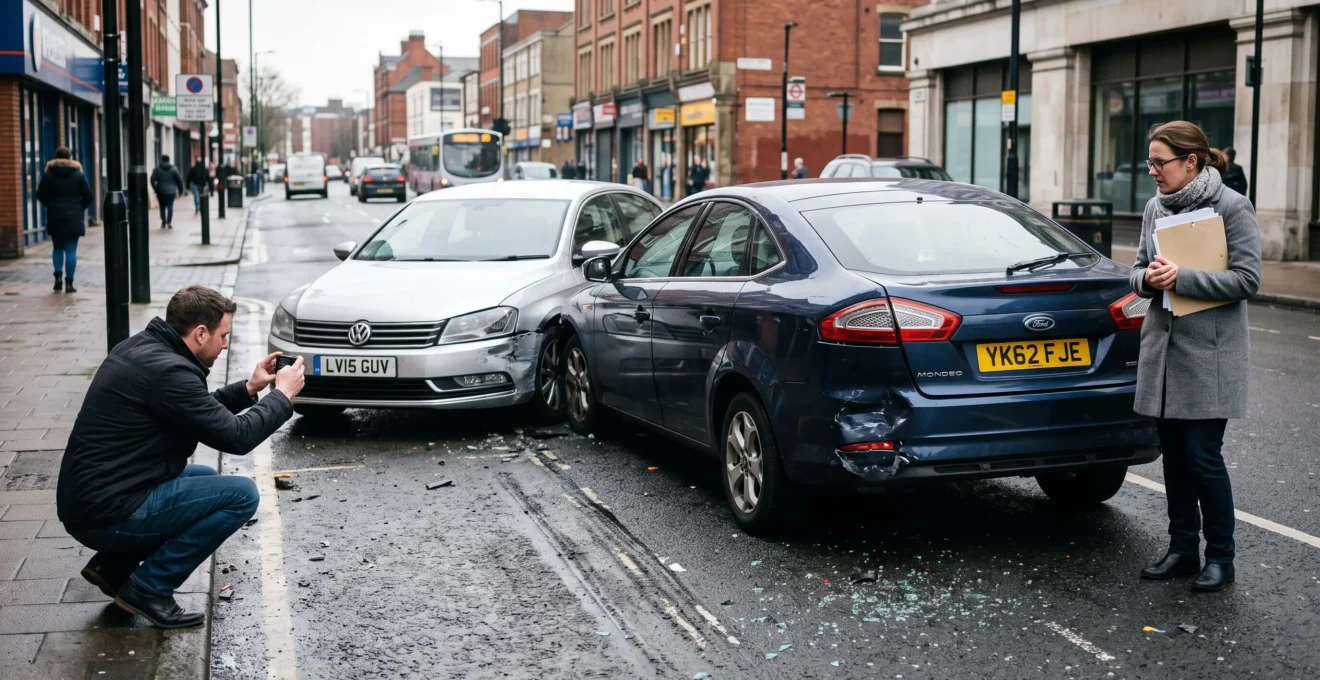
Driver responsibility after a road incident is assessed by examining what happened, which road users failed to meet their legal duties, and whether those failures contributed to the resulting damage or injuries. Insurers consider driver statements, physical evidence, witness accounts and relevant traffic rules before deciding how to handle a claim.
That assessment can have substantial financial consequences. A driver may recover all, part or none of a loss depending on the applicable law and circumstances. The result can also influence insurance deductibles, claim records, no-claims discounts and future premiums.
Responsibility is not necessarily an all-or-nothing finding. Two drivers may contribute to the same collision, while some incidents involve no identifiable second driver at all. Even then, the insurance response depends on the coverage purchased.
Because liability rules and policy terminology vary between countries, this guide distinguishes United States legal principles from United Kingdom claims practices and identifies where local law or individual policy wording determines the outcome.
Driver responsibility after a crash: essential points
- Responsibility is assessed through evidence, applicable driving duties and the connection between a driver’s conduct and the incident.
- Shared responsibility can reduce compensation, but deductibles and future insurance premiums follow separate rules.
- Preserving evidence, exchanging required details and notifying the insurer promptly can help prevent avoidable claim disputes.
- Why Can Shared Responsibility Change the Outcome of a Motor Claim?
- How Can You Protect Your Position After a Crash Without Admitting Responsibility?
- Police Report, Witness or Dashcam: Which Evidence Can Clarify Responsibility?
- Which Roadside Mistakes Can Make Liability Harder to Establish?
- When Is Responsibility Assessed During a Motor Insurance Claim?
- Why Can Comprehensive Cover Help After Damage With No Other Driver Involved?
- Driver Duty or Vehicle Duty: Who Must Ensure Each Requirement Is Met?
- How Do Insurers Assess Liability When Drivers Disagree About a Crash?
Why Can Shared Responsibility Change the Outcome of a Motor Claim?
Shared responsibility changes a motor claim because more than one driver may have contributed to the incident. Depending on the legal system, that finding can reduce compensation or prevent recovery altogether. Insurance deductibles, claim classifications and future premiums may also be affected, but they are calculated under different rules rather than automatically following the percentage of fault.
In the United States, negligence rules illustrate why the same collision can produce different compensation outcomes. Under pure comparative negligence, recoverable damages are reduced according to the claimant’s share of responsibility. Under modified comparative negligence, recovery may be barred once responsibility reaches a particular threshold. Traditional contributory negligence can prevent recovery even when the claimant’s contribution is small, subject to applicable exceptions.
These distinctions are explained in Cornell Law School‘s explanation of comparative negligence. They concern US negligence law and must not be treated as universal rules across English-speaking countries.
Hypothetical example: how fault allocation changes compensation
Assume an eligible negligence claim involves $10,000 in recoverable damages, and the claimant is assigned 40% responsibility.
Under a pure comparative negligence model, the claimant would recover $6,000. Under a modified comparative model with a relevant 50% or 51% bar, that same 40% allocation would generally remain below the exclusion threshold. Under a strict contributory negligence rule, the claimant could recover nothing, unless an applicable exception changes the result.
This example illustrates legal allocation only. It does not calculate a first-party insurance payout, deductible or renewal premium.
The financial consequences should be considered separately:
- Compensation: the law may reduce damages according to the claimant’s responsibility.
- Deductible or excess: the policy determines how much the insured initially bears, whether recovery is possible and whether any reimbursement follows.
- Future premiums: insurers may consider claim history and fault classification, but no fixed percentage increase follows from a particular fault allocation.
Accepting a small share of responsibility merely to accelerate settlement can therefore be costly. Before agreeing, compare three considerations: the strength of available evidence, the financial difference between possible outcomes and the time or expense of challenging the allocation.
A quick settlement may be sensible where the evidence is weak and the disputed amount is minor. It deserves closer scrutiny where an admission could materially reduce compensation or alter the claim record.
Understanding the financial stakes is useful, but preserving the facts immediately after the crash is what gives a driver a stronger basis for discussing responsibility later.
How Can You Protect Your Position After a Crash Without Admitting Responsibility?
A driver can protect their position by securing the scene, complying with legal reporting duties and describing observable facts without making premature conclusions about fault. Accurate details about vehicle movements, road conditions and damage are more useful than speculation. Avoid agreeing to responsibility or a settlement before the relevant evidence and insurance implications have been reviewed.
The immediate priority is safety. Stop, assess injuries, contact emergency services when necessary and avoid standing in traffic. Vehicles should be moved when required for safety or by applicable law; preserving their exact positions must never take priority over preventing further harm.
Once safe, record the scene and exchange the information required locally. In the United Kingdom, GOV.UK guidance on what to do after a road accident explains the identifying details drivers must provide following incidents involving damage or injury. It also requires accident notification to the insurer even when the driver does not intend to claim.
When communicating, separate what you observed from what you believe caused the crash:
- Factual account: “My vehicle was travelling along the road when the vehicles came into contact near the junction.”
- Unverified interpretation: “The other driver must have been speeding.”
- Premature admission: “The accident was entirely my fault.”
An expression of concern or apology is not automatically a binding legal admission in every jurisdiction. Nevertheless, statements about being distracted, failing to see another vehicle or accepting blame can become relevant evidence. Drivers should remain truthful and distinguish uncertainty from a known fact.
Another driver’s insurer may request a recorded statement or propose an early settlement. Before providing a detailed account, check what information must be supplied and consider discussing the request with your own insurer or legal adviser. Do not withhold legally required information or make misleading statements.
A neutral initial communication might read:
“The incident occurred at the stated time and location. I can confirm the vehicle details and the damage I observed. I am preserving the available evidence and will provide an accurate account through the appropriate claims process. I am not yet in a position to determine responsibility.”
This wording does not replace mandatory accident reporting or an insurer’s legitimate information requests. Its purpose is to avoid presenting an unverified conclusion as an established fact.
Five actions to document a crash accurately
- Secure the scene: record whether anyone needs emergency assistance and note the safety actions taken.
- Capture the road context: save dated photographs of vehicle positions, damage, markings, signs and visibility conditions, whenever safe.
- Exchange required information: prepare a written record of the drivers, vehicles and insurance details obtained.
- Identify independent evidence: save witness contact information and note any relevant cameras or recordings.
- Notify the insurer: retain the claim reference and a copy of the factual incident description submitted within the applicable notification period.
Once the immediate record is secure, the next question is which types of evidence can corroborate that account when the drivers remember the incident differently.
Police Report, Witness or Dashcam: Which Evidence Can Clarify Responsibility?
Police reports, independent witnesses and dashcam recordings can all clarify responsibility, but none automatically settles a disputed claim. Their value depends on what they establish, how directly they relate to the collision and whether their reliability can be assessed. Insurers also compare these materials with vehicle damage, road conditions and the drivers’ accounts.
An official police report may document observations, statements, measurements or enforcement action. However, a report that merely repeats what drivers said is different from one recording an officer’s direct observations or supported findings.
An independent witness can provide a perspective unconnected to either driver. Credibility still depends on visibility, distance, attention and whether the person actually saw the relevant movements.
Dashcam footage may establish vehicle positions, traffic signals or sequences of movement more precisely than memory. Yet the recording’s angle, timing and completeness determine what it can prove.
The following comparison helps explain how evidence is evaluated rather than suggesting a universal ranking.
| Evidence | Main strength | Important limitation |
|---|---|---|
| Police report | Official documentation of recorded observations and incident details | May include second-hand accounts or incomplete findings |
| Independent witness | Potentially neutral observations of disputed events | Memory, viewpoint and opportunity to observe can be challenged |
| Dashcam recording | Contemporaneous visual record of events within the camera’s view | Blind spots, missing audio, incomplete footage or timing issues |
| Scene and damage photographs | Visible road layout, contact points and physical consequences | May not establish the movements immediately before impact |
Where sources conflict, insurers assess their consistency, independence and connection to the physical evidence. A reliable independent witness or clear recording may be more persuasive than an unsupported driver account, but neither has automatic priority in every case.
A camera looking forward may show that another vehicle entered a junction, while revealing little about traffic approaching from the side. Similarly, a recording may show the collision without establishing whether either driver was distracted beforehand.
Preserve the original recording where possible, including its timing information, and avoid editing the only available copy. Photographs taken from several safe angles and independent witness details can fill gaps left by a single camera.
Evidence should also be considered in context. Even a clear recording cannot independently answer every legal question about driving duties, causation or the level of responsibility assigned to each party.
The best evidence package usually combines contemporaneous records with a coherent explanation. Several common roadside errors can undermine that combination before an insurer begins investigating.
Which Roadside Mistakes Can Make Liability Harder to Establish?
Roadside mistakes make liability harder to establish when they remove evidence, create inconsistencies or prevent an insurer from checking damage. Missing photographs, premature admissions, incomplete identification details and repairs carried out without appropriate documentation can all complicate a later investigation. The consequences depend on local reporting duties, policy conditions and the evidence that remains available.
A frequently overlooked problem is the delay between the collision and the insurer’s investigation. By the time the claim is reviewed, vehicles may have been repaired, weather conditions may have changed and witnesses may no longer be contactable.
Four errors are particularly important:
- Moving vehicles without documenting their positions when safe to do so: this can remove useful information about stopping points and collision geometry. Safety and legal instructions always take precedence.
- Making unsupported admissions: written or verbal statements may later conflict with physical evidence and require clarification.
- Leaving without exchanging legally required information: this can complicate identification, reporting and compliance with accident-related duties.
- Authorising repairs before the insurer can assess the damage: this may prevent inspection of relevant physical evidence or create disputes about repair costs and policy procedures.
The causal effect can be significant. Imagine two drivers disagree about which lane a vehicle occupied. Without photographs showing road markings, damage positions or reliable witnesses, the insurer may have to work with competing accounts that cannot be independently verified.
That does not mean the claim will automatically be rejected or that either account will automatically prevail. It means fewer objective details are available for evaluating the competing explanations.
Non-cooperation creates another difficulty. If the other driver refuses to provide details or gives inconsistent information, do not attempt to force cooperation or create a confrontation. Instead, record what can safely and lawfully be observed: registration number, vehicle description, location, time, apparent damage and independent witness information.
Report the refusal through the appropriate police and insurance channels where required or appropriate. The absence of cooperation should be described factually rather than treated as proof that the other person caused the accident.
If repairs are urgently necessary for safety, document the damage and communicate with the insurer about inspection and repair arrangements where practicable. Retain invoices, photographs and relevant correspondence.
Preserving information matters because responsibility is usually evaluated through a sequence of claim-handling stages, not definitively established during the first conversation with an insurer.
When Is Responsibility Assessed During a Motor Insurance Claim?
Responsibility is assessed throughout the motor claims process, beginning with notification and continuing through evidence gathering, technical assessment and the insurer’s liability decision. An initial view may change when relevant information becomes available, although a decision is not automatically open to revision indefinitely. Policy terms, settlement agreements and applicable law determine what can still be challenged.
The first notification gives the insurer the basic incident circumstances: date, location, drivers, vehicles, damage and any known witnesses. At this stage, the available information may be incomplete.
The next stage involves examining accounts and supporting evidence. The insurer may request photographs, recordings, repair estimates or witness statements and contact the other driver’s insurer when appropriate.
Where damage or collision mechanics are disputed, a vehicle assessor or engineer may examine impact areas, repair requirements and whether the physical findings are consistent with the reported circumstances.
A technical assessment can be influential when physical evidence helps distinguish between competing explanations. However, damage patterns do not always establish speed, driver awareness or the precise legal responsibility of each participant.
Once sufficient information has been reviewed, the insurer determines how to handle liability and any applicable payments. The result may involve accepting another party’s responsibility, disputing a claim or negotiating an allocation between insurers.
Timing matters operationally. Prompt evidence collection helps prevent loss of recordings and deterioration of recollections. Nevertheless, evidence discovered later should not be dismissed merely because it was submitted after the initial notification. Its relevance, reliability and the procedural status of the claim still matter.
Drivers should respect the notification requirements in their insurance contracts and any separate legal deadlines. They should also retain records showing when evidence was submitted and when liability decisions were communicated.
If the insurer’s decision appears inconsistent with the available documentation, request an explanation and identify the specific evidence that may have been overlooked.
Responsibility assessment is essential when another party may compensate the loss. But some vehicle damage occurs without an identifiable driver to pursue, making the type of insurance cover especially important.
Why Can Comprehensive Cover Help After Damage With No Other Driver Involved?
Comprehensive motor cover can help when a vehicle suffers damage without another driver being responsible or identifiable. However, the meaning of comprehensive insurance varies by country. In the United States, comprehensive coverage primarily addresses non-collision losses, while collision insurance covers many single-vehicle crashes. UK comprehensive policies commonly combine broader protections, subject to their terms and exclusions.
The central distinction is between insurance protecting against liability to others and insurance covering damage to the policyholder’s own vehicle.
Liability or third-party cover generally addresses specified losses caused to other people or their property. It does not ordinarily mean every form of damage to the insured driver’s own vehicle is covered.
The NAIC‘s explanation of automobile insurance coverages distinguishes several categories used in the United States, including liability, collision, comprehensive and uninsured-motorist cover.
Under that US distinction, comprehensive coverage can respond to specified non-collision events such as theft, hail, fire, flooding or animal impacts. Collision cover generally addresses damage from hitting another vehicle or object or a vehicle overturning.
| Incident | Potential coverage route | Point to verify |
|---|---|---|
| Hail damages a parked car | US comprehensive coverage; potentially UK comprehensive cover | Weather exclusions and applicable deductible or excess |
| Driver hits a roadside barrier | US collision coverage; potentially UK comprehensive cover | Single-vehicle damage terms and policy conditions |
| Collision with an animal | US comprehensive coverage, subject to policy terms | Covered event definition and documentation requirements |
| Unknown driver damages a parked vehicle | Own-damage insurance or eligible uninsured-driver arrangements | Jurisdiction, proof requirements and applicable coverage |
Comprehensive cover reduces dependence on proving that another motorist should pay, but it does not eliminate financial considerations. A deductible or excess may apply, and the insurer’s claim classification can affect the policyholder’s insurance record.
The distinction between an unattended vehicle, a fixed object and a hit-and-run incident also matters. Hitting a parked vehicle may create responsibility toward its owner, while striking a roadside object may fall under collision cover. A hit-and-run may involve separate reporting and compensation requirements.
Before deciding to claim, compare the repair cost, policy excess, available coverage and potential insurance consequences. There is no universal rule that comprehensive cover is always preferable or that every single-vehicle incident qualifies for payment.
Coverage is only one part of the assessment. The responsibilities of the person driving and those associated with the vehicle itself can also influence the handling of an incident.
Driver Duty or Vehicle Duty: Who Must Ensure Each Requirement Is Met?
Driver duties and vehicle-related duties are connected but not identical. The person driving is generally responsible for lawful and safe operation, while vehicle owners, registered keepers or other legally designated parties may have separate obligations concerning insurance, maintenance or roadworthiness. Exactly who must comply depends on the jurisdiction, the vehicle’s use and the relevant legal requirement.
Driver-related requirements commonly concern the authority and ability to drive, compliance with traffic rules, attention, speed and safe control of the vehicle.
Vehicle-related requirements concern matters such as mechanical condition, required inspections, lighting, tyres and applicable insurance arrangements. In many legal systems, the driver can also have duties not to operate a vehicle known to be unsafe.
These distinctions become important when the vehicle owner and driver are different people.
Consider a hypothetical vehicle loan. The owner lends a car to another person, and a mechanical defect contributes to an accident. The legal consequences may depend on who was responsible for maintenance, whether either person knew or should have known about the defect, and whether the defect actually contributed to the collision.
Ownership alone does not establish liability in every situation. Equally, the fact that someone else owns the vehicle does not necessarily relieve the driver of their operating duties.
A practical pre-drive review can be divided into two levels:
- Before driving: check visibility, obvious tyre problems, lights and controls, load security, required documentation and whether the vehicle appears safe to operate.
- During scheduled maintenance: ensure tyres, brakes, lights and other safety-critical systems are inspected and maintained as required by the vehicle, applicable law and service guidance.
Keeping maintenance records, inspection evidence and relevant repair invoices can help clarify the vehicle’s condition before an incident. Such records demonstrate what work was undertaken but do not automatically prove that every component was defect-free.
Where a mechanical issue is suspected after a collision, preserve the relevant records and avoid making unsupported claims about the cause before an appropriate technical assessment.
Insurance eligibility may also depend on who was permitted to drive and the conditions of the policy. Vehicle owners and drivers should confirm those arrangements before the vehicle is used.
When these duties remain contested, insurers must connect the available facts to an explanation of the collision. That can become especially difficult when the drivers disagree about the sequence of events.
Key takeaways before challenging a liability decision
- Identify the precise finding in dispute: the events themselves, the evidence used or the allocation of responsibility.
- Separate the amount at stake from assumptions about deductibles, no-claims discounts and future premiums.
- Ask for the reasoning behind the decision and prepare specific evidence supporting any requested reassessment.
How Do Insurers Assess Liability When Drivers Disagree About a Crash?
When drivers disagree about a crash, insurers compare their accounts with physical evidence, technical findings and independent information. They assess which explanation is most consistent with the documented circumstances and applicable liability rules. An insurer may decide how to handle or settle a claim under the policy, but that decision is not necessarily a binding court determination of legal responsibility.
The investigation usually begins by identifying the disputed facts. One driver might say the other changed lanes unexpectedly, while the other describes an unsafe overtaking manoeuvre. Both accounts can sound plausible until compared with road layout, damage positions and independent records.
Insurers may examine vehicle contact points, repair assessments, scene photographs, witness evidence, CCTV or dashcam footage and any relevant reports.
Technical experts can assist where the dispute involves collision mechanics. Their work may help establish whether a particular damage pattern is consistent with the accounts given. However, the reliability of the conclusion depends on the evidence examined, the scope of the expert’s instructions and the limitations of the analysis.
A driver should therefore ensure that relevant photographs, recordings, witness details and repair documentation reach the claims handler and, where appropriate, the expert. If an assessment overlooks a material fact, identify that omission rather than simply rejecting the conclusion.
In the United Kingdom, the Financial Ombudsman Service guidance on fault claims and no-claims bonuses explains how disputes about claim classification and insurance consequences are reviewed.
The Ombudsman does not independently reconstruct every accident to determine who caused it. Its role includes considering whether the insurer’s decision was reasonable in light of the available evidence and the applicable circumstances.
Importantly, a fault claim recorded by an insurer does not always mean the policyholder personally caused the accident. Claim classifications may also reflect whether the insurer has been able to recover its costs. A driver should ask what a particular classification means rather than assuming it amounts to a legal finding of negligence.
If disagreement persists, there are several possible routes:
- Request clarification: obtain the insurer’s explanation and identify the relevant policy provisions and evidence.
- Seek reconsideration: provide any missing information or challenge specific factual errors through the insurer’s process.
- Use a formal complaint route: follow the insurer’s complaints procedure and consider an eligible ombudsman or dispute-resolution service where available.
- Evaluate legal assistance: check whether legal expenses cover applies and whether independent advice is proportionate to the financial and legal stakes.
Each route involves trade-offs. A dispute may concern a relatively small repair amount, but it may also affect a larger injury claim or the classification of a motor insurance incident. The best course depends on the evidence, likely costs, procedural deadlines and financial consequences.
Do not allow an unresolved disagreement to obscure relevant deadlines for complaints, claims or legal action. Requirements differ between jurisdictions and can affect whether a challenge remains available.
The practical next step is to request the insurer’s written reasoning, organise the documents that support or contradict it, and decide whether clarification, reconsideration or specialist legal advice is justified by the amount and rights at stake.
Does an insurance fault claim always mean the driver caused the accident?
No. Insurance claim classifications and legal responsibility are not necessarily identical. In UK insurance practice, a fault classification may reflect an insurer’s inability to recover its costs, even when the policyholder disputes personal responsibility. Ask the insurer to explain the classification and its consequences for the policy.
Can an insurer increase premiums after an accident that was not my fault?
Potentially, yes. Premiums depend on an insurer’s pricing approach, policyholder information and applicable regulation. The UK’s Financial Ombudsman Service recognises complaints involving premium increases after non-fault incidents or even accident notifications without paid claims. Protected no-claims discounts do not necessarily prevent premiums from changing.
Is a police report enough to prove who was responsible for a crash?
Not necessarily. A police report may document observations, statements and official findings, but its evidential value depends on its contents and the applicable legal process. Insurers may also consider vehicle damage, witness evidence, photographs and recordings before reaching a liability assessment.
Can new evidence change an insurance liability decision?
New material evidence may justify reconsideration, particularly when it addresses a disputed fact or reveals an error. Whether a decision can be changed depends on the claim’s procedural status, any settlement already reached, policy conditions and applicable law. Submit relevant evidence promptly and request written confirmation of how it has been considered.
Should I pay for minor vehicle damage myself instead of making a claim?
Compare the verified repair cost with the applicable deductible or excess, coverage conditions and possible insurance consequences. However, choosing not to claim does not necessarily remove accident-notification obligations. In the UK, drivers must notify their insurer of an accident even when they do not intend to make a claim. Other jurisdictions and policies may impose different requirements.