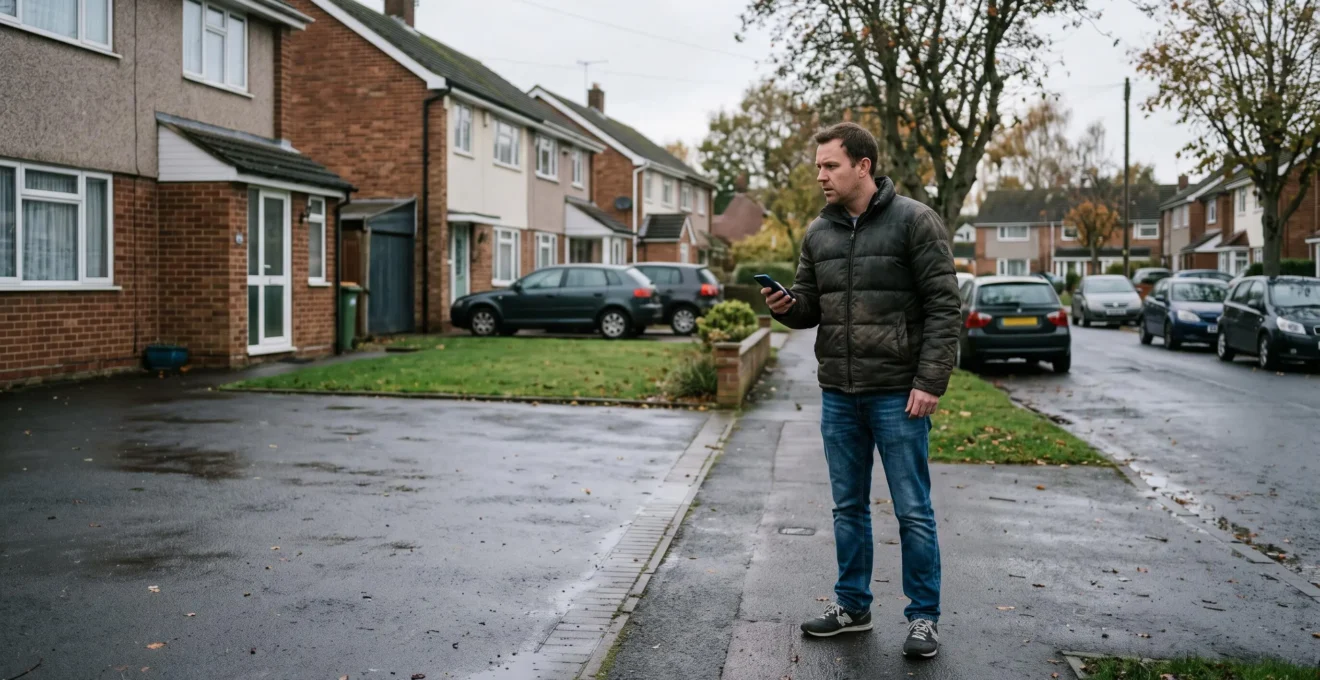
Discovering that your car has disappeared can leave you wondering whether it has been stolen, moved or towed. The first priority is to establish what happened without putting yourself at risk. Once theft appears likely, contact the police promptly, notify your insurer and preserve the information needed to support a claim.
Speed matters, but accuracy matters just as much. An incorrect location, missing key or unexplained discrepancy can complicate an investigation. Meanwhile, transport arrangements, outstanding finance and the difference between the car’s purchase price and its current value can create immediate financial pressure.
Preventing a repeat incident requires more than relying on a modern alarm or keyless entry system. Physical barriers, signal protection, tracking technology and appropriate insurance can address different vulnerabilities. The right combination depends on the vehicle, where it is kept and the protection already in place.
Reporting procedures and insurance terminology vary across English-speaking countries. The following guidance distinguishes practical precautions from country-specific rules, using official UK and US sources where their procedures apply.
What matters most after a vehicle theft
- Report promptly: check whether the vehicle was officially moved, then notify the police and insurer without unnecessary delay. Keep the police reference number.
- Protect your claim: preserve key information, give an accurate account and check the policy’s theft exclusions, excess and settlement conditions.
- Reduce future exposure: combine security measures suited to the vehicle’s vulnerabilities and review whether insurance would cover its current value.
- Why Can Cars With Keyless Security Still Be Stolen?
- How Should You Report a Stolen Car Without Delaying the Insurance Claim?
- Steering Lock, Tracker or Faraday Pouch: Which Security Measure Helps Most?
- Which Security Mistakes Can Weaken a Vehicle Theft Claim?
- When Should You Upgrade Your Car’s Anti-Theft Protection?
- Why Can Comprehensive Cover Help After Damage With No Other Driver Involved?
- How Should You Handle the First 10 Minutes After an Unexpected Crash?
- How Quickly Does a Car Lose Value and What Can an Owner Do About It?
Why Can Cars With Keyless Security Still Be Stolen?
Cars with keyless entry can still be stolen because certain systems can be deceived into detecting an authorised key that is actually some distance away. This technique, commonly called relay theft, exploits wireless communication between the car and its key. A functioning factory security system therefore does not necessarily prevent unauthorised access or starting.
Normally, a keyless vehicle checks whether its authorised key is sufficiently close before unlocking or allowing the engine to start. During a relay attack, criminals use electronic equipment to extend the apparent reach of that communication. The car may respond as though the legitimate key were beside it, even when the owner has left the key indoors.
The mechanism is described in Police.uk vehicle theft prevention advice. The guidance explains that a key signal can be captured from within a few metres, including when the key is inside a home.
Relay attacks may involve offenders operating equipment in different locations, but there is no reliable basis for assuming every theft uses exactly two people or follows an identical sequence. Nor does keyless theft necessarily involve visible damage to locks or windows.
Different vehicles have different vulnerabilities
The most useful security response depends on the circumstances:
- Recent keyless vehicles: investigate whether the key supports signal deactivation, a motion-sensitive sleep function or another manufacturer-supported protection.
- Older vehicles: check the manufacturer’s security information and whether any relevant software or hardware improvements are available. Do not assume an update exists for every model.
- Second-hand vehicles: consider whether additional keys could remain programmed to the vehicle. Police.uk recommends reprogramming keys after purchasing a used car.
These are different problems. A signal-blocking pouch can address relay attacks involving a stored key, but it cannot disable an unknown duplicate key that remains authorised by the vehicle.
A simple keyless security check
Start by consulting the vehicle handbook or manufacturer to identify how its keyless system works. Determine whether passive entry is enabled, whether the key has a sleep or wireless-disable function and whether the manufacturer provides security-related updates.
If using a signal-blocking pouch, place the key fully inside its protected compartment and test whether the vehicle still responds with the closed pouch nearby. Repeat the test periodically because shielding performance can deteriorate.
Do not confuse a successful pouch test with proof that every possible theft method has been eliminated. Criminals may exploit other vulnerabilities, including unauthorised keys or methods unrelated to relay communication.
Importantly, a vehicle showing no forced entry is not proof that its owner was careless. Insurance disputes require an examination of the available evidence and applicable policy terms.
Understanding how the vehicle can be accessed is valuable before a theft. Once a vehicle has disappeared, however, the immediate task changes from prevention to accurate reporting and claim preparation.
How Should You Report a Stolen Car Without Delaying the Insurance Claim?
Report a suspected stolen vehicle to the police promptly, obtain the incident or crime reference number and notify your insurer as soon as possible. Prepare the vehicle’s identifying details, relevant keys and a clear account of where and when it was last seen. Follow the notification deadlines and reporting instructions applicable to your country and policy.
Before reporting theft, make a brief, safe check for another explanation. Confirm the parking location and whether an authorised driver moved the car. Where relevant, check the official towing or vehicle-removal service. Do not delay a genuine theft report while conducting an extended personal search.
If you suspect an offence is ongoing or someone is in immediate danger, use the appropriate emergency service. Do not confront suspected thieves or attempt to recover the vehicle yourself.
Follow the reporting sequence
In the United Kingdom, the official GOV.UK instructions for reporting a stolen vehicle require owners to tell both the police and their insurance company straight away.
- Contact the police. In the UK, the government directs motorists to use the non-emergency number 101 for reporting a stolen vehicle. Give the registration number, make, model and colour.
- Record the crime reference number. UK police provide this number for the insurance process. Elsewhere, obtain the relevant police report or incident reference.
- Notify the insurer promptly. Explain that the vehicle is missing, provide the available reference and ask how to submit the formal claim.
- Preserve your documentation. Keep copies of communications, submitted information and any instructions concerning keys, recovered vehicles or further evidence.
Police reporting and contractual insurance notification are related but separate obligations. An insurer may need a police reference to process the claim, yet owners should not assume that waiting for every police document is an acceptable reason to delay initial notification.
Prepare the details the insurer may request
Having the following information readily available can reduce avoidable follow-up questions:
- Vehicle registration number and vehicle identification number (VIN).
- Make, model, colour and approximate mileage.
- Last confirmed location and approximate time the vehicle was seen.
- Details of the keys and spare keys still in your possession.
- Relevant security equipment, tracker details and any available location records.
- Information about personal belongings inside the vehicle and any outstanding vehicle finance.
This is a practical preparation list rather than a universal legal requirement. Each insurer may request different evidence.
Remember the administrative consequences
Reporting to the insurer does not necessarily complete every administrative obligation.
For UK vehicles, police notify the Driver and Vehicle Licensing Agency (DVLA) about the theft and any subsequent recovery. If the insurer later pays the theft claim and takes ownership of the vehicle, the policyholder must separately notify DVLA of the transfer to the insurer. These are distinct steps.
Owners outside the UK should consult their local registration authority rather than assume the DVLA procedure applies to them.
If the vehicle is financed or leased, contact the finance provider to establish the relevant contractual obligations. Also review toll accounts, parking subscriptions, vehicle-linked payment services and any security applications connected to the car.
Five actions to complete after discovering the theft
- Confirm the vehicle is missing: write down the last verified parking location and time, including any uncertainty.
- File the police report: save the incident or crime reference number and a copy of the report when available.
- Notify the insurer: obtain the claim number, reporting deadline information and required-document list.
- Organise supporting evidence: create one folder containing vehicle details, key information, relevant photographs and communications.
- Check related obligations: make a written record of any finance-provider, registration-authority or vehicle-linked account notifications required.
Keep the report factual. If the exact time of theft is unknown, provide a time interval rather than selecting an unsupported precise time. If information changes, communicate the correction clearly.
A well-organised report cannot guarantee a successful claim, but it helps the insurer evaluate the circumstances without unnecessary confusion. Prevention remains equally important, especially when choosing which security devices deserve priority.
Steering Lock, Tracker or Faraday Pouch: Which Security Measure Helps Most?
A steering lock, vehicle tracker and Faraday pouch protect against different problems. A steering lock adds a visible physical obstacle, a tracker helps locate a vehicle after theft, and a properly functioning signal-blocking pouch reduces exposure to certain keyless relay attacks. No single device provides complete protection, so the most useful choice depends on the vehicle’s vulnerabilities.
Comparing these products only by price overlooks the purpose of each measure. A device intended to discourage theft should not be judged solely by its ability to locate a stolen vehicle, while a recovery device should not be mistaken for a physical barrier.
| Security measure | Main benefit | Important limitation |
|---|---|---|
| Steering wheel lock | Provides a visible obstacle that requires additional effort to overcome. | Can potentially be defeated and does not stop every method of vehicle access. |
| Vehicle tracker | Can provide location information to assist recovery after theft. | May depend on power, connectivity, an active service and the tracker’s continued operation. |
| Faraday pouch | Blocks or reduces key-fob communication when it works correctly. | Targets wireless signal exploitation rather than all theft methods. |
Choose protection based on the actual exposure
For a keyless vehicle regularly parked outside a home, keeping both primary and spare keys away from the car and storing them in tested signal-blocking pouches can address a specific vulnerability.
A visible mechanical lock adds another obstacle, including for someone who has managed to unlock the doors electronically. A properly installed tracker may be useful when recovering a stolen vehicle is a major concern, provided its service remains operational.
These measures are complementary. A tracker does not make a Faraday pouch unnecessary, and a steering lock does not replace safe key storage.
Additional immobilisers and manufacturer-supported security functions may offer further protection, although installation and compatibility should be confirmed with qualified providers.
Consider the insurance conditions before buying
Some insurance policies, particularly those covering higher-value or higher-risk vehicles, include additional security requirements. A tracker may need to meet specified standards, remain active or satisfy an installation condition.
Before purchasing equipment, ask the insurer whether it is required, whether any recognised certification applies and whether installing it affects the premium. Discounts should never be assumed.
Operational details also matter. A poorly sealed signal-blocking pouch may stop working effectively, while a tracker with an expired subscription can lose the capability for which it was purchased.
Use these safeguards consistently, not only when parking in an unfamiliar area. Everyday parking arrangements can also expose a vehicle to theft.
The strongest practical approach is layered protection that the owner can maintain. Its value also depends on whether the insurance policy recognises the equipment and whether the owner follows the policy’s security conditions.
Which Security Mistakes Can Weaken a Vehicle Theft Claim?
A vehicle theft claim can be weakened by inaccurate reporting, leaving keys in circumstances covered by a policy exclusion, failing to meet a security condition or giving conflicting accounts of what happened. However, a missing vehicle with no signs of forced entry does not automatically justify rejection. The insurer must assess the evidence and applicable policy wording.
The distinction between a preventable mistake, an exclusion and deliberate misrepresentation matters. Not every lapse has the same contractual or legal consequence.
Understand which circumstances insurers examine
The UK’s Financial Ombudsman Service describes vehicle theft disputes involving keys left inside cars, vehicles left unattended and disagreements over policy exclusions.
Investigators may compare the account given to police with the insurance statement. They may also consider witness evidence, electronic key information and the circumstances surrounding the theft.
Relevant electronic evidence can include whether another key was programmed to the vehicle or which key was most recently used. This does not mean that every insurer routinely obtains phone-location histories or telematics data.
A genuinely uncertain time or location should be reported as uncertain. An estimate should not later be presented as an independently verified fact.
Not all security failures justify a refusal
| Situation | Possible insurance concern | What the owner should establish |
|---|---|---|
| Keys left inside the vehicle | A policy exclusion or reasonable-care condition may be relevant. | Exact policy wording and the circumstances in which the vehicle was left. |
| No visible forced entry | The insurer may seek an explanation of the theft mechanism. | Keyless access, duplicated keys and other plausible explanations. |
| Required tracker inactive | A specified security condition may not have been satisfied. | Whether the condition applies and the device’s actual status. |
| Contradictory statements | Questions may arise about the reliability of the claim. | Original records and a clear explanation of any mistake or correction. |
| Lost or missing spare key | Key possession and possible prior compromise may require investigation. | When the key disappeared and whether it was reported or replaced. |
Different outcomes are possible. A claim may be paid, investigated further, adjusted under a valid contractual provision or declined. There is no universal reduction percentage for particular security mistakes.
Knowingly supplying false material information is fundamentally different from making a reasonable estimate or correcting an innocent error. Owners should provide complete, accurate information and respond transparently when new evidence becomes available.
Preserve evidence before it becomes necessary
Photographs showing the vehicle’s condition, service records, purchase documents and descriptions of optional equipment may help establish its condition and specification. They are particularly useful when the vehicle is never recovered and cannot be physically inspected.
Keep evidence of installed security equipment and any related manufacturer or insurer communications. If a key is lost, document when the loss was discovered and follow the applicable policy and security guidance.
These records do not guarantee a particular settlement, but they can reduce uncertainty about facts that might otherwise be difficult to reconstruct.
Clear reporting and documented precautions support a fair assessment. They also reveal when the vehicle’s protection needs updating before an incident occurs.
When Should You Upgrade Your Car’s Anti-Theft Protection?
Upgrade anti-theft protection when the vehicle’s exposure changes, a new vulnerability becomes known, an insurer introduces a security condition or the consequences of losing the car become more significant. There is no universal replacement schedule for security equipment. A useful review compares credible theft risks, protection costs, practical convenience and the insurance already available.
A vehicle that was adequately protected when purchased may need different safeguards after a change of location, ownership or daily use.
Recognise the practical triggers
- A newly purchased vehicle: review its keyless functions, available keys and existing protection before settling into a parking routine.
- A change of parking location: reassess protection after moving from secure private parking to an exposed street or other different environment.
- A manufacturer security notice: check whether the notice affects the exact model, configuration or software version.
- An insurance renewal: examine changes to the excess, security conditions, insured value or theft protection.
- A change in vehicle use: reassess consequences if the car is now essential for work, family transport or another activity that would be seriously disrupted by theft.
Local theft information can help prioritise action. Police, government agencies and insurers may publish vehicle-theft statistics or lists of commonly targeted models. Check the geographical coverage, reporting period and data definitions before drawing conclusions.
A frequently stolen model is not automatically the most vulnerable on an individual basis. The number of cars on the road, their popularity and how they are used can affect raw theft counts.
Balance protection against the value at risk
Consider the full cost of a proposed improvement, including purchase, installation, subscription and maintenance. Compare that cost with the potential disruption of a theft and the insurance settlement likely to be available.
For an inexpensive older vehicle, costly tracking technology may not be a proportionate purchase. A more modest physical deterrent and a review of the insurance arrangements could be more appropriate.
For a newer or higher-value vehicle, additional security could have greater practical value, particularly if an insurer makes it a condition of cover.
Neither situation justifies assuming that a specific accessory will pay for itself. That calculation depends on costs, the actual risk and any verified insurance benefits.
Tell the insurer about security improvements when required and ask for written confirmation of any coverage or premium changes. Do not represent equipment as installed or operational unless that description is accurate.
A security upgrade should solve an identifiable problem. Equally, reviewing the financial consequences of damage or theft can reveal gaps that extra locks and tracking devices cannot address.
Why Can Comprehensive Cover Help After Damage With No Other Driver Involved?
Comprehensive motor insurance can protect against certain losses even when no other driver is involved, including theft, vandalism, fire and some forms of accidental damage. However, the meaning of comprehensive cover differs between insurance markets. In the United States, comprehensive coverage generally addresses non-collision events, while collision damage normally falls under separate collision coverage.
This distinction matters because a car can suffer substantial damage without another identifiable driver being responsible. A broken window during an attempted theft, vandalism or damage discovered after recovery can create repair costs even though no conventional road collision occurred.
The US NAIC information on auto insurance coverage distinguishes liability, collision and comprehensive protection. Comprehensive coverage generally includes theft, vandalism, fire, severe weather and certain glass damage.
Distinguish attempted theft from a total vehicle loss
Suppose a thief breaks a window while trying to enter a vehicle but fails to steal it. In the US, the resulting damage may fall under comprehensive coverage, subject to the relevant terms and deductible.
If the entire vehicle is stolen and never recovered, the loss may also fall under comprehensive coverage. The settlement is then governed by the vehicle valuation and policy conditions rather than simply reimbursing its original purchase price.
If the vehicle is recovered with a damaged interior, missing components or other theft-related damage, the insurer must determine which insured event and policy provisions apply.
It would be misleading to state that every recovered stolen vehicle must be processed under a separate comprehensive guarantee rather than theft cover. The classification depends on the insurance product and jurisdiction.
Understand the different meanings of comprehensive
| Issue | United States | United Kingdom |
|---|---|---|
| Liability or third-party protection | Generally addresses covered injury or damage caused to others. | Third-party-only insurance primarily protects against liability to others. |
| Theft and vandalism | Generally associated with comprehensive coverage. | May be included under third-party, fire and theft or comprehensive policies, subject to wording. |
| Collision damage to the insured car | Generally associated with separate collision coverage. | May be covered under comprehensive motor insurance, subject to its terms. |
| Replacement transport | Rental reimbursement may require optional coverage. | Courtesy-car or hire-car benefits depend on the policy and circumstances. |
Names alone do not establish coverage. Owners should check theft, attempted-theft damage, personal belongings, excesses, temporary transport and total-loss valuation separately.
Vehicle value is particularly important in a claim where there is no identifiable responsible party from whom to seek compensation. Depending on the contract, settlement might use current market value, an agreed value or a qualifying replacement-value benefit.
Additional cover may reduce the financial difference between the settlement and the expense of replacing the vehicle, but benefits, limits and eligibility must be confirmed before relying on them.
The same need for accurate evidence applies after an unexpected crash. Even when the incident has nothing to do with theft, early safety and documentation decisions can materially affect what happens next.
How Should You Handle the First 10 Minutes After an Unexpected Crash?
During the first minutes after an unexpected crash, prioritise personal safety, check for injuries and contact emergency services when necessary. Once the scene is safe, exchange relevant details, preserve useful evidence and record what happened without guessing about causes or responsibility. The sequence is more important than completing every task within exactly ten minutes.
Accidents create immediate practical decisions under stress. Attempting to photograph vehicles while standing in moving traffic, for example, may create a greater danger than losing a particular image.
Safety comes before documentation
Stop in accordance with applicable road rules, assess immediate hazards and check whether anyone requires urgent assistance. Follow local emergency-service instructions and road-safety requirements.
Where it is safe and lawful to do so, preserve the vehicle positions long enough to establish what happened. But do not leave vehicles or people in danger merely to obtain photographs.
If anyone is injured, prioritise appropriate assistance. Where there is a fire, suspected fuel leak or another serious hazard, move to safety and follow emergency guidance.
Build a reliable record once the scene is safe
Useful evidence may include:
- Photographs of vehicle positions, visible damage and relevant road conditions, taken only when safe.
- Registration numbers and the details required by local law.
- Contact information for witnesses willing to provide it.
- The approximate time, location and sequence of events.
- Details of any police attendance, medical assistance or towing arrangements.
Make a contemporaneous note while the circumstances are relatively fresh. Distinguish what you personally observed from what another person reported.
For example, describing the location of visible damage is an observation. Declaring that another driver was distracted, without direct evidence, is speculation.
Avoid making unsupported statements about legal responsibility. At the same time, do not conceal facts or refuse information that the law, police or insurer requires. Being accurate is more important than trying to construct a favourable narrative.
Report the incident to the insurer in accordance with the policy requirements, even where the need for a claim is not immediately obvious.
What crashes and vehicle theft have in common
Although the circumstances differ, both situations benefit from a consistent response: protect people, preserve information and notify the appropriate authorities and insurer.
In a crash, scene safety and medical needs take precedence. After discovering a stolen parked car, the primary concerns usually involve verifying the disappearance, avoiding confrontation and reporting the theft promptly.
Neither situation should be reduced to a rigid countdown. A ten-minute framework can help organise priorities, but real emergencies may require significantly more time and different actions.
Once the immediate incident has been dealt with, attention turns to financial recovery. That depends not only on the type of cover held but also on what the vehicle was worth immediately before the loss.
Key takeaways before reviewing your car’s value
- An insurance settlement may be based on the vehicle’s value immediately before theft or damage, rather than the original purchase price.
- Maintenance records, accurate vehicle specifications and documented condition can help support a valuation.
- Owners with outstanding finance should check whether a potential settlement would be enough to discharge the remaining balance.
How Quickly Does a Car Lose Value and What Can an Owner Do About It?
A car generally loses value as it ages, often more rapidly during its earlier years, but depreciation is not uniform. The actual change depends on the model, mileage, condition, maintenance history and demand in the used-car market. Owners cannot eliminate depreciation, but they can preserve evidence of condition and assess whether insurance would cover a financially significant loss.
This matters after theft because a car’s current value can be substantially different from the amount originally paid for it.
Why depreciation matters after a theft
Consider a hypothetical owner who finances a relatively new car. If the vehicle is stolen before the loan is repaid, a conventional total-loss settlement may be based on its current insured value rather than the outstanding finance balance.
Those amounts need not be equal. Depending on the policy and finance arrangement, the owner might still owe money after the insurance settlement has been applied.
That possibility should be investigated before a theft, not discovered when replacement transport becomes necessary.
For many conventional motor insurance policies, current market value plays an important role in total-loss settlements. The valuation may consider comparable used vehicles, mileage, age, options and condition. The precise methodology depends on the jurisdiction and contract.
A quoted valuation guide figure is not necessarily the amount the insurer must pay. Comparisons should use vehicles sufficiently similar to the insured car and account for relevant market differences.
Which protections can reduce the financial gap?
Additional insurance products may help address particular losses, but they serve different purposes.
| Protection | Potential purpose | What to verify |
|---|---|---|
| Market-value settlement | Compensates according to the covered vehicle’s assessed value at the time of loss. | Valuation method, excess, limits and dispute procedure. |
| Agreed-value insurance | Uses a value established according to the agreement, subject to applicable terms. | Eligibility, valuation conditions and situations where the agreed amount applies. |
| New-for-old or replacement-value cover | May provide a qualifying replacement vehicle or enhanced settlement. | Vehicle age, ownership, mileage and policy conditions. |
| GAP insurance | May address specified differences between another insurance settlement and an eligible financial amount. | The particular GAP product, exclusions, finance terms and payout limits. |
| Accessories or modifications cover | May protect eligible equipment beyond standard valuation assumptions. | Declarations, insured limits and covered items. |
These are not interchangeable benefits. GAP insurance, for example, should not be assumed to repay every outstanding balance or reimburse every purchase-related expense. The specific product determines what is covered.
Replacement-value benefits may be particularly relevant while a vehicle is relatively new, but their usefulness can decline or eligibility can end as the vehicle ages. Agreed-value insurance may be more relevant for certain specialist or collectible vehicles, depending on eligibility.
Protect the value you can still influence
Regular maintenance, careful use and timely repairs help preserve the car’s condition. Keeping service records, invoices and evidence of major work can also make its history easier to establish.
Maintain a reasonable record of the vehicle’s mileage, specification and optional equipment. Retain purchase paperwork and relevant photographs. If the vehicle is sold, providing the available keys and documentation can help prospective buyers assess it.
These measures do not freeze the car’s market value. They can, however, help distinguish a properly maintained vehicle from superficially similar examples with less complete histories.
Owners should also review the difference between the estimated current value, applicable insurance excess and any outstanding borrowing. This provides a clearer view of the financial consequences of a total loss.
Do not rely on a fixed annual depreciation percentage to make that decision. A model-specific comparison with credible local market listings and the insurer’s valuation approach is more informative than a generic average.
Review your current insurance schedule, confirm the valuation basis and save an up-to-date record of the vehicle and its security equipment. These straightforward actions can reduce uncertainty if the car is damaged or stolen, while helping you decide which protections genuinely deserve an upgrade.
Can a stolen car be tracked using a phone app?
Some manufacturers and aftermarket tracking services offer vehicle-location functions through an app. Availability depends on the vehicle, service activation, connectivity and whether the tracking system remains operational. Share relevant location information with police rather than attempting to confront suspected thieves or recover the vehicle independently.
What happens if the police recover the car after an insurance payout?
Ownership and settlement arrangements depend on the insurance contract and local rules. Notify the insurer promptly and follow its instructions. In the UK, a policyholder must notify DVLA when a stolen vehicle has been transferred to the insurer following a payout. A later recovery does not automatically mean the former owner can reclaim the vehicle without further arrangements.
Does car insurance cover personal belongings stolen with the vehicle?
Not necessarily. Motor policies may exclude personal belongings or impose specific limits, while other insurance products may provide relevant protection. Review the applicable policy wording and document missing items accurately when reporting the theft. Do not assume that theft cover for the vehicle automatically includes everything stored inside it.
Should you change your car’s locks after losing a key?
If a key may have been stolen or compromised, contact the manufacturer, dealer or qualified vehicle-security specialist to determine whether the missing key can be deauthorised or whether further security work is needed. The correct solution depends on the vehicle’s key and immobiliser system. Inform the insurer where your policy requires notification of lost keys or security changes.
Can you challenge an insurer’s valuation of a stolen vehicle?
Depending on the jurisdiction and policy, a disputed valuation may be reviewed through the insurer’s complaints process or an applicable independent dispute-resolution service. Gather comparable vehicle listings, evidence of mileage and condition, maintenance records and information about eligible optional equipment. Explain specific differences between the insurer’s valuation and the available evidence rather than relying solely on the original purchase price.