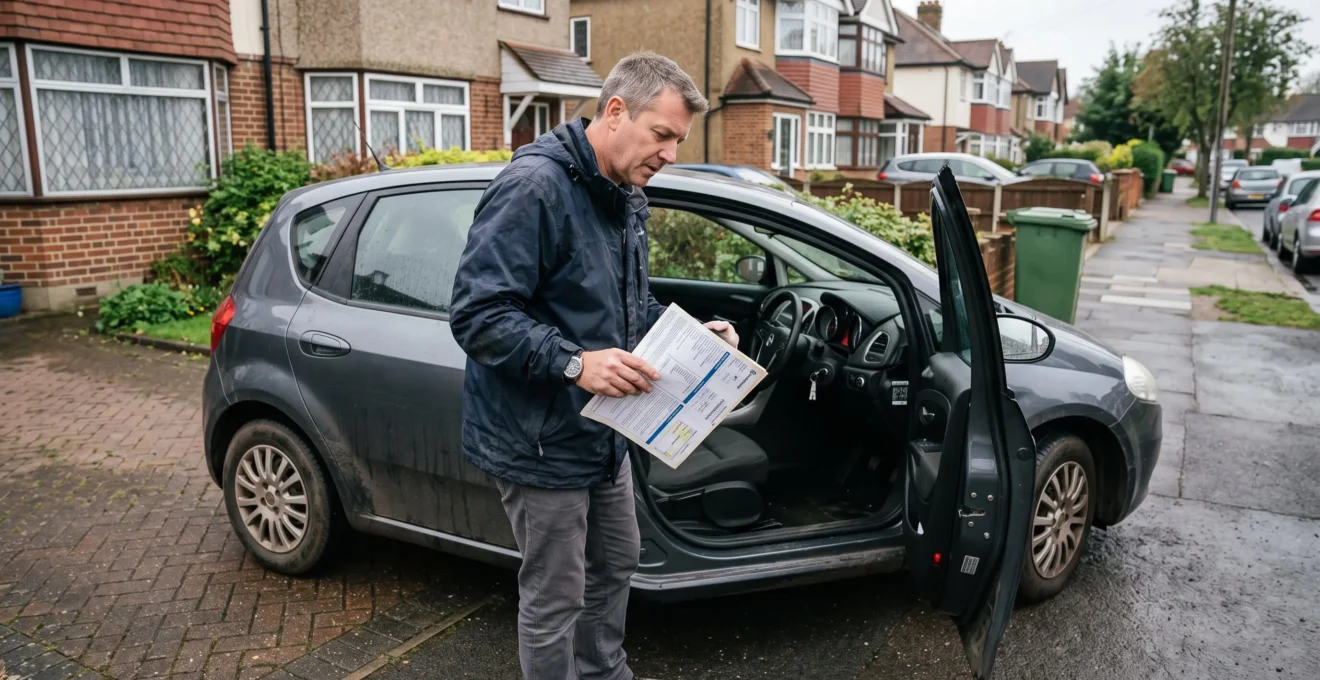
Two motorists can drive identical cars, have similar driving histories and still receive different motor insurance quotations. One reason is how each vehicle is used. A car driven mainly for shopping and leisure presents a different exposure pattern from one regularly used to visit clients or deliver goods.
Insurers classify vehicle use to understand the journeys they are being asked to cover. Social driving, commuting and business activities may fall into separate categories, while commercial deliveries or carrying paying passengers can require specialist arrangements. The boundaries depend on the insurer, the policy wording and the country where the cover applies.
The classification affects more than the initial price. It can determine whether a particular journey is insured, whether additional conditions apply and what happens if the insurer discovers that the declared use was inaccurate. Understanding these distinctions helps policyholders choose appropriate cover, recognise changes that need reporting and avoid assumptions that may become costly during a claim.
Motor insurance use classification: essential points
- Insurers assess how a vehicle is used alongside driver, vehicle and location information; a good driving record does not replace the correct use classification.
- Social, commuting, business and commercial driving have different coverage implications, and their definitions vary between insurers.
- Policy schedules, endorsements and changes in driving habits should be checked together, particularly after a change of job or the start of paid driving activities.
- Why Does Your Declared Car Use Matter to an Insurer?
- How Can You Choose the Correct Vehicle-Use Category on an Insurance Quote?
- Social, Commuting or Business Use: Which Classification Matches Your Driving?
- Which Driving Activities Are Commonly Misclassified on Insurance Policies?
- When Should You Update the Vehicle-Use Class on Your Policy?
- Standard Cover or Endorsement: Which Rules Apply When They Differ?
- Why Can Telematics Data Change the Price of Motor Insurance?
- When Does a Motor Insurance Endorsement Change What Your Policy Covers?
Why Does Your Declared Car Use Matter to an Insurer?
Your declared car use matters because insurers assess the risks associated with different types of journeys when calculating premiums and setting coverage conditions. Regular commuting, occasional leisure driving and work-related travel can involve different mileage, road environments and exposure to accidents. An inaccurate declaration may therefore affect both the quotation and the handling of a subsequent claim.
Vehicle-use classification is an underwriting input, not merely an administrative description. Insurers may consider expected annual mileage, journey frequency, driving times, typical roads and whether the vehicle carries passengers, equipment or goods in connection with work.
These characteristics help explain why a driver who makes frequent business journeys might receive a different quotation from someone who uses the same vehicle mainly at weekends. However, the premium effect is not uniform: each insurer applies its own rating model, eligibility criteria and policy terms.
A common mistake is assuming that a clean driving licence or several claim-free years compensate for an incorrect use class. Driving history and vehicle use answer different underwriting questions. A favourable claims record does not establish that a business journey is insured under a social-only policy.
Inaccurate declarations can also carry legal consequences. Under the UK’s Consumer Insurance (Disclosure and Representations) Act 2012, consumers must take reasonable care not to misrepresent information supplied to insurers.
The legislation distinguishes deliberate or reckless misrepresentation from careless misrepresentation. For a qualifying careless misrepresentation, the insurer’s remedy depends on what it would have done with accurate information. Depending on the circumstances, this may involve different policy terms, a proportionate reduction in a claim payment or avoidance of the contract.
Deliberate or reckless misrepresentation can justify more severe remedies, including avoidance and refusal of claims. Nevertheless, an incorrect declaration does not automatically invalidate every claim. The applicable law, facts, insurer’s questions and underwriting evidence matter. The UK statutory framework should not be assumed to govern policies issued in other countries.
The practical starting point is to identify the journeys the vehicle actually makes, rather than relying on the category selected when the policy was first purchased.
How Can You Choose the Correct Vehicle-Use Category on an Insurance Quote?
Choose a vehicle-use category by comparing your real driving activities with the definitions provided on the specific insurance quotation. Identify each journey purpose, estimate annual mileage and distinguish ordinary commuting from journeys undertaken as part of your work. If a journey sits between categories, obtain clarification from the insurer before accepting the quotation.
A reliable classification begins with a simple inventory of regular and occasional journeys. Include personal travel, trips to workplaces, visits to clients, volunteering and any activity involving payment or transportation of goods.
The following decision process makes the declaration easier to check:
- Identify your driving purposes. Separate shopping, leisure, school runs, commuting and work-related journeys.
- Estimate annual mileage realistically. Include infrequent longer journeys, not just an average working week.
- Identify workplace connections. Record whether you travel to one usual workplace, several sites or business appointments.
- Check commercial activities. Identify deliveries, paid passenger transport and other income-generating vehicle use.
- Read the insurer’s definitions. Compare the complete journey pattern with the coverage description and exclusions.
The classification labels alone are insufficient. One quotation may distinguish ordinary business travel from commercial deliveries, while another may require a separate insurance product for deliveries. A category used on a previous policy cannot safely be transferred to a different insurer without checking its meaning.
Some situations require additional questions. A volunteer driver should check whether the journeys fall within permitted voluntary activities. Someone travelling to a temporary workplace needs to establish whether that destination is treated as commuting or business travel. A professional transporting tools or samples must check whether the nature of the goods and journey creates additional restrictions.
For ambiguous journeys, consider three questions: who benefits from the trip, how regularly does it occur, and is it connected to payment or professional obligations? These questions help describe the risk, but they do not replace the insurer’s contractual definition.
Five checks before submitting a motor insurance quotation
- Write down all regular driving purposes and produce a journey-purpose list.
- Estimate mileage for each purpose and produce a realistic annual mileage total.
- Mark every workplace, client, delivery or paid journey and produce a list of potentially business-related trips.
- Compare those journeys with the insurer’s category definitions and save the relevant wording.
- Submit unresolved scenarios to the insurer and retain its written classification or coverage confirmation.
Once the journeys have been identified, the next task is to distinguish the main classes of use and understand where the boundaries between them typically fall.
Social, Commuting or Business Use: Which Classification Matches Your Driving?
Social use generally covers personal journeys, commuting extends protection to travel between home and a usual workplace, and business use can cover journeys undertaken as part of employment or professional activity. Paid deliveries and passenger transport may require additional or specialist insurance. The appropriate classification depends on the actual journeys and the insurer’s definitions.
In UK-style motor insurance terminology, social, domestic and pleasure use commonly includes shopping, leisure trips, visiting friends and other private activities. It should not be assumed to cover routine travel to work.
Social, domestic, pleasure and commuting cover generally adds journeys to and from a usual workplace. However, travel to different work sites or appointments can fall outside that description.
The PSNI guidance on common car insurance myths distinguishes journeys to a usual workplace from travel to another business location, such as a meeting or conference. It advises drivers to check their insurance certificate and policy schedule.
Business use can encompass travel between work locations, client meetings or other journeys undertaken for professional purposes. Some insurers distinguish several business-use classes according to who drives, the type of work and the activities involved.
Business use should not be assumed to include commercial delivery or hire-and-reward activities. Transporting food, parcels or paying passengers may require specialist cover, even where ordinary business travel is insured.
The following scenarios are illustrative classifications based on common UK-style terminology, not universal rules applying to every insurer.
| Driving situation | Likely classification to check | Important qualification |
|---|---|---|
| Shopping, leisure and visiting friends | Social, domestic and pleasure | Assumes no excluded commercial activity. |
| Travelling to one usual workplace | Social plus commuting | Check the policy’s definition of a usual workplace. |
| Hybrid worker travelling to the same office twice weekly | Social plus commuting | Less frequent commuting remains commuting. |
| Employee regularly travelling between separate work sites | Business use | Check whether multi-site commuting receives different treatment. |
| Occasional journey to a client meeting | Business use | Even an infrequent professional journey may require cover. |
| Delivering food through a paid platform | Commercial delivery or hire-and-reward cover | Ordinary business cover may exclude deliveries. |
| Carrying colleagues to work without payment | Commuting or another permitted class | Payment arrangements and passenger conditions require checking. |
More extensive business driving may result in a higher premium because the insurer considers additional journey exposure. Nevertheless, the price difference depends on the insurer and risk profile; business use is not necessarily more expensive in every quotation.
Where two classifications appear plausible, obtaining a quotation for the broader category and comparing its terms can be sensible. Selecting a higher class is not a substitute for confirming that the particular activity is actually insured.
These distinctions become particularly important when personal and professional journeys overlap, because mixed-use activities are among the situations most likely to create uncertainty.
Which Driving Activities Are Commonly Misclassified on Insurance Policies?
Vehicle use is commonly misclassified when drivers treat work-related journeys as ordinary personal travel or assume commuting cover extends to every professional trip. Paid deliveries, car-sharing arrangements, temporary workplaces and transporting work equipment can create uncertainty. The appropriate response is to review the actual journey pattern against the policy’s permitted uses and exclusions.
One significant risk arises when someone begins earning income through a personal vehicle. A driver may continue to use the same car, follow familiar roads and drive only occasionally, yet the purpose of those journeys has changed.
For example, a person who drives to collect a takeaway meal for themselves is making a personal journey. Driving to collect meals for paying customers is a commercial activity. The vehicle is unchanged, but the exposure and insurance requirements may differ substantially.
Other situations worth investigating include:
- Occasional professional appointments: a driver assumes that a client meeting is covered because it happens only a few times annually.
- Car-sharing or lift arrangements: payments, expense sharing and the purpose of the journey may affect the applicable conditions.
- Travel to a railway station: driving to a station or car park as part of a commute may still be commuting, even when another mode of transport completes the journey.
- Temporary work locations: a change in workplace can make the boundary between commuting and business travel unclear.
- Transporting professional equipment: carrying tools or samples for work may require further disclosure, particularly where goods-related exclusions apply.
Misclassification often results from simplified quotation labels meeting complicated real-world behaviour. A driver may choose a category that appears appropriate, then retain it through several renewals without reassessing changes in employment, commuting or additional income.
A useful personal verification method is to review the previous three months of journeys. Assign each journey a purpose, note its frequency and identify any involving payment, professional obligations or travel to unfamiliar work locations.
This review is a practical self-audit, not an insurer-prescribed test. It cannot establish coverage on its own, but it provides concrete information to discuss with the insurer.
A self-audit becomes more useful when repeated after lifestyle changes, rather than being carried out only when buying insurance or preparing a claim.
When Should You Update the Vehicle-Use Class on Your Policy?
Review your vehicle-use classification whenever your regular journeys or driving purposes change materially. Starting a new job, travelling to different workplaces, taking on freelance work, beginning paid deliveries or stopping commuting can affect the appropriate category. Contact the insurer before undertaking newly introduced activities that might fall outside the existing cover.
The importance of a change depends on what the policy requires to be disclosed. A different working pattern does not necessarily mean the category must change, but it warrants checking the existing terms.
Typical triggers include:
- Changing employer or moving to a different usual workplace.
- Beginning to travel between multiple business locations.
- Switching to hybrid or fully remote work.
- Starting a second job requiring use of the vehicle.
- Becoming self-employed or undertaking freelance client visits.
- Beginning deliveries or another commercial driving activity.
To request a change, explain the new journeys to the insurer or authorised intermediary, including their purpose, frequency and estimated mileage. Ask whether the activity is covered, whether the use category needs changing and from what date any revised terms will apply.
If the insurer accepts the amended risk, it may issue an updated policy schedule, revised certificate or endorsement. A mid-term premium adjustment can be calculated for the remaining policy period, but insurers differ in their pricing, administration charges and refund rules. A pro-rata adjustment should not be assumed without confirmation.
It is also important to distinguish the timing of a change from the timing of a claim. A new activity that began before an incident may raise questions about whether the cover was appropriate at the time. A later correction does not necessarily provide retrospective protection for an earlier uninsured journey.
In the UK, the Financial Ombudsman Service‘s analysis of insurance misrepresentation and non-disclosure highlights the importance of clear insurer questions, accurate representations and proportionate treatment of qualifying misrepresentation under the applicable law.
Changes can also reduce risk. Someone who stops commuting or substantially reduces annual mileage may qualify for different terms or a lower premium. Any refund or saving depends on the policy and insurer rather than arising automatically.
After notifying the insurer, the next step is to examine the updated documents, because an agreed change may introduce conditions that are not obvious from the category label alone.
Standard Cover or Endorsement: Which Rules Apply When They Differ?
When a valid endorsement conflicts with general policy wording, the endorsement will normally govern the specific matter it modifies, subject to applicable law and the policy’s interpretation rules. The policy schedule identifies the agreed cover, while standard terms explain its general conditions. All three documents must be read together to determine which vehicle uses are insured.
The policy schedule is a practical starting point because it commonly identifies the insured vehicle, drivers, period of cover and permitted use. A certificate of insurance may provide further confirmation of the insured driving purposes, depending on the jurisdiction.
The general policy wording sets out the underlying contractual provisions, including definitions, exclusions, claims conditions and obligations. An endorsement then changes or supplements particular provisions for the individual policy.
An endorsement is not automatically additional protection. It may expand cover, restrict an activity or impose a condition that must be satisfied.
Consider the following hypothetical examples:
| Endorsement or condition | Possible effect on cover | What to verify |
|---|---|---|
| Named-driver restriction | Limits driving to specified individuals. | Whether every intended driver is permitted. |
| Commercial-use exclusion | Excludes specified commercial activities. | Whether deliveries or paid transport remain excluded. |
| Mileage condition | Sets an agreed mileage limit or related obligation. | How mileage is measured and what happens if it changes. |
| Business-use amendment | Adds or restricts specified professional journeys. | Which activities are included and when the change begins. |
The precise effect depends on the wording. A restriction that applies only to named drivers should not automatically be interpreted as a restriction on every other aspect of the policy.
When checking documentation, first identify the permitted vehicle uses on the schedule. Next, list the endorsements and find the clauses they amend. Finally, compare those provisions with the journeys the vehicle actually makes.
If the documents appear contradictory, request written clarification instead of assuming that the most favourable wording applies. The legal interpretation of conflicting provisions may depend on the jurisdiction, contractual language and consumer protection rules.
These documentary checks establish the contractual boundaries of cover, while data-driven insurance products can introduce an additional question: how observed driving behaviour affects the price.
Why Can Telematics Data Change the Price of Motor Insurance?
Telematics data can change motor insurance pricing because it gives insurers information about how, when and sometimes where a vehicle is driven. Depending on the product, this may include mileage, speed, braking patterns, journey times and road types. Insurers can use these observations alongside traditional rating factors to reassess premiums during the policy or at renewal.
Telematics insurance can involve a fitted tracking device, an onboard vehicle system or a smartphone application. The technology and monitored variables differ between providers.
The ABI information on pay-as-you-drive insurance explains that telematics products may assess mileage, road types, time of day, speed and braking behaviour alongside other risk factors.
For example, frequent journeys during certain times or driving patterns involving repeated harsh braking may influence an insurer’s assessment of exposure or driving performance. The significance of each variable depends on the product’s methodology and contractual terms.
Some policies use the results when calculating renewal prices, while others allow adjustments during the policy period. A careful, low-mileage driver may benefit, but telematics does not guarantee a lower premium.
Driving data can also reveal patterns that appear inconsistent with the declared use category. Repeated weekday journeys to a particular destination, for instance, might prompt questions about whether the driver commutes.
However, journey patterns alone do not establish their purpose. A regular destination may be connected to personal obligations rather than employment. It would therefore be inaccurate to assume that every telematics insurer automatically detects or determines use-class misrepresentation from GPS records.
Consumers should also examine privacy and flexibility implications. Relevant questions include what data is collected, who receives it, how long it is retained and whether restrictions apply to certain driving times or locations.
Early driving data may affect an initial assessment or subsequent renewal, depending on the product. There is no universal rule that early poor scores permanently determine future pricing.
Before choosing telematics cover, compare its monitoring terms, possible premium adjustments and driving restrictions with a conventional policy. The apparent financial advantage should be considered alongside these obligations.
That distinction leads to a final safeguard: whenever the cover or its conditions change, the policyholder should check the resulting endorsement rather than relying on the original insurance documents.
Key takeaways before reviewing your policy
- A correctly declared use category is only one part of the coverage assessment; individual restrictions can still affect specific journeys.
- A mid-term policy amendment should be checked for its effective date, permitted activities and any new exclusions or conditions.
- Written confirmation of agreed changes provides a clearer record than relying on assumptions about a telephone conversation or quotation label.
When Does a Motor Insurance Endorsement Change What Your Policy Covers?
A motor insurance endorsement changes cover when it validly adds, removes or modifies a contractual provision. It may be issued following a policyholder’s requested amendment, an insurer’s reassessment of the risk or a correction to the policy documents. Its effect depends on the wording and effective date, so the revised policy must be checked against actual driving activities.
An endorsement can broaden protection by permitting an additional driver or specified business journeys. It can also narrow protection by excluding particular activities or introducing conditions on vehicle use.
For example, consider a hypothetical driver who informs their insurer that they intend to use a personal car for additional work journeys. The insurer agrees to amend the policy but issues an endorsement excluding commercial deliveries.
The driver might reasonably understand that ordinary professional travel is now covered. However, that amendment would not establish protection for paid delivery work if the endorsement expressly excludes it.
The same distinction matters after an insurer-initiated risk review. A revised document might contain a new limitation that was not present when the policy was originally issued. Whether that limitation is valid and enforceable depends on the contractual process and applicable law; issuing an endorsement does not itself establish that every proposed restriction is enforceable.
Endorsements connected to telematics may introduce requirements concerning monitoring equipment, data availability or driving restrictions. These obligations should be examined alongside any permitted-use provisions, because the policyholder may need to satisfy both sets of conditions.
At claim time, the insurer may consider the policy wording in force when the relevant incident occurred. If an endorsement validly restricts the activity involved, the original general wording cannot safely be relied upon without considering that restriction.
A practical final audit should confirm that the declared vehicle-use class remains accurate, the schedule and endorsements permit the intended journeys, and notifications or written clarifications have been retained.
It is useful to repeat this examination at renewal, after changes in employment or lifestyle, and whenever a revised schedule or endorsement is issued. If a provision is unclear, ask the insurer to identify exactly which journeys are covered and when the relevant amendment takes effect.
Before the next journey involving a new or uncertain activity, compare the current driving pattern with the latest policy schedule, permitted-use wording and endorsements. Where any mismatch remains, obtain written confirmation from the insurer and retain the updated documents with the policy records.
Does working from home mean commuting cover is no longer needed?
Not necessarily. Someone who works remotely most days but still drives to their usual workplace may need commuting cover for those journeys. If commuting has stopped completely, ask the insurer whether the declared category or premium can be changed. The answer depends on the policy’s definitions and the remaining driving activities.
Is an occasional business trip covered by ordinary commuting insurance?
It should not be assumed. Travelling to a usual workplace is generally treated differently from driving to a client meeting, conference or another business location under common UK-style classifications. Even a single professional journey may require business-use cover, depending on the insurer’s definitions.
Can a car insurance claim be refused because of an incorrect use category?
Potentially, but the result is not automatic. It depends on the actual journey, policy terms and applicable law. In UK consumer insurance, qualifying misrepresentations are assessed according to statutory rules distinguishing careless from deliberate or reckless conduct. The insurer’s available remedy can also depend on what it would have done if accurate information had been provided.
Can someone keep personal insurance and obtain separate cover for delivery driving?
Some arrangements may combine personal motor insurance with separate cover for specified delivery activities. However, compatibility cannot be assumed. The underlying insurer and the additional provider should confirm that the arrangements work together, which journeys each policy covers and whether any exclusions or gaps apply.
What should a driver do if the policy schedule and endorsement appear inconsistent?
Ask the insurer or authorised intermediary for written clarification identifying the applicable provision, permitted activities and effective date. An endorsement generally modifies the particular terms it addresses, but the outcome of an apparent conflict depends on the complete contract and applicable law. Avoid undertaking an uncertain driving activity until its insurance position has been confirmed.