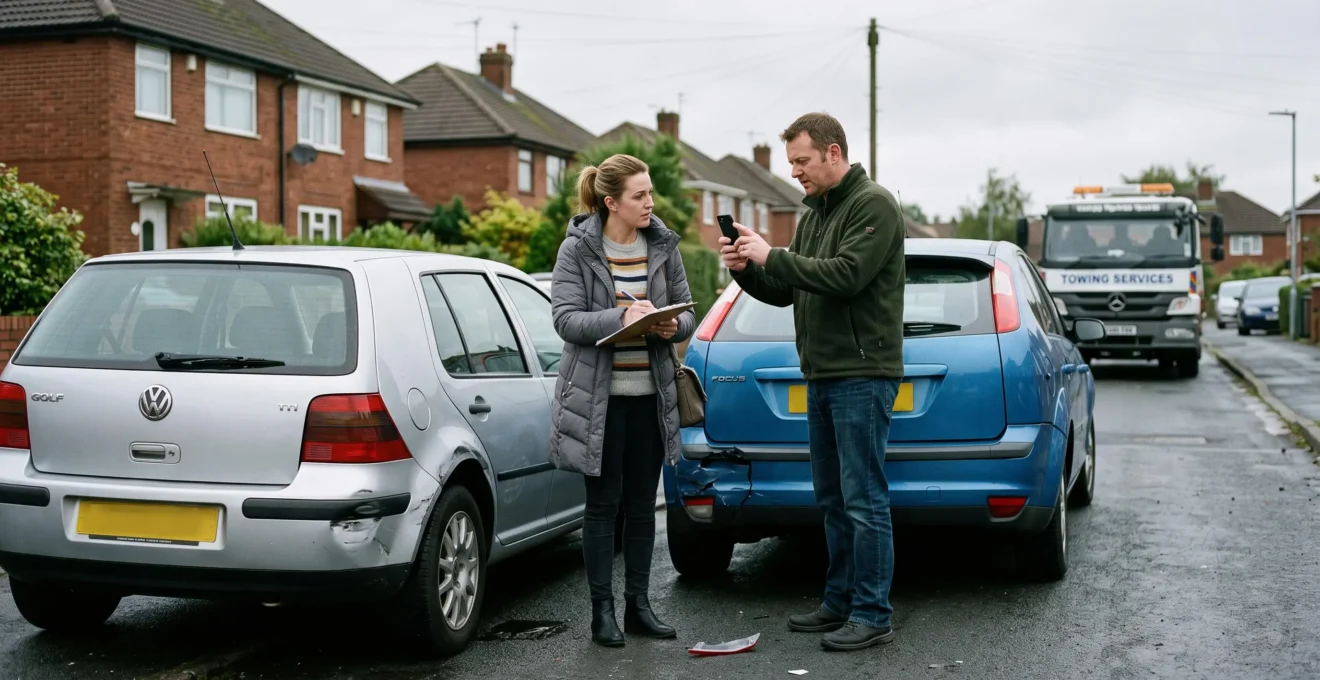
Third-party motor insurance generally pays for injuries or property damage you are legally responsible for causing to other people. If you collide with another vehicle, damage someone’s property or injure another road user, the relevant liability coverage may meet eligible claims up to the policy’s applicable limits. It does not ordinarily pay to repair your own car after an accident you caused.
That distinction can have substantial financial consequences. A policy may protect you against a large claim from another driver while leaving you to arrange and finance repairs, towing and replacement transport yourself. Even when someone else caused the collision, recovering your losses may depend on proving liability and obtaining payment from an insurer or another compensation arrangement.
Insurance terminology also differs across English-speaking countries. The United Kingdom, Australia and United States do not use identical coverage categories, particularly for personal injuries. Understanding what your specific policy covers matters more than relying on the words “third-party” alone.
Third-party motor insurance: the essentials
- Liability insurance generally pays eligible claims for harm you cause to other people, subject to applicable policy limits and local law.
- Your own vehicle damage, replacement transport and some additional expenses can remain your responsibility.
- The appropriate coverage depends on your vehicle’s value, outstanding finance, exposure to loss and ability to pay for replacement.
- Why Does Third-Party Cover Pay Others but Not Usually Repair Your Own Car?
- How Can You Decide Whether Third-Party Cover Is Enough for Your Car?
- Third-Party or Comprehensive Cover: Which Makes Sense for a Low-Value Car?
- Which Costs Can Still Fall on You With Third-Party Cover?
- When Should You Move Beyond Third-Party Motor Insurance?
- When Can an Insurer Reconsider an Earlier Liability Decision?
- Comprehensive or Third-Party Cover: Which Fits a High-Value Car Better?
- Which Motor Insurance Protection Do You Actually Need for Your Driving Situation?
Why Does Third-Party Cover Pay Others but Not Usually Repair Your Own Car?
Third-party cover is designed to meet certain legal liabilities arising from harm you cause to others, not to insure the value of your own vehicle. If you are responsible for a collision, the appropriate liability insurance may compensate injured people or owners of damaged property, while repairs to your car generally require separate protection.
The distinction comes from how liability insurance works. Its central purpose is to protect against eligible financial claims made by other people because of your driving. Your own damaged vehicle represents a different type of loss: damage to an asset you own.
Consider three separate groups affected by a collision:
- Other road users and property owners: eligible injury and property claims may be covered under the applicable liability insurance.
- The responsible driver: their own vehicle repairs are generally excluded from liability-only protection, while personal injury protection depends on other coverage and local law.
- Passengers and pedestrians: their compensation rights depend on the jurisdiction, liability rules and relevant insurance arrangements.
Australia illustrates why these distinctions matter. Compulsory Third Party insurance there concerns personal injuries, whereas third-party property damage insurance addresses damage to other people’s vehicles or property. These are separate protections, as explained in ASIC MoneySmart‘s Choosing car insurance guidance.
In the United States, liability insurance commonly distinguishes bodily injury liability from property damage liability. The Insurance Information Institute‘s What is auto insurance? explainer also distinguishes liability from collision and other types of physical damage protection.
If your vehicle becomes undriveable after an accident you caused, the financial consequences can extend beyond the repair bill. Towing, storage, temporary transport and the inconvenience of losing access to your car may not be covered unless your policy includes specific benefits.
The problem can also arise after an accident that was not your fault. If the other driver disputes responsibility, you may need to fund transport or repairs while the claim is investigated. Payment is not necessarily immediate, even where the evidence eventually supports your position.
Once that distinction is clear, the next question is whether the financial loss you retain is small enough for you to manage without additional insurance.
How Can You Decide Whether Third-Party Cover Is Enough for Your Car?
Third-party cover may be sufficient when your car is relatively inexpensive to replace, you can comfortably absorb its total loss, and your exposure to theft, vandalism or unidentified drivers is manageable. The decision should account for outstanding finance and temporary transport costs, rather than relying on the vehicle’s market value alone.
Begin by assessing three factors: the vehicle’s realistic replacement cost, your available emergency funds and the circumstances in which you use or park it.
A car’s resale value is not necessarily what you would have to spend to obtain a reliable replacement. Purchasing another vehicle may involve additional costs, while any outstanding loan may remain payable even after the original car is destroyed.
Imagine a purely hypothetical situation in which a car could be sold for £3,000, but replacing it with a suitable alternative would cost £4,000. If the driver also owes money on the original vehicle, the financial consequences of losing it may be much larger than the resale figure suggests. Any insurance settlement, if available, must be assessed against that wider exposure.
Parking conditions also matter. A vehicle kept on a public street may face different theft, vandalism and accidental damage risks from one stored securely. But the relevant question is whether those risks are actually covered by the alternative policy being considered.
Five checks before choosing third-party cover
- Obtain a current vehicle valuation and record the estimated cost of a suitable replacement.
- Check your finance statement and note the outstanding loan balance, if any.
- List your usual parking locations and identify situations where a responsible driver might not be found.
- Request comparable third-party and broader-cover quotations, recording their premiums, excesses and exclusions.
- Write down the maximum uninsured loss you could afford and compare it with your estimated total-loss exposure.
A low-value car can therefore justify either basic or broader cover, depending on its owner’s financial resilience. The same reasoning becomes particularly important when comparing policies for older vehicles.
Third-Party or Comprehensive Cover: Which Makes Sense for a Low-Value Car?
Third-party insurance can be a reasonable option for a low-value car when comprehensive cover costs disproportionately more and the owner can afford to replace the vehicle. Comprehensive insurance may still be worthwhile if an unexpected total loss would disrupt essential travel or if theft and vandalism are significant concerns.
The difficulty is that comprehensive premiums do not necessarily decline in proportion to a vehicle’s age or value. Insurance pricing also reflects the driver, location, claims exposure and chosen excess.
Consequently, the extra annual premium for wider protection may represent a meaningful share of an older vehicle’s value. Paying that additional premium for several years could cost more than the amount available from an eventual own-vehicle claim, although no particular outcome is guaranteed.
To understand the trade-off, compare the policies on the same basis:
| Consideration | Third-party cover | Broader own-vehicle cover |
|---|---|---|
| Damage you cause to others | Covered within applicable liability terms | Generally included through liability protection |
| Your car in an at-fault collision | Generally excluded | Potentially covered, subject to excess and exclusions |
| Theft or vandalism | Generally excluded under basic liability-only cover | May be covered depending on the product |
| Total loss of your vehicle | Usually your financial responsibility | Potential settlement according to valuation terms |
| Premium | Must be quoted | Must be quoted and compared |
In markets such as the United Kingdom and Australia, third-party, fire and theft insurance may offer a compromise. It can add specified protection for theft or fire without providing the same collision protection as comprehensive insurance. The wording and availability vary between markets.
In the United States, comprehensive and collision are commonly distinguished as separate coverage components. A US policy described as comprehensive protection against non-collision losses should not be mistaken for automatic protection against at-fault collision damage.
The comparison is especially important for drivers who need their car daily but cannot obtain an immediate replacement without borrowing money.
Whichever option you choose, a policy’s headline description will not reveal every cost you could face following an accident.
Which Costs Can Still Fall on You With Third-Party Cover?
With third-party-only motor insurance, you may have to pay for repairs to your own vehicle, replacement transport, towing, storage and certain legal expenses. You can also face unrecovered losses when liability is disputed, the responsible driver cannot be identified or available insurance limits are insufficient. Exact costs depend on the policy and jurisdiction.
The most obvious exposure is your own vehicle. If you cause a collision and your car is written off, liability-only insurance does not ordinarily provide a settlement to replace it.
Other potential expenses are less apparent until you need to make a claim:
- Towing and storage: recovering an undriveable vehicle and keeping it at a garage or storage facility.
- Replacement transport: hiring a car or paying for other journeys during repairs or a claim dispute.
- Legal expenses: obtaining advice or pursuing a contested recovery where legal assistance is not otherwise provided.
- Unrecovered vehicle loss: the difference between a damaged vehicle’s value and the compensation eventually obtained, if any.
- Liability above policy limits: amounts that remain personally payable where applicable coverage limits do not fully meet an enforceable claim.
An excess or deductible can also affect an insurance recovery, but it is important to distinguish your own policy’s deductible from a claim made directly against another driver’s liability insurer. An opposing insurer does not universally impose your personal policy excess. Whether any deduction applies depends on the claim route, settlement rules and relevant contract.
Suppose, hypothetically, two drivers are each considered 50% responsible for a collision. Depending on local contributory or comparative negligence rules, the recoverable amount may be reduced, limited or affected in another way. A driver with only third-party cover may have no separate own-vehicle policy to fund the unrecovered portion.
Accidents involving uninsured or unidentified drivers create further uncertainty. Some jurisdictions offer uninsured-motorist protection or compensation arrangements, but eligibility, the type of loss covered and applicable limits vary. Such arrangements should not be assumed to replace comprehensive or collision insurance.
A useful planning exercise is to compare a wholly at-fault accident, a disputed accident and a collision involving an unidentified driver. Record the expenses that your chosen insurance would leave unpaid under each scenario.
If the uncovered amounts could seriously affect your finances, reconsidering the policy before your circumstances change may be preferable to discovering the gap after a collision.
When Should You Move Beyond Third-Party Motor Insurance?
You should reconsider third-party-only insurance when your vehicle becomes more expensive to replace, you take out finance, your driving or parking conditions change, or you could no longer comfortably absorb an uninsured loss. Moving to broader cover is most useful when the additional protection addresses a significant risk that your current policy leaves with you.
A change of vehicle is an obvious trigger. Replacing an older car with a newer or more valuable model increases the amount potentially lost in an at-fault accident, although the cost of insurance must still be assessed.
Financing can add another obligation. A vehicle loan may continue to be payable after the car has been written off. The lender may also require particular insurance coverage under the finance agreement.
Other changes can alter your exposure:
- Parking outside rather than in secure accommodation.
- Driving more frequently or travelling longer distances.
- Adding another driver whose experience or driving history affects the risk.
- Moving to an area with different theft, traffic or parking conditions.
- Becoming more dependent on the vehicle for work or essential journeys.
There is no universal premium threshold at which comprehensive insurance becomes the correct choice. A simplified personal comparison can use the extra annual premium for broader coverage alongside the estimated likelihood and financial impact of losses that the additional policy would actually insure.
For example, if a hypothetical upgrade costs £250 annually and could protect against a much larger uninsured vehicle loss, its value depends on the risks, deductible, expected settlement and ability to manage the loss. The premium alone does not establish whether the upgrade is worthwhile.
Timing matters as well. Changing insurers while a claim remains unresolved can affect the information required by the new insurer. Claims history, any no-claims discount and the treatment of an ongoing incident may influence renewal or acceptance terms.
Arrange the effective date of a replacement policy carefully. Cancelling existing cover before the new contract begins may create an uninsured interval, with both financial and legal consequences.
Coverage decisions should also account for claims that are not yet settled, because an insurer’s assessment of responsibility may remain open to challenge or further investigation.
When Can an Insurer Reconsider an Earlier Liability Decision?
An insurer may reconsider an earlier liability assessment when new evidence emerges, material information was overlooked or the decision is challenged through an available complaints or legal process. Reconsideration is not automatic, and a previously settled claim may be subject to additional contractual or legal restrictions. The available remedies and deadlines depend on the jurisdiction.
Liability assessments typically depend on evidence rather than the initial impressions of either driver. Relevant material can include photographs, witness statements, vehicle inspection findings, recordings and the drivers’ accounts.
Evidence discovered later may change the interpretation of an accident. A newly identified witness, previously unavailable footage or additional technical information could support a request for review. Whether the insurer must reopen the matter is a separate question.
Three routes should be distinguished:
- Internal review: asking the insurer to explain or reconsider its decision using the relevant evidence and policy terms.
- Independent complaint resolution: referring an eligible dispute to an ombudsman or similar body where one exists.
- Legal proceedings: seeking a determination through the courts, subject to applicable procedural rules and time limits.
In the United Kingdom, the Financial Ombudsman Service guidance on fault claims and no-claims bonuses explains how evidence and policy provisions can be examined when a consumer challenges an insurer’s handling of liability.
An important distinction is that a claim described as “fault” for insurance records does not necessarily mean the driver was legally responsible for the collision. In the UK, the classification can reflect an insurer’s inability to recover its costs from another party.
That may affect the treatment of a no-claims bonus while a recovery remains unresolved. It can also complicate how an open claim is reported when seeking alternative insurance.
A later change to the liability assessment does not automatically reverse payments already made. Whether an insurer can recover compensation, request reimbursement or alter a settlement depends on the legal position, contractual rights and circumstances of the case.
Keep the original accident report, photographs, claim correspondence and the written explanation for any liability decision. Before accepting a disputed settlement, check the relevant complaint deadlines and whether agreeing to its terms would restrict further action.
This uncertainty is another reason to assess your own financial protection independently of any expectation that another driver’s insurer will quickly reimburse your loss.
Comprehensive or Third-Party Cover: Which Fits a High-Value Car Better?
Comprehensive or appropriately combined own-vehicle protection will generally deserve stronger consideration for a high-value car because the potential financial loss from theft, accidental damage or a total write-off is greater. However, choosing broader cover is not enough: the valuation basis, sums insured, exclusions, deductibles and finance obligations must also be appropriate.
A high-value vehicle introduces questions that are less significant with an inexpensive older car. The difference between an agreed-value policy and a market-value settlement can materially affect the payment after a total loss.
Under an agreed-value arrangement, the insurer and policyholder establish a value according to the contract, subject to its conditions. Under a market-value arrangement, the settlement is based on the vehicle’s assessed value at the relevant time. Neither approach should be assumed to cover every associated expense.
Specialist vehicles may also require closer examination. Collectible cars, imported models, modifications and added equipment can create valuation or eligibility issues if they are not properly declared or covered.
Some policies may apply conditions relating to the insured value or an underinsurance clause. Where such a clause applies, declaring a value below the correct amount could reduce the settlement, but proportional reductions are not a universal feature of all motor policies.
Before selecting a policy, obtain written confirmation of how it treats:
- Vehicle valuation and total-loss settlement.
- Factory options, aftermarket accessories and modifications.
- Tyres, glass and other specific components.
- Towing, roadside assistance and temporary replacement transport.
- Driver injury protection, exclusions and excesses.
- Any financing requirements or settlement shortfall.
In US insurance terminology, collision coverage and comprehensive coverage usually address different categories of own-vehicle loss. Drivers should verify that both the collision-related and non-collision risks they intend to insure are included.
Higher vehicle value also makes continuity particularly important. If one policy ends before another takes effect, damage occurring during the gap may be uninsured. A newly purchased vehicle should therefore have the required protection arranged before it is driven.
The most suitable arrangement is ultimately determined by the vehicle, the financial exposure and the driver’s circumstances rather than by a single coverage label.
Key takeaways before choosing
- Evaluate the largest realistic uninsured vehicle loss alongside your ability to fund it without financial strain.
- Confirm the actual policy wording, particularly where insurance labels differ between countries.
- Reassess protection when the vehicle, financing, drivers or everyday driving conditions change.
Which Motor Insurance Protection Do You Actually Need for Your Driving Situation?
The appropriate motor insurance protection is the level that meets your legal obligations while keeping potential losses within your financial capacity. Third-party liability may be enough for some inexpensive vehicles, but broader insurance becomes more valuable when replacement costs, finance obligations or exposure to uninsured damage would make a loss difficult to manage.
Start by separating two questions: what insurance the law requires and what protection you personally need. Minimum legal requirements differ between English-speaking jurisdictions and, in the United States, between states. The minimum permitted coverage does not necessarily provide enough protection for a particular driver.
A practical decision can be built around four dimensions:
- Vehicle and financing: consider the replacement cost, valuation method and any outstanding loan or lender requirements.
- Liability exposure: examine your existing liability coverage and whether applicable limits could leave you facing significant claims.
- Financial resilience: determine how much you could pay immediately if your car were damaged or written off without reimbursement.
- Driving environment: assess your mileage, parking conditions, typical journeys and exposure to theft, vandalism or collisions.
These dimensions are interconnected. A driver with a modestly valued car but little available savings may benefit from own-vehicle protection more than another driver with a higher-value car and substantial reserves.
Similarly, someone who relies on their vehicle to earn a living may need to consider the financial disruption from losing access to it, even where the repair itself would be manageable. Replacement transport is not automatically included in all policies, so any related benefit should be checked explicitly.
Compare the total cost of insurance over the expected ownership period, including annual premiums and possible excess payments, with the uninsured losses you would retain. Avoid assuming that the lowest annual premium is necessarily the most economical choice over time.
Finally, revisit the decision whenever you change vehicles, take out finance, move home, alter your driving habits or experience a material change in your finances. Insurance suited to last year’s circumstances may no longer provide adequate protection.
For your next action, compare written quotations using the same drivers, vehicle details and intended use. Check the liability limits, own-vehicle protections, valuation conditions, excesses and exclusions before choosing the level of cover you can realistically rely on.
Does third-party insurance pay if I damage someone else’s parked car?
Third-party property damage liability insurance generally covers eligible damage you are legally responsible for causing to another person’s parked car, subject to policy limits, exclusions and local law. However, not every product labelled third-party insurance includes property damage protection; Australian compulsory third-party personal injury insurance is one important example.
Will third-party insurance pay for my injuries if I caused the accident?
Liability-only protection does not ordinarily compensate the responsible driver for their own injuries. Separate personal injury, medical payments, no-fault or driver injury protection may apply depending on the jurisdiction and policy. Check the relevant coverage rather than assuming the liability section provides it.
Can I claim against another driver’s insurer if I only have third-party cover?
Potentially, yes. Your choice of third-party-only insurance does not by itself prevent you from pursuing compensation from someone who is legally responsible for damaging your vehicle. Recovery depends on applicable liability rules, available evidence, the other party’s insurance and any relevant compensation procedures.
Does third-party insurance cover damage from a hit-and-run?
Basic third-party liability insurance generally does not pay to repair your own car after damage caused by an unidentified driver. Separate uninsured-motorist, collision or other protection may apply, and some jurisdictions operate compensation arrangements. Eligibility, coverage and reporting requirements vary considerably.
Is comprehensive insurance always more expensive than third-party insurance?
No universal price relationship should be assumed for every driver or market. Premiums are influenced by the insurer’s assessment of risk, the vehicle, driver details, location, selected excess and coverage conditions. Compare actual quotations with equivalent information and verify what each policy includes before judging their relative value.