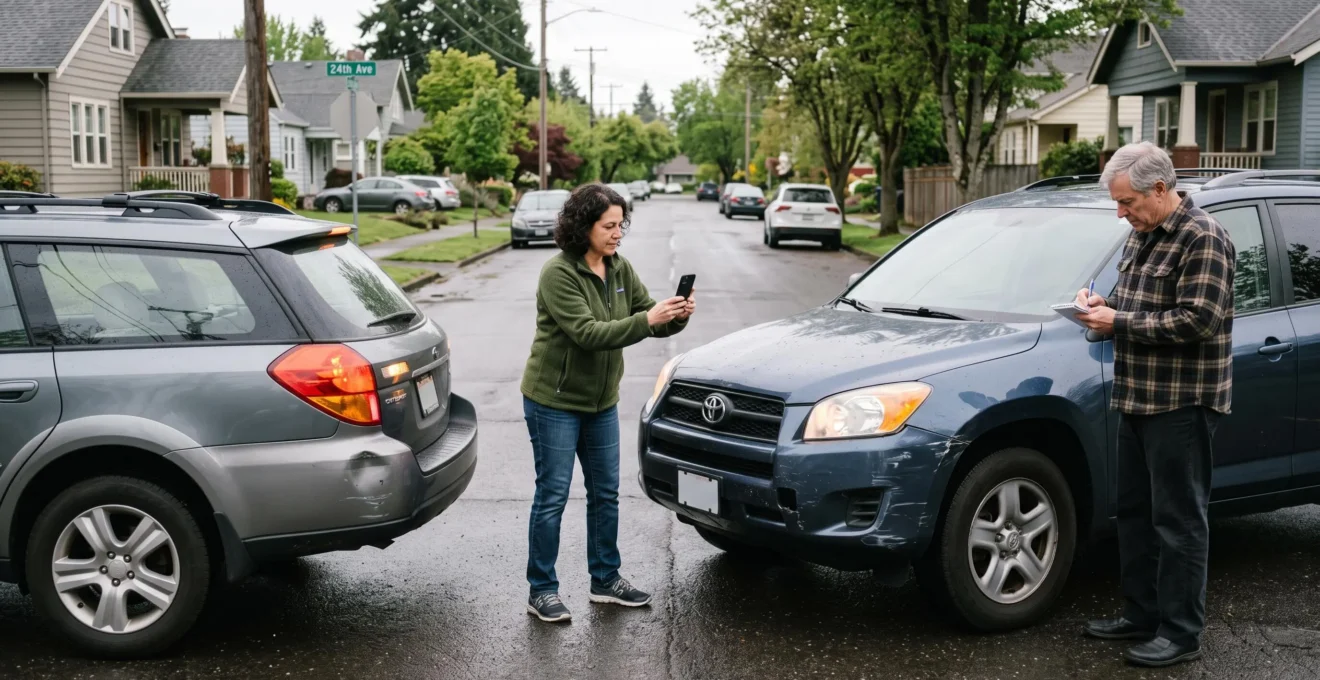
A collision can happen on the familiar road to work, during a short shopping trip or while another driver makes an unexpected mistake. Even careful motorists cannot control every vehicle, road condition or mechanical problem around them. What they can control is how well they are prepared to respond.
Preparing for an unexpected car accident means reducing preventable risks while keeping a practical safety, financial and administrative plan ready. That includes knowing how to secure a collision scene, having essential equipment available, understanding insurance coverage and keeping the information needed for a claim within reach.
Preparation matters because the disruption often continues after the vehicles have been moved. Recovery charges, insurance excesses, replacement transport, repairs and missed commitments can create difficulties that were never part of the original journey.
A workable plan does not require expensive equipment or an elaborate filing system. It requires a few sensible decisions made before stress, injury or conflicting recollections complicate them. Legal duties and insurance arrangements differ between countries, so drivers should adapt these precautions to the rules and policy terms that apply to them.
Unexpected car accident preparation: the essentials
- Prioritise personal safety, assess injuries and obtain emergency assistance before discussing responsibility or collecting evidence.
- Keep accessible emergency equipment, insurance information, important contacts and a simple collision checklist.
- Review excesses, recovery cover, replacement transport and claim procedures before an accident creates an urgent need for them.
- Why Can Serious Accidents Happen on Routine Low-Speed Journeys?
- How Should You Handle the First 10 Minutes After an Unexpected Crash?
- Warning Triangle, Torch or First-Aid Kit: What Should You Keep in the Car?
- What Should You Keep Ready to Avoid Delays After an Unexpected Collision?
- When Does an Unexpected Accident Require Immediate Reporting or Assistance?
- How Can You Prepare for a Vehicle Insurance Assessment After a Claim?
- How Can You Prepare for the Morning Commute Without Starting the Journey Under Pressure?
- Which Common Collisions Can Drivers Most Often Prevent?
Why Can Serious Accidents Happen on Routine Low-Speed Journeys?
Serious accidents can happen on routine, low-speed journeys because familiar roads still contain unpredictable hazards, including pedestrians, turning vehicles, changing visibility and driver errors. Lower speeds generally reduce the energy involved in a collision, but they do not eliminate injury risk. Familiarity can also encourage drivers to underestimate situations that deserve their full attention.
A regular journey may feel safer simply because it has been completed hundreds of times. Drivers know the junctions, parking spaces and usual traffic patterns, making parts of the trip feel automatic. This familiarity can reduce conscious attention to changes in the road environment.
However, it would be misleading to assume that most crashes happen close to home or that familiarity always causes drivers to speed. Collision patterns depend on exposure, road conditions and local circumstances. The practical lesson is narrower: a well-known route is not necessarily a hazard-free route.
Unexpected collisions generally involve a combination of factors that drivers can influence and factors beyond their immediate control.
- External hazards: another driver failing to give way, sudden road obstruction, poor weather or an unexpected mechanical problem.
- Driver-related hazards: inadequate observation, distraction, following too closely or making assumptions about familiar traffic movements.
- Combined circumstances: a predictable manoeuvre becoming dangerous because another road user behaves unexpectedly.
Consider a hypothetical collision in a residential street. A driver travelling slowly encounters a vehicle reversing from a driveway. Both vehicles stop after a minor impact, with no obvious injuries. Although the crash is low speed, the damaged car may need recovery, inspection and temporary replacement.
The financial consequences depend on the insurance policy and the extent of the damage. An excess may apply, towing or storage might fall outside available cover, and the driver may need alternative transport while repairs are arranged. Even when another party is eventually found responsible, reimbursement is not necessarily immediate.
That creates an important distinction between preventing a crash and limiting the disruption after one occurs. Defensive driving addresses the first objective; suitable insurance and practical readiness address the second.
No driver can eliminate uncertainty. Understanding the remaining risk makes it easier to respond calmly if an ordinary journey suddenly becomes a roadside emergency.
How Should You Handle the First 10 Minutes After an Unexpected Crash?
In the first minutes after a collision, stop safely, assess immediate danger, check for injuries and contact emergency services when needed. Warn other road users without exposing yourself to traffic. Only when the scene is reasonably safe should you exchange legally required details and document what happened. Safety always takes priority over photographs or insurance discussions.
The first ten minutes are a useful framework for remembering priorities, not a deadline for completing every action. A serious collision may require emergency assistance throughout that period, while a minor incident can allow information exchange sooner.
The UK’s Highway Code guidance on breakdowns and incidents provides an example of official collision-response advice. It covers warning other traffic, securing relative safety, helping injured people and fulfilling relevant legal duties. Its requirements should not be treated as universal rules for every country.
- Stop and assess the surroundings. Stop as required by local law, switch off the engine when appropriate and activate hazard warning lights. Do not move the vehicle if doing so would create further danger or compromise an applicable legal requirement.
- Check for injuries. Assess yourself and passengers, then other people involved where it is safe to do so. Call emergency services immediately if anyone is injured, trapped, unresponsive or exposed to a serious hazard. Avoid moving an injured person unless immediate danger makes it necessary.
- Protect people from secondary traffic risks. Move to a place of relative safety when possible. Do not stand between damaged vehicles or enter moving traffic to retrieve belongings or photograph the scene.
- Exchange required details. Obtain names, contact information, vehicle registration details and insurance information as required locally. Record the other driver’s account without arguing about responsibility.
- Preserve available evidence. When safe, photograph the vehicle positions, visible damage, road markings, traffic signs and surrounding conditions. Note witness contact details and prepare a factual description of the incident.
At the roadside, distinguish between describing events and making assumptions about liability. Saying that your vehicle was stationary or that you were turning records a factual observation. Declaring yourself entirely responsible before the circumstances are established may create unnecessary confusion.
An apology is not automatically an admission of legal liability in every jurisdiction. Drivers should remain courteous and compassionate without speculating, blaming other people or making promises about insurance payments.
The UK national driving standard on safe collision response recognises the importance of gathering and recording incident information promptly, including photographs or sketches where appropriate.
Early documentation helps preserve details that may otherwise be forgotten. Nevertheless, a photograph is not automatically conclusive evidence, and its usefulness depends on what it shows and how it relates to other information.
Shock can also affect judgment. Someone who initially feels physically well may notice symptoms later. Seek medical assessment when symptoms, the collision mechanism or other circumstances raise concerns. Do not continue driving if pain, dizziness, confusion or vehicle damage makes doing so unsafe.
Keeping a short checklist in the glovebox or on a phone can reduce the number of decisions that must be recalled under stress. The checklist should emphasise safety first rather than encouraging drivers to collect evidence in dangerous conditions.
Once everyone is safe and immediate duties have been addressed, the next challenge is having suitable equipment available without wasting time searching for it.
Warning Triangle, Torch or First-Aid Kit: What Should You Keep in the Car?
A useful car emergency kit combines equipment required by local law with items that improve visibility, personal safety and accident documentation. A warning triangle, torch, first-aid kit, reflective vest and charged power bank can all be useful, but their legal status and safe use differ between jurisdictions. Accessibility matters as much as ownership.
Drivers should organise emergency equipment according to its purpose instead of buying an indiscriminate collection of accessories. Some items help protect people at the roadside, while others support communication or provide information for an insurance claim.
The following comparison is a practical starting point. It does not establish which items are legally mandatory in a particular country.
| Equipment | Primary purpose | Important precaution |
|---|---|---|
| Warning triangle | Warn approaching traffic where permitted and safe | Check local requirements; do not place one on a motorway where prohibited |
| Reflective vest | Improve visibility when outside the vehicle | Keep accessible from the passenger compartment |
| Torch | Provide light for safe inspection or communication | Check batteries and avoid standing in exposed traffic |
| First-aid kit | Provide basic supplies for minor injuries | Inspect expiry dates and damaged packaging |
| Phone and power bank | Contact assistance and record details | Keep charged and carry a suitable cable |
| Insurance information card | Retrieve policy and claims contacts | Update after changing insurer |
| Work gloves | Protect hands during appropriate minor tasks | Do not handle hazardous debris or attempt unsafe repairs |
| Dashcam | Potentially record relevant driving events | Check local recording and privacy rules |
The warning triangle deserves particular caution. Placement rules vary, and setting one out may expose the driver to greater danger. For example, UK motorway guidance instructs motorists not to place a warning triangle on the motorway. Moving to safety and summoning assistance takes precedence over equipment deployment.
Similarly, carrying a first-aid kit does not qualify a driver to provide advanced medical treatment. Basic first-aid training can help motorists understand their own capabilities and when professional intervention is necessary.
The ideal kit also depends on the journey. An urban commuter may have relatively easy access to assistance, while someone travelling through remote areas may need additional weather protection, drinking water or suitable communication arrangements.
Drivers undertaking long rural journeys should consider the possibility of weak phone coverage, delayed vehicle recovery and exposure to extreme temperatures. These circumstances justify a more substantial kit, but they do not make roadside repairs safe in every location.
Make equipment inspection part of an existing maintenance habit. During a seasonal tyre or fluid check, confirm that the torch operates, batteries are charged, first-aid supplies remain usable and frequently needed items are not buried underneath luggage.
Physical equipment addresses immediate needs, but insurance claims often depend just as heavily on having the correct administrative information available.
What Should You Keep Ready to Avoid Delays After an Unexpected Collision?
To reduce avoidable delays after a collision, keep your policy number, claims contact details, vehicle registration information, relevant driver details and a simple incident-recording template readily available. Check recovery and replacement transport cover in advance. A small, regularly updated collision file makes it easier to provide accurate information when an insurer requests it.
A claim can be delayed because relevant information is missing, the circumstances are disputed or the insurer requires further evidence before deciding whether a loss is covered. Preparation cannot remove every stage of a claims investigation, but it can reduce avoidable administrative problems.
A collision file can be stored digitally, with an offline-accessible copy of essential information, or in a secure physical folder. Sensitive documents should not be left unnecessarily exposed inside a vehicle where they could be stolen.
The file should contain the information most likely to be needed:
- Insurance policy number, insurer name, claims hotline and roadside assistance contact.
- Vehicle registration details and relevant driver information for household members who use the vehicle.
- Policy excess, recovery conditions, approved repairer arrangements and applicable claim notification requirements.
- Dated photographs of the vehicle’s condition, with maintenance records stored securely where available.
- An incident template for recording the location, date, approximate time, vehicles involved, witnesses and a factual description.
Replacement transport deserves particular attention. Some policies provide a courtesy car only under specific conditions, such as an eligible repair through an approved garage. Others offer hire-car benefits as an optional extra or exclude certain circumstances.
Verify whether a replacement car is available during repairs, following a total loss or only while an approved repairer has the vehicle. Also check whether the policy places limits on vehicle category, duration, availability or reimbursement.
For a driver who depends on their vehicle for work, childcare or regular appointments, the absence of alternative transport may be more disruptive than the initial collision. Understanding that risk beforehand allows a realistic contingency plan.
A one-time preparation session of approximately thirty minutes is a reasonable personal planning target, although it is not a guaranteed measure of time saved during a claim. The actual benefit depends on the incident, insurer and documentation requirements.
Build your collision preparation file in five steps
- Save the insurer’s claims and roadside assistance numbers, then verify that both contacts are available without internet access. Deliverable: two checked contact entries.
- Review your policy’s excess, recovery cover and replacement vehicle conditions. Deliverable: a short coverage summary.
- Record the relevant vehicle and household driver details securely. Deliverable: an updated vehicle information sheet.
- Take dated photographs of the vehicle’s current exterior condition and store copies securely. Deliverable: a labelled photo folder.
- Create a one-page incident template covering safety, required details, witnesses and photographs. Deliverable: a printable or offline-accessible collision checklist.
Review the file after renewing insurance, changing vehicles or adding a driver. Store sensitive information securely, keep a practical backup and avoid retaining unnecessary personal or medical details.
Administrative readiness is useful only when paired with an understanding of which authorities and organisations must be contacted after different types of collision.
When Does an Unexpected Accident Require Immediate Reporting or Assistance?
An accident requires immediate emergency assistance when someone is seriously injured, trapped or exposed to continuing danger. Police reporting duties vary according to local law, the type of damage, injuries and whether the required information can be exchanged. Insurance notification is a separate obligation governed by the applicable law and policy conditions, even when no claim is intended.
Three different contacts may be relevant after a crash, and each serves a different purpose.
- Emergency services: respond to injuries and immediate threats to life or safety.
- Police: investigate incidents or receive reports when reporting is required by law or justified by the circumstances.
- Insurance provider: receives notification, explains policy procedures and arranges covered services where applicable.
Contact emergency services first when urgent medical care or immediate danger is involved. Police involvement should follow applicable reporting requirements, while the insurer should be notified within the relevant deadline. These steps may overlap in an emergency.
The UK’s GOV.UK vehicle insurance guidance for accidents illustrates why local rules matter. It explains that drivers involved in relevant collisions must provide specified identifying details and report the accident to their insurer even if they do not intend to claim.
In Great Britain, when the legally required details have not been provided at the scene, an applicable collision must be reported to police as soon as reasonably practicable and within twenty-four hours. The twenty-four-hour limit is not permission to postpone reporting when an earlier report is practicable.
This example must not be transferred automatically to the United States, Canada, Australia or other jurisdictions. Some locations use damage-value thresholds; others impose reporting duties based on injury, property ownership or the circumstances of the collision.
Several situations deserve advance consideration because the other party may not be immediately available:
| Situation | Immediate priority | What to verify locally |
|---|---|---|
| Damage to an unattended parked vehicle | Stop safely and identify the property involved | Duties to provide details, contact the owner or report to police |
| Single-vehicle collision damaging public property | Assess danger and prevent further harm | Police or highway authority notification requirements |
| Collision involving wildlife | Avoid further collision and do not approach an injured animal unsafely | Reporting obligations and appropriate wildlife or road authorities |
| Collision with an unidentified or departing driver | Protect occupants and record available facts | Police reporting rules and insurance evidence requirements |
Check insurance notification conditions before any accident occurs. An insurer may require prompt notice even where no immediate repair claim is made. However, a late notification does not automatically invalidate every claim; the consequences depend on applicable law, contract terms and circumstances.
When unsure whether an incident must be reported, consult the relevant official authority and contact the insurer promptly. Record when the contact occurred and any reference number provided.
Once reporting has been addressed, the next challenge may be demonstrating the vehicle’s condition and the extent of the damage during an insurance assessment.
How Can You Prepare for a Vehicle Insurance Assessment After a Claim?
Prepare for a vehicle insurance assessment by gathering accident photographs, relevant maintenance records, repair information and evidence of the vehicle’s condition before the collision. Ask the insurer whether an inspection is required before repairs begin. If the vehicle is declared a total loss, review the valuation evidence and use the available complaint process if you believe the assessment is inaccurate.
The assessor’s role is to establish the nature and likely cause of the damage, consider whether it is consistent with the reported incident and estimate an appropriate repair or settlement outcome under the policy.
Some assessments involve a physical inspection, while others may use photographs or repairer information. The exact process depends on the insurer, jurisdiction, extent of damage and available evidence.
A consistent evidence trail is more useful than an emotional description of the collision. Keep photographs, correspondence and repair estimates together, with dates and clear descriptions. Disclose relevant pre-existing damage rather than assuming it will not be identified.
Before approving substantial repairs or disposing of damaged parts, ask whether the insurer needs to inspect them. Emergency measures that are necessary for safety or preventing further loss should be distinguished from discretionary repairs, and the insurer’s instructions should be documented.
A particularly important assessment concerns whether the car should be repaired or classified as a total loss.
The Financial Ombudsman Service guidance on motor valuations and write-offs explains the UK approach to disputes over vehicle values. Insurers generally assess the market value of a written-off vehicle immediately before the insured event, rather than automatically paying what the owner originally spent or would prefer to spend on a replacement.
Repair economics can influence whether a vehicle is written off, but there is no universal repair-cost percentage that applies to all insurance systems.
If the proposed valuation appears too low, potentially relevant evidence includes:
- Comparable vehicles of similar model, specification, age and mileage available in the relevant market.
- Maintenance and service records supporting the vehicle’s condition.
- Evidence of significant recent work or replacement components, where relevant to market value.
- Documentation explaining optional equipment or unusual specifications.
- An independent professional assessment where justified by the size of the disagreement.
New tyres, servicing and accessories do not automatically increase the valuation by their original purchase price. They may nevertheless provide useful context about the vehicle’s condition.
If the proposed settlement seems incorrect, ask for the valuation method and supporting information. Explain the disagreement with specific evidence, request reconsideration and retain copies of all correspondence.
UK consumers may be able to escalate eligible unresolved complaints to the Financial Ombudsman Service after the insurer’s final response or after eight weeks without a final response. Other countries have different insurers’ complaint procedures, regulators and dispute resolution bodies.
Claim readiness helps manage damage after an accident. Everyday driving habits remain the first opportunity to avoid creating that claim in the first place.
How Can You Prepare for the Morning Commute Without Starting the Journey Under Pressure?
Prepare for a calmer morning commute by completing nonessential decisions the night before, checking road and weather conditions before leaving, and allowing additional travel time when delays are plausible. Once in the vehicle, adjust your seat and mirrors, fasten your seatbelt and remove distractions before moving. A realistic departure plan reduces the temptation to compensate for lost time through risky decisions.
Time pressure can influence the choices drivers make. Someone running late may be tempted to follow another vehicle too closely, change lanes abruptly or spend attention on a navigation device instead of surrounding traffic.
These behaviours are preventable, but allowing extra time does not guarantee that a collision will be avoided. The goal is to remove unnecessary pressure while maintaining normal defensive-driving standards.
Divide preparation into two practical stages.
| When | Preparation | Reason |
|---|---|---|
| The previous evening | Review the planned route and possible disruptions | Reduces rushed route decisions |
| The previous evening | Check fuel or battery charge and collect necessary belongings | Limits avoidable stops and forgotten items |
| Before departure | Check current weather, visibility and road conditions | Supports appropriate route and driving decisions |
| Before departure | Adjust seating, mirrors and seatbelt | Establishes safe vehicle control and occupant protection |
| Before departure | Set navigation and silence unnecessary notifications | Reduces avoidable interaction with devices while driving |
On particularly important days, consider a personal departure buffer. Leaving ten minutes earlier than the calculated journey time is a possible planning rule rather than a scientifically established safety threshold. Longer, unfamiliar or weather-sensitive journeys may require a greater margin.
When delays still occur, the safest response is not to recover lost time through speed. Adjust arrival expectations, arrange a safe opportunity to notify the person waiting and continue driving according to road conditions and applicable limits.
Planning also benefits from understanding the costs of a possible interruption. A driver who knows their breakdown contact, alternative transport options and insurance arrangements has fewer administrative decisions to make while already under pressure.
There is no sound basis for assuming that every accident occurring during a late commute will result in a worse insurance outcome. Insurers assess the evidence, applicable coverage and responsibility rather than simply whether a driver was running behind schedule.
The same approach applies beyond commuting: allow enough attention and flexibility for the hazards that can be prevented, while retaining a plan for events that cannot.
Key takeaways before your next journey
- Focus preventive habits on specific collision mechanisms, such as insufficient following distance and overlooked blind spots.
- Treat an initial collision as a continuing roadside hazard until people and vehicles are safely positioned.
- Keep insurance and emergency arrangements ready for the risks that remain beyond reasonable driver control.
Which Common Collisions Can Drivers Most Often Prevent?
Drivers can reduce the risk of many rear-end collisions, intersection crashes, parking impacts and lane-change incidents through specific defensive-driving habits. Maintaining adequate following distance, checking intersections carefully, observing blind spots and controlling low-speed manoeuvres are practical preventive measures. These habits cannot prevent every collision, particularly when another road user behaves unexpectedly.
The following collision types are grouped by their underlying mechanisms, not ranked by a claimed universal frequency. Their prevalence varies across road networks, traffic conditions and countries.
| Collision type | Typical avoidable mechanism | Useful driving habit |
|---|---|---|
| Rear-end collision | Insufficient following distance or delayed observation | Maintain a time gap appropriate to speed, weather and visibility |
| Intersection collision | Incorrect gap judgment or failure to notice approaching traffic | Check traffic and relevant road users again before committing |
| Parking or reversing collision | Limited visibility and insufficient space awareness | Inspect surroundings, move slowly and stop if visibility is uncertain |
| Lane-change collision | Failure to observe vehicles in blind spots | Use mirrors, signal and perform a suitable blind-spot check |
Following distance is one of the most useful habits to make deliberate. On suitable roads, drivers can choose a fixed roadside reference and count the time between the vehicle ahead passing it and their own vehicle reaching the same point. The appropriate gap depends on applicable driving guidance and conditions, and should increase when visibility or road grip deteriorates.
At intersections, looking once is not always sufficient. A vehicle, cyclist or pedestrian may move into a conflict area between the initial observation and the manoeuvre. A final check before committing can help identify a changing situation.
Parking and reversing require similarly active observation. Mirrors and cameras can assist, but neither guarantees complete visibility. Stop and reassess whenever the path is uncertain. Reverse parking can sometimes make a later forward exit easier, provided the initial manoeuvre can be completed safely and legally.
For lane changes, adjust mirrors appropriately before driving and remain aware that some areas may not be visible through them. Check blind spots as necessary without neglecting the road ahead. A signal communicates intention; it does not establish priority over another road user.
Preventable risk and unavoidable uncertainty are not the same thing. A driver may make reasonable checks and still face an unexpected mechanical failure, an unsafe manoeuvre by someone else or a sudden obstruction.
That distinction is the central reason for combining defensive driving with practical accident preparation.
It is also important to recognise the danger of a secondary collision. After an initial incident, distracted or shaken occupants may step into moving traffic, stand between vehicles or attempt to restart a damaged car without assessing the surroundings.
In those circumstances, protecting people from further harm is more important than clearing traffic quickly or collecting additional photographs. If the vehicle cannot be moved safely, seek appropriate assistance and follow local road-safety instructions.
Choose one practical action today: check your insurance conditions, save your emergency contacts and place a short collision-response checklist where you can retrieve it safely. Then continue building driving habits that reduce avoidable risks. Preparedness is not a prediction that an accident will happen; it is a way to protect your choices when events do not go to plan.
Should you contact your insurer if the damage appears minor?
Check the reporting obligations in your policy and local law. In the UK, government guidance says drivers must notify their insurer even when they do not intend to make a claim. Elsewhere, the requirements may differ. Minor visible damage does not always reveal the full extent of a vehicle’s damage, so record the circumstances and seek appropriate advice before deciding how to proceed.
Can you drive home after a collision if the car still starts?
A working engine does not establish that a vehicle is roadworthy. Damage may affect tyres, steering, brakes, lighting, suspension or safety systems. Do not continue driving if the vehicle appears unsafe, a warning indicates a serious problem or your physical condition makes driving risky. Arrange professional recovery or inspection when necessary and follow applicable local rules.
Does comprehensive motor insurance cover every accident-related expense?
No. Comprehensive insurance does not automatically cover every towing charge, storage fee, replacement vehicle or incidental expense. Coverage depends on the policy, exclusions, applicable excess and circumstances of the incident. Review the policy schedule and wording, and ask the insurer to clarify any uncertainty before relying on a particular benefit.
What should you do if the other driver refuses to exchange details?
Do not threaten, pursue or physically confront the other driver. Prioritise personal safety, record the vehicle registration and observable circumstances if safe, and contact police when required by local law or justified by the situation. Inform your insurer and preserve any relevant photographs or witness information collected lawfully.
How often should an emergency kit and collision file be reviewed?
A seasonal equipment check is a practical routine, while insurance information should be updated whenever the policy, vehicle, drivers or contact details change. Check the condition and expiry dates of supplies, verify power banks and torches, and make sure essential contact information remains accessible without relying entirely on an internet connection.