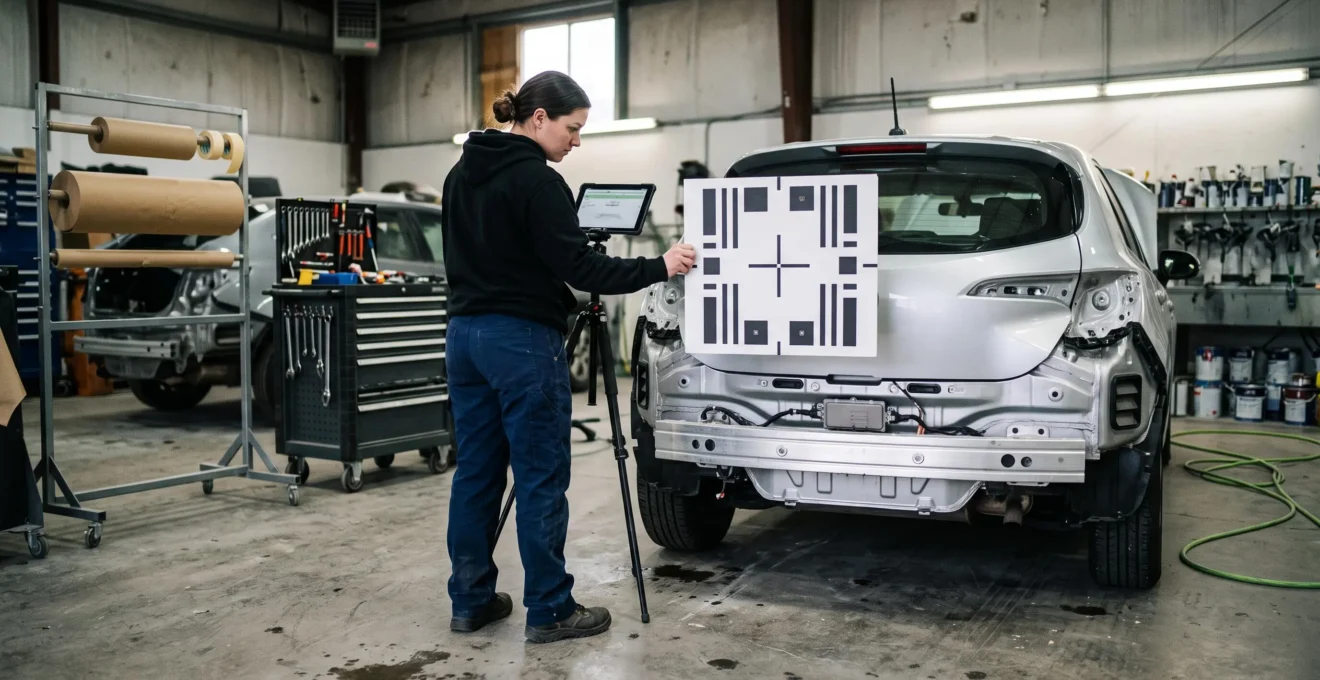
Two cars arrive at different repair shops with what appears to be the same bumper damage. One owner receives a straightforward repair estimate; the other faces a much larger bill involving replacement components, paintwork and electronic calibration. The difference may be justified, but the amount alone does not explain why.
Vehicle repair costs vary because the visible damage is only one part of the job. Labour time, replacement-part specifications, hidden structural damage, vehicle technology and workshop procedures all influence the final price. Two estimates may also describe different scopes of work, making a direct price comparison misleading.
Before authorising a repair, the most useful approach is to separate essential safety work from cosmetic improvements, verify the type of parts being supplied and examine how labour charges are calculated. Where insurance is involved, the proposed repair must also be considered alongside policy conditions and the vehicle’s pre-accident value.
Understanding these differences gives car owners a practical way to question expensive estimates without assuming that the cheapest repair is necessarily the best choice.
Vehicle repair costs: what matters most
- Compare the complete repair scope, including parts, labour, paintwork and any required electronic procedures, rather than the headline price.
- Use manufacturer repair instructions and documented part quality to distinguish genuine savings from potentially unsafe shortcuts.
- Consider the vehicle’s pre-accident value, insurance conditions and future repair risks before approving a substantial bill.
- Why Can a Minor Bumper Repair Cost So Much on a Modern Car?
- How Can You Compare Two Garage Quotes Without Choosing on Price Alone?
- New, Reconditioned or Used Parts: Which Can Reduce Repair Costs Safely?
- Which Low-Cost Repair Shortcuts Can Lead to a Bigger Bill Later?
- When Is a Repair Bill Too High Relative to the Car’s Value?
- Repair or Replace: Which Option Makes Sense for Damaged Car Parts?
- Which Repair Mistakes Can Create Problems With a Collision Claim?
- Which Preventive Maintenance Tasks Save Drivers the Most Trouble Later?
Why Can a Minor Bumper Repair Cost So Much on a Modern Car?
A minor bumper repair can become expensive when the damaged area contains electronic sensors, integrated mounting components or finishes requiring substantial preparation. The workshop may need to remove the bumper, inspect hidden attachments, follow manufacturer-specific repair restrictions and carry out electronic checks. A small scratch or dent therefore does not always mean a small repair.
Modern bumper assemblies may conceal radar units used by driver-assistance systems, alongside parking sensors and associated wiring. Their presence changes what repair methods are acceptable. In some vehicles, modifying the bumper surface or using an unsuitable finish can interfere with sensor operation.
For example, I-CAR‘s technical guidance on Hyundai bumper repairs describes manufacturer restrictions affecting certain bumper covers equipped with corner radar or ultrasonic sensors. Hyundai’s guidance includes precautions against sensor contamination and specific replacement and recalibration requirements for affected radar units.
These requirements are vehicle-specific. They do not mean every damaged bumper needs new sensors or electronic recalibration. The relevant question is whether the manufacturer’s procedure requires those operations for the particular vehicle and damage.
Paintwork introduces another layer of cost. Matching an existing finish may require colour adjustments, preparation and application across a wider area than the original damage. Multi-layer finishes can involve additional operations, while surrounding components may need protection or removal.
The labour section of a quote can therefore reveal more than the replacement-part price:
- Disassembly: removing trim, bumper covers, fasteners and connected equipment to access damage.
- Repair preparation: checking mounts, correcting approved cosmetic damage and preparing surfaces.
- Refinishing: applying appropriate paint materials and restoring the surrounding appearance.
- Electronic procedures: performing scans, calibrations or functional checks when required by the manufacturer.
Repairers also distinguish superficial damage from damage involving mounting points, reinforcement components or energy-absorbing structures. A bumper cover that looks repairable may need replacement if its repair would conflict with manufacturer restrictions.
Ask the garage to identify the damaged components, explain why repair or replacement is recommended and show which operations are required by the applicable repair procedure.
The aim is not to eliminate every expensive procedure. It is to establish which charges are essential for a safe, complete repair and which represent optional cosmetic work.
How Can You Compare Two Garage Quotes Without Choosing on Price Alone?
Two garage quotes should be compared by matching their repair operations, part specifications, labour hours, hourly rates and included services. A lower total is meaningful only when both estimates cover equivalent work. Missing calibration, paint finishing or additional-damage procedures can make one quote appear cheaper without delivering the same completed repair.
Start by requesting written, itemised estimates. The Federal Trade Commission‘s Auto Repair Basics recommends estimates that identify the required repairs, necessary parts and anticipated labour charges. It also advises establishing when further authorisation is necessary before a repairer exceeds an agreed amount.
Labour deserves particular attention. Some garages charge according to estimated standard repair times, while others use actual hours worked. Comparing the hourly rate without comparing the quoted hours can conceal the real source of the difference.
The following comparison makes important differences visible before work begins.
| Comparison point | What to verify | Why it matters |
|---|---|---|
| Replacement parts | Part number, manufacturer and condition | Quotes may use different components or quality specifications. |
| Labour | Estimated hours and hourly rate separately | A cheaper hourly rate can still produce a higher labour bill. |
| Paintwork | Preparation, materials and adjacent-panel blending | Finishing operations may be included in one quote and excluded from another. |
| Electronic procedures | Required scanning, calibration and functional checks | Omissions can affect repair completeness and safety. |
| Warranty | Written terms for parts and workmanship | Coverage and exclusions may differ between repairers. |
| Additional charges | Applicable taxes, disposal and supplementary work | Excluded items can change the final amount payable. |
Warranty wording matters because a replacement part may carry a warranty that does not cover the labour needed to remove and refit it. Ask what happens if the part fails or the repair develops a defect.
For collision repairs, an insurer’s estimate can provide a third reference point. It may identify differences in labour allowances, part choices and the assessed scope of damage. However, an insurer’s estimate is not automatically a complete repair plan, particularly when concealed damage has not yet been inspected.
Ask both an insurer-approved repairer and an independent garage how additional damage is documented and authorised. Network arrangements, insurer procedures and policy terms may affect how supplementary charges are handled.
Five checks to complete before approving a repair quote
- Request a written itemised estimate and keep a copy showing the proposed work, parts and labour charges.
- Match the part numbers and part categories between quotes, producing a list of any differences.
- Check the quoted labour hours, rates and included paint or electronic procedures, marking any missing operations.
- Obtain written warranty terms and a clear rule for approving supplementary charges, saving both documents.
- Ask the repairer to explain significant differences and obtain a revised comparable estimate before signing authorisation.
A transparent, complete estimate gives a stronger basis for choosing a repairer than either the lowest figure or the reputation of a particular garage alone.
New, Reconditioned or Used Parts: Which Can Reduce Repair Costs Safely?
Reconditioned and used components can reduce repair costs when the part is suitable for reuse, its condition can be verified and installation complies with manufacturer requirements. Cosmetic components are often more plausible candidates than safety-critical equipment. The best choice depends on the part’s function, documented history, warranty and the insurance policy’s conditions.
Understanding the terminology helps prevent confusion when a garage offers a cheaper alternative.
| Part category | What it means | What to check |
|---|---|---|
| New OEM | New component supplied under the vehicle manufacturer’s parts system | Correct specification, compatibility and warranty |
| New aftermarket | New component made by an independent supplier | Quality, fit, applicable approvals and manufacturer restrictions |
| Remanufactured or reconditioned | Previously used component restored to working condition | Work performed, test results and written warranty |
| Used or salvage | Component removed from another vehicle | Origin, condition, compatibility and evidence of previous damage |
These categories describe how a component is supplied, not whether it is automatically safe for every application. A used exterior trim piece and an unknown-history airbag present very different levels of risk.
Safety-critical components require particular caution. Airbags, seatbelt restraint components, structural members and crash-management parts should not be substituted solely to reduce the bill. Their suitability must be established against the relevant vehicle manufacturer’s procedures and applicable standards.
For a reconditioned component, request an explanation of the restoration process and any inspection or testing performed. For a salvage part, ask where it came from, whether its identification and compatibility can be verified, and what is known about its condition. Mileage and source-vehicle details can provide useful context where available, but they do not prove that a part is suitable.
A reconditioned wheel, for example, needs more than an attractive surface finish. Its structural condition, previous damage and compliance with relevant repair limits matter before it is accepted for use.
The insurer’s position should also be established before installation. Some policies or claims arrangements may affect which replacement parts are funded, while applicable consumer rights vary by jurisdiction.
Non-original parts do not necessarily reduce resale value or create insurance problems. However, uncertain quality, poor fit, noncompliant repairs or insufficient records can complicate a later inspection, sale or dispute. Retaining the final invoice and part details helps establish what was fitted.
A saving is most defensible when the component’s origin, technical suitability and warranty are clear, rather than when its lower purchase price is the only known advantage.
Which Low-Cost Repair Shortcuts Can Lead to a Bigger Bill Later?
The most costly repair shortcuts are those that conceal damage or depart from required repair procedures. Skipping corrosion protection, reusing damaged attachments, overlooking sensor problems or applying an unsuitable structural repair can create additional work later. Cosmetic economies may be reasonable, but shortcuts involving safety-related components require a much stricter assessment.
A repair that appears acceptable when the vehicle leaves the workshop may deteriorate if the underlying problem remains unresolved.
For example, a repaired metal panel that does not receive appropriate corrosion protection may develop rust around the affected area. The owner can then face further refinishing or panel work beyond the original repair.
Other shortcuts create more immediate concerns:
- Distorted fasteners or mounting clips: reusing damaged components can affect how panels and attached equipment are secured.
- Unsupported structural repairs: substituting an improvised joining method for a manufacturer-specified process may compromise the repaired assembly.
- Unverified sensor operation: failing to complete required diagnostic or calibration procedures can leave driver-assistance systems operating incorrectly.
- Concealed damage: refinishing visible surfaces without examining affected attachments can leave the underlying problem unresolved.
The distinction between cosmetic and structural work is central. A budget-conscious owner might reasonably accept a visible scratch on an older vehicle. That decision is fundamentally different from accepting a compromised crash-related component.
After the repair, inspect the vehicle in good light. Uneven panel gaps, paint overspray, poorly aligned trim and unexpected warning lights are reasons to request an explanation. These observations do not independently establish that the repair is unsafe, but they justify checking the work.
Photographs taken during disassembly and the completed repair order can help clarify what was discovered, replaced and tested. Where safety is in doubt, request an assessment by a suitably qualified repair specialist before relying on the vehicle.
A later collision or mechanical failure can also raise questions about whether earlier damage was repaired correctly. Insurance consequences depend on the facts, the causal connection and the applicable policy and law; a previous poor repair does not automatically invalidate a subsequent claim.
Reducing the cost of nonessential appearance work can be sensible. Reducing necessary structural protection, safety procedures or repair documentation is a substantially different decision.
When Is a Repair Bill Too High Relative to the Car’s Value?
A repair bill becomes difficult to justify when the complete cost approaches or exceeds the vehicle’s pre-accident market value, particularly if further damage may be discovered. Insurers may classify such vehicles as total losses, but the decision depends on local rules, policy terms and economic considerations. There is no single universal percentage that applies everywhere.
The key distinction is between what the vehicle is worth and what it would cost its owner to replace it. Those amounts are not necessarily identical.
In the United States, the NAIC‘s automobile insurance consumer information explains that total-loss assessments concern the vehicle’s worth immediately before the accident. Comparable local vehicles may be considered, and consumers are encouraged to research valuations independently.
To evaluate an estimate, gather evidence of the car’s model, specification, mileage, condition and maintenance history. Comparable completed sales, where verifiable, can provide useful market evidence. Advertised prices can also offer context, but an asking price does not establish what a vehicle actually sells for.
Hypothetical example: a repair near the vehicle’s value
Consider a vehicle with an estimated pre-accident market value of $8,000 and a proposed repair costing $6,500. These figures are illustrative, not market averages or an insurance threshold.
The repair represents a substantial share of the vehicle’s value. Before authorising it, the owner should investigate possible supplementary damage, insurer settlement rules and whether repair costs could increase after disassembly. The figures alone do not establish whether the insurer must declare a total loss.
The treatment of written-off vehicles also differs by country. In the United Kingdom, UK government guidance on insurance write-offs distinguishes categories A and B, which cannot be repaired for road use, from categories N and S, which may return to the road after appropriate repairs.
Depending on the classification and insurer arrangements, retaining a written-off vehicle may be possible. However, salvage history, repairs, registration obligations and future resale implications must all be considered.
Outstanding finance introduces another problem. A market-value settlement may be insufficient to clear an existing loan. Any additional protection, such as guaranteed asset protection cover, depends on its actual terms and exclusions.
Owners of unusual or modified vehicles should also check whether modifications have been declared and how the policy values them. Sentimental value does not necessarily influence the insurer’s assessment.
The right financial decision may be a full repair, a limited approved repair or a settlement instead. The essential step is to compare the complete economic consequences, not only the garage’s estimate.
Repair or Replace: Which Option Makes Sense for Damaged Car Parts?
Repairing a damaged part makes sense when the manufacturer permits the procedure, the part can retain its required function and the total repair cost is competitive. Replacement is more appropriate when damage exceeds repair limits, affects critical safety functions or makes restoration uneconomical. The correct decision depends on the component, not a blanket preference for repair or replacement.
Some components offer several acceptable repair methods. Others have strict restrictions because their performance during normal driving or a collision is essential.
| Component | Repair may be possible when | Replacement or specialist action is needed when |
|---|---|---|
| Exterior body panel | Damage is cosmetic and within approved repair limits | Damage exceeds structural or material repair limits |
| Alloy wheel | Surface restoration is permitted and its structural condition is satisfactory | Cracks, distortion or other damage fall outside approved limits |
| Windscreen | A chip meets applicable repair-size and location criteria | Cracks, location or other defects make repair unsuitable |
| Airbag or restraint component | Only manufacturer-authorised inspection or servicing applies | Deployment, damage or relevant procedures require replacement |
| Structural body member | Manufacturer instructions expressly permit the repair | Damage exceeds those procedures or specified replacement limits |
| Integrated headlamp | A manufacturer-approved serviceable part can be restored or replaced separately | The affected assembly is non-serviceable or cannot be restored to specification |
Total job cost matters more than part price alone. A relatively inexpensive component can require extensive disassembly, while an expensive integrated unit may have no approved partial repair method.
For exterior panels, a repair may preserve the original component and avoid the cost of a replacement. Yet filling and refinishing heavily damaged material is not automatically better if the result cannot meet acceptable durability or appearance standards.
Integrated electronic components introduce a further constraint. Replacing a headlamp or sensor assembly may require coding, alignment or calibration, depending on the model. A quote should identify these associated operations rather than treating the purchase of the part as the complete job.
If an insurer proposes repair while the garage recommends replacement, request the technical basis for both positions. Manufacturer documentation, photographs and a written description of the damage can support a reassessment.
The insurer’s cost assessment does not replace the need for a technically appropriate repair. Equally, a garage’s preference for a new part does not establish that an approved repair is impossible.
A well-supported decision reconciles safety, repairability, long-term durability and overall expense instead of choosing the cheapest individual component.
Which Repair Mistakes Can Create Problems With a Collision Claim?
Collision claims can become complicated when repairs begin without checking insurer requirements, damage is poorly documented or additional work is performed without appropriate approval. Missing photographs, incomplete invoices and confusion between accident damage and pre-existing defects can also create disputes. Protecting a claim starts with documenting the damage and establishing the authorisation process before repair work begins.
The applicable process depends on the insurance policy and jurisdiction. An insurer may have requirements concerning inspection, repair estimates, notification and supplementary damage. Choosing an independent garage does not necessarily eliminate coverage, but the implications should be checked before authorising work.
When possible and safe, document visible damage before dismantling begins. Photographs should show the overall affected area and relevant details. The garage can then document hidden damage discovered during inspection.
Suppose a repairer removes an apparently damaged bumper and finds additional damage to a mounting structure. That new information may change the estimate materially. The garage should report it through the applicable insurer-approval process rather than assuming the original authorisation covers every additional operation.
Keep accident damage separate from unrelated wear or previous damage. If the vehicle also has an old scratch, corrosion or an existing mechanical defect, combining that work with the collision repair without disclosure can create serious claim problems.
Useful records include:
- Photographs of the damage before and during repair.
- The initial written estimate and any revised estimates.
- Written authorisations for supplementary work.
- An itemised final invoice identifying parts and labour.
- Correspondence explaining disputed repair methods or charges.
If the insurer’s estimate differs from the final garage bill, request a clear reconciliation of the differences. Check whether the disagreement concerns labour rates, parts, omitted procedures or newly discovered damage.
Where the disagreement persists, review the policy’s complaint, appraisal or dispute-resolution provisions. Independent technical assessment may help establish the necessary repair scope, although access to specific procedures and remedies depends on local rules.
Paying a disputed supplementary charge before clarifying reimbursement can create financial uncertainty. Where possible, resolve the authorisation and coverage questions before incurring the expense.
Clear records cannot guarantee that an insurer will accept every charge, but they make the repair history easier to establish and disagreements easier to investigate.
Key decisions before the next repair
- Separate urgent safety and reliability requirements from appearance or comfort improvements when allocating a limited budget.
- Preserve maintenance invoices and service records as evidence of vehicle condition, particularly when a valuation is disputed.
- Use the manufacturer’s maintenance schedule to identify preventive work instead of waiting for a component to fail.
Which Preventive Maintenance Tasks Save Drivers the Most Trouble Later?
The most valuable preventive maintenance tasks are those that protect essential mechanical systems and keep the vehicle safe and roadworthy. Manufacturer-scheduled fluid and timing-system maintenance, tyre and brake checks, and early attention to corrosion can help prevent more serious problems. Consistent records also provide useful evidence of vehicle condition when repair costs or insurance valuations are disputed.
Not all maintenance items carry the same financial implications. Some affect immediate safety, while others primarily influence reliability, vehicle condition or comfort.
Brakes and tyres deserve regular attention because their condition affects vehicle control. Tyre wear, incorrect pressures or deteriorated braking components should be addressed according to the manufacturer’s specifications and relevant roadworthiness rules.
Engine maintenance also matters. Oil and coolant servicing help protect mechanical components from avoidable wear or operating problems. Timing belts, chains and associated components should be inspected or serviced according to the manufacturer’s vehicle-specific requirements; their service needs are not interchangeable.
Corrosion deserves attention before it becomes extensive. Early inspection of exposed or previously repaired areas can identify developing damage while the affected component may still be repairable.
A practical spending order is to prioritise:
- Safety and legal compliance: tyres, brakes, lighting and defects affecting roadworthiness.
- Manufacturer-scheduled critical maintenance: essential fluids, timing-related work and specified inspections.
- Developing defects: leaks, corrosion, unusual noises and warning indicators requiring diagnosis.
- Nonessential improvements: comfort items and minor cosmetic concerns that do not affect safe operation.
A documented service history can support an assessment of the vehicle’s overall condition. That may help when discussing pre-accident value, although maintenance expenditure does not automatically increase an insurance payout by the amount spent.
Maintenance-related insurance consequences should also be treated carefully. Neglected tyres or brakes may become relevant to accident causation or liability in particular circumstances, but their condition does not automatically remove collision coverage. Policy terms, applicable law and the facts of the incident determine the outcome.
Keep receipts showing the date, mileage, service performed and parts supplied. Digital records can be useful, provided the owner can access them when selling the vehicle or making a claim.
Before the next service appointment, compare the garage’s recommendations with the manufacturer’s maintenance schedule and request a written explanation of any additional work. This simple review helps direct spending towards repairs that genuinely protect safety, reliability and long-term value.
Can a garage increase the final bill after giving an estimate?
Additional damage or necessary work can change the estimated cost, but the garage’s obligations concerning notification and approval depend on the agreement and applicable consumer law. Ask for written authorisation rules before work begins and require a revised estimate when significant additional work is discovered.
Does a more expensive repair quote mean the garage provides better quality?
Not necessarily. A higher quote may include additional labour, better-documented procedures or different parts, but price does not prove workmanship quality. Compare the repair scope, applicable manufacturer procedures, warranty terms and evidence of the garage’s ability to complete the work correctly.
Should a repair quote include taxes and other additional charges?
The required presentation of taxes and charges depends on local law and the type of estimate. To avoid surprises, ask the garage to identify applicable taxes, materials, disposal fees and potential supplementary work, and confirm whether the quoted total includes them.
Can vehicle repairs affect the manufacturer’s warranty?
Warranty consequences depend on the vehicle, jurisdiction, warranty terms and whether a repair or component causes a relevant defect. Using an independent garage or non-original component does not necessarily invalidate the entire vehicle warranty. Keep repair documentation and confirm technical compatibility before installation.
Is getting a second repair estimate worthwhile if the vehicle is still driveable?
A second estimate can be useful for expensive, complex or disputed work. However, a vehicle that can move under its own power is not necessarily safe to drive. If steering, brakes, structure, restraints or other safety-related components may be affected, obtain professional guidance before using it on public roads.