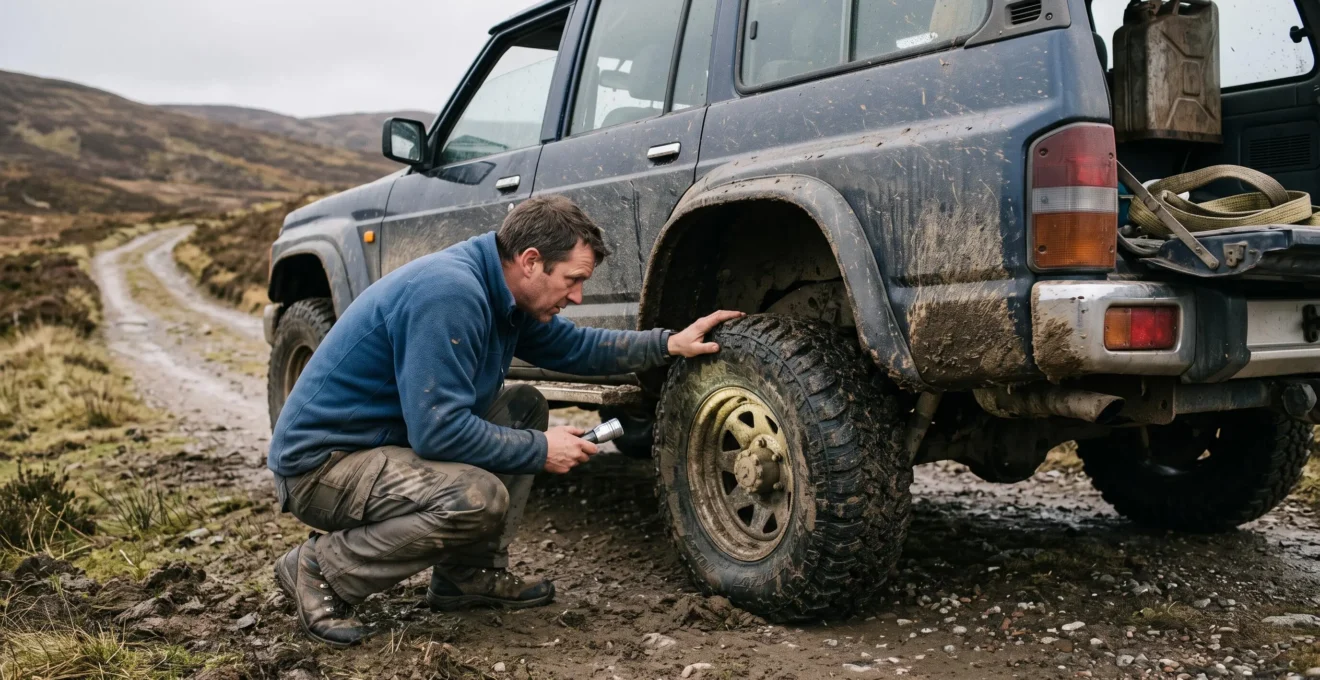
Driving away from paved roads can turn an ordinary weekend trip into an expensive mechanical problem. A shallow rut can damage a low-mounted component, loose stones can cut a tire, and an unexpected muddy section can leave a vehicle stranded far beyond the reach of conventional roadside assistance.
Yet off-road driving does not automatically require a dedicated expedition vehicle. Some maintained gravel roads are suitable for ordinary cars, while rocky tracks, deep sand and water crossings demand substantially different capabilities. The important distinction is between the route a vehicle can safely negotiate and the terrain its driver merely hopes it can handle.
Insurance adds another layer of uncertainty. A vehicle may be legally permitted on a route without its own-damage policy covering incidents there. Conversely, having collision insurance does not establish that every off-road accident, mechanical failure or recovery expense will be paid.
Safe recreational off-road driving therefore starts with four decisions: matching the vehicle to the terrain, inspecting its condition, confirming access and insurance arrangements, and recognising when turning around is the sensible option.
Off-road driving essentials
- Assess ground clearance, tires, vulnerable underbody components and route conditions before leaving a maintained road.
- Check insurance exclusions and recovery assistance in writing; third-party liability cover is not the same as protection for your vehicle.
- Slow down for obstacles, avoid uncertain water crossings and abandon routes when weather, isolation or terrain exceeds your capabilities.
- Why Can Light Off-Road Driving Damage a Car Designed for Normal Roads?
- How Should You Check Your Vehicle Before Driving on Rough Terrain?
- Two-Wheel Drive or Four-Wheel Drive: Which Is Better for Occasional Off-Road Use?
- Which Beginner Mistakes Cause the Most Off-Road Vehicle Damage?
- When Should You Avoid an Off-Road Route Because Conditions Are Too Risky?
- When Should Drivers Recheck Their Legal Right to Use a Vehicle?
- Public Road or Private Land: Which Driving Rules Still Apply?
- What Changes Legally When You Drive a Vehicle on a Public Road?
Why Can Light Off-Road Driving Damage a Car Designed for Normal Roads?
Light off-road driving can damage a conventional car because its ground clearance, tires and exposed mechanical components may not tolerate uneven surfaces or sharp stones. Even a modest gravel track can strike the underbody, bend a wheel or overload suspension components. Some damage occurs immediately; other problems develop gradually through repeated vibration and abrasion.
Passenger cars are primarily engineered around normal road conditions. Their suspension can absorb ordinary bumps, but a deep rut introduces a different problem: the underside of the car may contact the ground before its wheels can climb over the obstacle.
The National Park Service off-pavement vehicle safety guidance identifies insufficient ground clearance and unsuitable tires among the risks encountered on rough desert roads. It also warns that low-clearance vehicles can damage components such as the engine oil pan.
The potential consequences extend beyond visible scratches:
- Underbody impacts: a protruding rock can strike an oil pan, exhaust system or protective panel.
- Tire and wheel damage: sharp stones or abrupt pothole edges can cut sidewalls or deform rims.
- Suspension stress: repeated impacts may accelerate deterioration in bushings, joints and dampers.
- Dust contamination: prolonged dusty operation may place additional demands on air filtration and maintenance.
- Drivetrain vulnerability: exposed joints and rubber boots can be damaged by contact with obstacles.
A particularly important distinction is between sudden accidental damage and deterioration that accumulates over several journeys. A single collision with a rock may leave identifiable physical evidence. Progressive wear may produce a mechanical failure without one clearly identifiable accident.
That distinction matters when examining insurance. The California Department of Insurance explains that collision coverage can address damage involving objects such as rocks or trees, while ordinary mechanical breakdown and wear are different categories of loss. However, whether a particular off-road collision is insured depends on the actual contract and its exclusions.
Before setting out, assess your vehicle’s minimum ground clearance, tire condition and exposed components against the roughest section of the planned route. A four-wheel-drive badge does not substitute for that assessment.
If the vehicle’s underside is likely to scrape on ordinary obstacles, choosing a smoother route is more sensible than relying on careful driving to eliminate every risk.
How Should You Check Your Vehicle Before Driving on Rough Terrain?
Before driving on rough terrain, inspect the tires, spare wheel, fluids, underbody, battery and essential recovery equipment. Check vehicle documents, insurance conditions and assistance arrangements separately. For remote routes, add reliable communication, emergency supplies and a recovery plan. Repeat a targeted inspection afterward to identify damage while its circumstances are still clear.
Start with the tires. Check inflation pressures against the vehicle and tire manufacturer’s guidance, accounting for the intended load and terrain. Look for cuts, sidewall bulges, embedded objects and uneven wear. Confirm that the spare is serviceable and that the wheel-changing equipment can be used safely.
A tire repair kit designed for a small tread puncture may be ineffective against a serious sidewall tear. Discovering this limitation after reaching an isolated track can turn a manageable puncture into an expensive recovery.
Next, inspect engine oil, coolant and other applicable fluid levels, and investigate any visible leaks. Check that the battery is secure, protective panels are properly attached and no component appears loose beneath the vehicle.
Insurance readiness is equally practical. Keep access to registration and insurance documents, confirm permitted drivers and retain relevant maintenance records. Review whether roadside assistance reaches unpaved tracks or stops at ordinarily accessible roads.
For a short journey along a maintained gravel road, these basic checks may be proportionate. Remote rocky terrain requires a more demanding assessment, particularly when mobile reception, passing traffic and conventional towing services cannot be relied upon.
Five checks to complete before departure
- Inspect every tire: record pressures and confirm that the spare and wheel-changing equipment are usable.
- Check mechanical condition: complete a short inspection record covering fluids, leaks, battery security and exposed underbody components.
- Confirm insurance: save the relevant policy wording and written clarification of off-road exclusions or assistance limits.
- Prepare for isolation: retain a route plan identifying the destination, expected return and intended communication arrangements.
- Document vehicle condition: take dated pre-trip photographs of tires, wheels and accessible vulnerable areas to help distinguish existing damage from later findings.
After returning, inspect tires, wheels, suspension areas and the underside again. Look for fresh leaks, displaced panels or cuts. If the vehicle has sustained an impact, document what happened and follow the insurer’s reporting instructions promptly.
Photographs and maintenance records can help establish a timeline, but they do not guarantee that a claim will be accepted. Coverage still turns on policy terms, applicable law and the circumstances of the incident.
Once the vehicle’s condition is established, the next question is whether its drivetrain and physical design are suitable for the routes you actually intend to drive.
Two-Wheel Drive or Four-Wheel Drive: Which Is Better for Occasional Off-Road Use?
For occasional travel on maintained gravel tracks, a suitable two-wheel-drive vehicle may be sufficient. Four-wheel drive becomes more useful when traction is limited by loose, slippery or uneven surfaces, but it does not guarantee safe passage. Tire suitability, ground clearance, vehicle geometry and driver judgement can be more decisive than drivetrain labels alone.
A two-wheel-drive SUV with adequate clearance and appropriate tires may comfortably negotiate a firm, relatively smooth track. A road-focused four-wheel-drive vehicle with low-profile tires, limited ground clearance and vulnerable bodywork may struggle on the same route if sharp obstacles are present.
That does not mean two-wheel drive generally outperforms four-wheel drive. When tire grip and other conditions are comparable, distributing drive to four wheels can improve the ability to move across slippery or loose surfaces. Its advantage depends on the vehicle’s actual drivetrain, tires and terrain.
For occasional use, compare the options against practical requirements rather than their names.
| Decision factor | Two-wheel drive | Four-wheel drive |
|---|---|---|
| Maintained gravel roads | Often suitable with adequate clearance and tires | Usually capable, subject to the same physical limitations |
| Loose or slippery surfaces | Greater likelihood of traction limitations | Potential traction advantage, depending on the system |
| Deep ruts and protruding rocks | Clearance and geometry remain critical | Four driven wheels cannot prevent underbody contact |
| Remote recovery | May require assistance when traction is lost | May still become stuck or require specialist recovery |
| Purchase and upkeep | Vehicle-specific costs and mechanical complexity vary | Additional drivetrain components may increase maintenance needs |
The most important decision variables are route frequency, terrain severity, isolation and carried load. A vehicle regularly carrying passengers and equipment over broken rocky tracks needs a different margin of capability from one visiting a well-maintained campsite occasionally.
Modifications create a further consideration. Suspension lifts, replacement wheels, specialist tires, winches and other accessories may affect roadworthiness, insurance declarations or the amount of equipment covered. Requirements depend on the insurer and jurisdiction.
Do not assume that a modification automatically invalidates insurance, or that a manufacturer-approved accessory is automatically covered. Ask the insurer how the equipment and intended use are treated.
A capable vehicle can increase the range of accessible routes, but it cannot compensate for mistakes in speed, obstacle assessment or driver technique.
Which Beginner Mistakes Cause the Most Off-Road Vehicle Damage?
Common beginner mistakes include driving too fast over rough surfaces, entering water without assessing the crossing, using abrupt controls on loose ground and misjudging rocks or ruts. Another serious error is continuing into increasingly difficult terrain without a safe exit. These mistakes can cause immediate damage or leave a vehicle stranded in hazardous conditions.
Excessive speed over uneven ground is particularly deceptive. A bump that the suspension can manage at low speed may produce a severe impact when approached too quickly. Bottoming out can damage the underbody, while repeated hard impacts place additional stress on wheels and suspension components.
Speed should be chosen so the driver can see, assess and negotiate the surface safely. Slowing down does not mean crawling blindly through every obstacle; it means maintaining sufficient control and avoiding impacts beyond the vehicle’s capabilities.
Water crossings present a different risk. A flooded depression can conceal deep ruts, strong currents or an unstable surface. Water entering an engine’s air intake can cause catastrophic internal damage. Electrical systems, bearings and cabin components may also be affected.
If the depth, current, surface or safe exit cannot be established, do not attempt the crossing. Walking into unknown or moving water to measure it can itself be dangerous.
Other frequent errors include:
- Accelerating aggressively when wheels start spinning, increasing the risk of digging into soft ground.
- Braking abruptly on loose gravel, where stopping distances and directional stability may change.
- Failing to watch the intended path of individual wheels around sharp obstacles.
- Ignoring the departure angle when leaving a ditch or cresting a rise.
- Continuing past a safe turning point simply because part of the route has already been completed.
Insurance treatment depends partly on what physically caused the loss. The California Department of Insurance automobile insurance guide explains the distinction between collision coverage and ordinary breakdown or wear. An abrupt impact and deterioration from prolonged use may therefore raise different coverage questions.
Nevertheless, a collision is not automatically covered merely because it occurred suddenly. Off-road exclusions, applicable conditions and the policy’s definition of insured damage must also be checked.
Before negotiating a difficult obstacle, identify where the vehicle can stop or turn back. If proceeding would leave no reliable escape route, the correct technique may be to avoid the obstacle entirely.
Driver technique reduces risk, but changing weather and deteriorating ground conditions can make even a familiar route unsuitable.
When Should You Avoid an Off-Road Route Because Conditions Are Too Risky?
Avoid an off-road route when recent weather, deep ruts, uncertain water depth, limited recovery options or inadequate driver experience make safe passage doubtful. Route descriptions are not guarantees of current conditions. If the terrain exceeds your vehicle’s capabilities or you cannot identify a safe way back, postpone the journey or choose another route.
Rain can transform firm earth into slippery mud, particularly on clay-rich surfaces. Snowmelt may saturate tracks and conceal unstable ground. A route considered easy during a dry season can become impassable after a storm.
Visible warning signs include fresh recovery tracks, deep wheel ruts, substantial standing water, washed-out edges and sections where the route is no longer clearly identifiable.
Isolation increases the consequences of a mistake. A minor puncture or immobilisation may be manageable near a populated road but far more serious when communication is unavailable and no suitable recovery vehicle can reach the location.
The National Park Service’s Mojave National Preserve’s official 4WD route information highlights unreliable mobile reception, potentially impassable roads following storms and the importance of preparing for mechanical difficulties. These observations concern the preserve’s desert conditions, but they illustrate why recent route information matters.
A practical go/no-go decision can be made by examining four questions:
- Ground: Are ruts, mud, loose rock or water likely to exceed the vehicle’s physical limits?
- Weather: Could current or forecast conditions deteriorate before the return journey?
- Recovery: Is there a realistic means of obtaining assistance if the vehicle becomes immobilised?
- Experience: Can the driver safely negotiate the route without depending on an uncertain manoeuvre?
The financial argument for turning back is straightforward. Abandoning a route may cost time and inconvenience. Becoming stranded can involve vehicle repairs, specialist recovery and additional transport expenses.
Insurance and roadside assistance should not be assumed to absorb those costs. Some policies impose location, use or recovery restrictions, and some incidents may fall outside the insured events altogether. Exact coverage must be confirmed rather than inferred from the presence of roadside assistance on a policy schedule.
When a track becomes progressively worse, stop while there is still firm ground and enough room to manoeuvre safely. Do not drive farther merely to find out whether the next section improves.
Physical safety is only one part of the decision. A technically passable track may still be closed to vehicles or subject to legal restrictions.
When Should Drivers Recheck Their Legal Right to Use a Vehicle?
Drivers should recheck their legal and insurance position whenever the vehicle, driver, intended use or jurisdiction changes. Key triggers include lending the vehicle, fitting modifications, entering organised activities, crossing borders and renewing insurance. A valid driving licence and registration do not by themselves establish that off-road use is lawful or insured.
It helps to separate three questions that are often treated as interchangeable.
First, is the driver entitled to operate the vehicle in the relevant circumstances? Licensing categories and requirements differ across countries and may depend on vehicle type, weight, commercial activity or the particular event.
Second, does the vehicle satisfy the registration, inspection and technical requirements applicable to the roads or land involved? A vehicle prepared exclusively for closed-site use may not necessarily satisfy public-road rules.
Third, does the actual insurance contract cover the proposed activity? This question is separate from legal permission to drive.
Recheck these matters when:
- A different person will drive, particularly if the policy names or excludes specific drivers.
- Suspension, wheels, tires, towing equipment or recovery accessories are altered.
- The vehicle moves from private recreational use into paid work, organised instruction or competition.
- The journey crosses into another country, state, province or legal jurisdiction.
- The policy is renewed or replaced and its wording may have changed.
Some activities require additional permissions or insurance arrangements; others may be permitted under an existing policy. There is no universal rule covering every recreational off-road setting across English-speaking countries.
When reading insurance documents, examine the declarations, permitted uses, territorial limitations, excluded drivers, modifications, competition exclusions and roadside recovery terms. Ask the insurer to clarify whether the specific intended route and activity fall within coverage.
Obtain the explanation in writing and keep it with the relevant policy documents. A verbal reassurance without clear reference to the insured activity can leave substantial uncertainty if a claim occurs.
Once eligibility is confirmed, the next step is to establish whether the proposed track is legally accessible and which rules apply to its location.
Public Road or Private Land: Which Driving Rules Still Apply?
Driving rules depend on the legal status of the route, not simply whether it is paved or privately owned. Public highways, public-access tracks, restricted trails and genuinely private land may have different requirements. Permission from a landowner does not automatically remove licensing, insurance, environmental or liability obligations, and the precise rules vary by jurisdiction.
A gravel road can be legally public even when it looks remote. Equally, a wide and frequently used forest track may be restricted to authorised vehicles. Surface appearance cannot establish a right of access.
Before entering a route, establish whether it is a public road, a legally recognised right of way, a designated motor-vehicle trail or land requiring specific permission. A gate, warning notice or closure sign should never be dismissed on the assumption that recreational driving is harmless.
Private ownership is not the only relevant factor. In some jurisdictions, road-traffic obligations extend to places accessible to the public even when the underlying land is privately owned. The precise test can depend on local legislation and actual public access.
For example, the National Park Service restricts off-pavement travel in Mojave National Preserve to existing roads open to motor vehicles. Cross-country driving is prohibited there. Those restrictions are specific to the preserve and cannot be automatically applied to other parks or countries.
Landowner permission is not a blanket legal exemption. Even with consent to enter private property, a driver may remain responsible for injuring another person, damaging property or harming protected habitats.
Insurance requires a parallel check. A policy may distinguish ordinary road use from recreational trail driving, track activities or organised events. The exact location and activity may therefore matter to a claim, but entering a restricted route does not automatically establish the outcome of every insurance dispute.
When planning an unfamiliar route, use current information from the relevant road authority, park manager or landowner. Record any required permission and clarify restrictions on vehicles, access hours or permitted activities.
Do not create bypasses around obstacles or drive across vegetation simply because the original track has become difficult. Apart from potential environmental damage, leaving a designated route may introduce legal and recovery problems.
A route with lawful access still requires another check whenever a journey includes conventional public roads, especially if the vehicle has been modified for rough terrain.
Key points before returning to public roads
- Off-road suitability and roadworthiness are separate: recovery accessories, tires and suspension modifications may need individual compliance checks.
- A short public-road connection can bring ordinary registration, insurance, equipment and driver-licensing requirements into play.
- Check the exact jurisdiction before travelling; rules applying to one country or park do not establish requirements elsewhere.
What Changes Legally When You Drive a Vehicle on a Public Road?
When a vehicle enters a public road, applicable road-traffic rules govern its use, including driver licensing, registration, insurance and technical compliance. An off-road-capable vehicle is not automatically road-legal. Even a brief journey between trails can require compliant tires, lighting, safety equipment and documentation under the relevant jurisdiction’s rules.
In the United Kingdom, official UK government vehicle insurance requirements state that third-party motor insurance is the legal minimum for driving on roads. This cover addresses liability toward others but does not pay for damage to the policyholder’s own vehicle.
Requirements are not identical across English-speaking jurisdictions. In the United States, Canada and Australia, relevant obligations can vary by state, province or territory as well as by vehicle class and intended use.
For a mixed on-road and off-road journey, consider the following compliance areas:
- Driver eligibility: the correct and valid licence or other legally required driving entitlement.
- Registration: current registration or lawful exemption where applicable.
- Insurance: the minimum compulsory cover for the relevant road and any additional protection the driver expects to have.
- Vehicle condition: functioning lighting, road-compliant tires, required equipment and applicable inspection obligations.
- Modifications: confirmation that suspension changes, wheel fitments, accessories and other alterations are lawful for road use.
Modifications deserve particular attention. A specialist tire suitable for loose terrain may not satisfy a jurisdiction’s road-use requirements. A suspension alteration may affect vehicle dimensions, handling or inspection status. Equipment mounted for off-road recovery can also require attention to secure installation and roadworthiness.
None of these questions can be resolved merely by showing that a vehicle performs well on rough ground.
Following an incident on a public road, several issues may arise separately: civil liability to other people, possible regulatory or criminal consequences, and entitlement to insurance payments for the vehicle itself. Their relationship depends on the applicable law, policy provisions and facts of the incident.
A compulsory liability policy should not be confused with comprehensive protection against every loss. Third-party obligations and cover for damage to the insured vehicle are distinct matters.
The practical next step is to write down the intended route, inspect the vehicle, verify the applicable road and access rules, and obtain written clarification of uncertain insurance provisions before departure. If any essential requirement remains unresolved, choose a lawful, lower-risk route or postpone the trip.
Does comprehensive car insurance automatically cover driving on dirt tracks?
No. Comprehensive insurance and collision insurance are different coverage categories in some jurisdictions, and neither label guarantees protection for every off-road incident. Review the contract’s exclusions, permitted uses and territorial conditions, and obtain written clarification for the intended route.
Can an ordinary car safely travel on a gravel road?
Some maintained gravel roads are suitable for ordinary cars when the surface is firm and ground clearance is adequate. Sharp stones, deep ruts, exposed rocks or recent rain can change that assessment. Vehicle suitability must be evaluated against the specific route and current conditions.
What should a driver do after hitting a rock beneath the car?
Stop safely and inspect for fluid leaks, damaged tires, displaced panels and other visible problems. Do not continue driving if significant mechanical damage is suspected. Document the incident, arrange suitable assistance where necessary and follow the insurer’s reporting requirements if a claim may be involved.
Does roadside assistance cover recovery from a remote trail?
Not necessarily. Assistance policies may restrict access by vehicle type, location, road condition or the nature of the recovery. Confirm whether the provider can reach the intended track and whether specialist extraction, towing distance and associated costs are included.
Can someone drive off-road in a borrowed or rented vehicle?
Only when the vehicle owner’s permission, applicable access rules and relevant driving or rental conditions allow it. Rental agreements may impose separate restrictions on unpaved routes, and insurance cover for an additional driver or off-road activity must be checked before use.