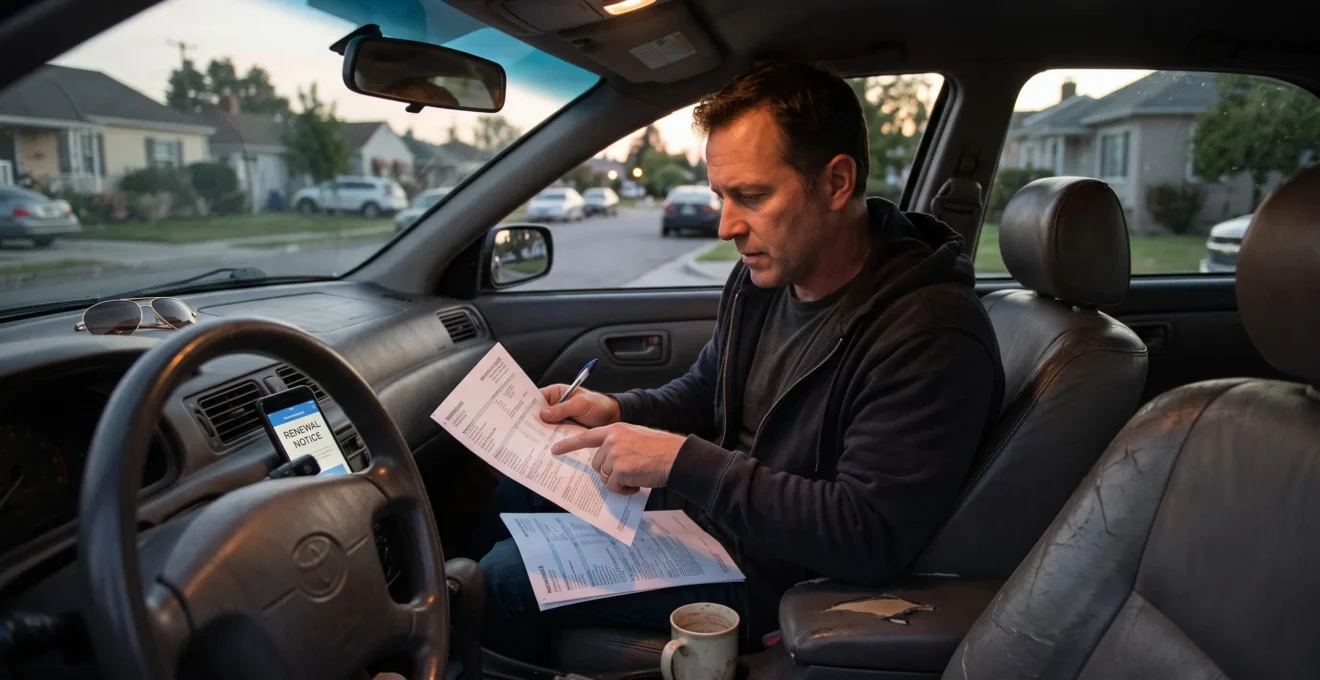
Motor insurance should protect you against financial losses that would be difficult to manage yourself. The right policy is not necessarily the one with the most benefits, the lowest premium or the broadest-sounding name. It is the one that matches your vehicle’s value, your driving habits and your ability to absorb an unexpected expense.
Consider two drivers with similar cars. One has sufficient savings to replace a damaged vehicle immediately. The other relies on the car for work and could not afford a replacement after an accident. Although their vehicles look equally valuable, their insurance needs may be substantially different.
Choosing suitable protection therefore means looking beyond the three familiar cover levels and examining what an insurer would actually pay in realistic circumstances.
The terminology and examples below primarily reflect UK motor insurance, where third-party, third-party fire and theft, and comprehensive policies are common. Insurance requirements, available benefits and claims rules differ across English-speaking countries, so local regulations and individual policy documents always take precedence.
Motor insurance protection: the essentials
- Choose your cover level according to the financial loss you could realistically absorb, not simply your car’s age or the cheapest quotation.
- Compare excesses, exclusions, claims limits and additional benefits before deciding that two policies offer equivalent protection.
- Review your policy whenever your driving circumstances change, and verify the actual terms again before renewal.
- Why Can Two Similar Motor Policies Provide Very Different Protection?
- How Can You Review Motor Insurance Cover Before Renewal Without Missing Key Gaps?
- Comprehensive or Limited Cover: Which Better Fits an Older Car?
- Which Changes in Your Driving Could Leave Motor Cover Inadequate?
- When Should You Recheck Your Motor Insurance Instead of Waiting for Renewal?
- How Can You Decide Whether Third-Party Cover Is Enough for Your Car?
- When Should You Move Beyond Third-Party Motor Insurance?
- Which Vehicle Coverage Option Best Matches Your Car and Driving Needs?
Why Can Two Similar Motor Policies Provide Very Different Protection?
Two motor insurance policies can carry the same comprehensive label yet provide significantly different financial protection. Their excesses, benefit limits, exclusions and optional features may vary. One might cover a replacement windscreen or temporary vehicle under circumstances where another offers limited assistance, leaving the policyholder with substantially different out-of-pocket costs.
The term comprehensive describes a broad category of protection, not an identical package of benefits across insurers. In UK insurance, comprehensive policies normally cover accidental damage to the insured vehicle in addition to third-party liabilities, subject to their contractual conditions.
However, the detailed benefits deserve separate attention. MoneyHelper’s motor insurance feature comparison explains how common policy features can be included, restricted or available only as optional extras.
Consider these differences when comparing quotations:
- Windscreen protection: check whether repair and replacement are covered, whether a separate glass excess applies and whether approved repairers must be used.
- Courtesy cars: a temporary car during authorised repairs is not necessarily available following theft or a total loss.
- Personal belongings: financial limits and exclusions may restrict what is payable for possessions damaged or stolen from the vehicle.
- Legal expenses and breakdown cover: these benefits may be separate additions rather than part of standard comprehensive insurance.
- Protected no-claims discount: protection may limit the effect of qualifying claims on the discount, without preventing the underlying premium from increasing.
Three financial figures also need to be distinguished. The insured value or valuation basis influences the potential settlement. The excess is the amount you contribute to an eligible claim. Exclusions describe circumstances or losses that the insurer does not cover.
A lower premium obtained by selecting a substantial voluntary excess may be attractive until a claim requires a payment that strains your available savings.
Endorsements and optional benefits can change practical protection without changing the headline policy category. The same is true at renewal: a familiar product name does not establish that every benefit and condition remains identical.
Once you understand what each policy promises, the next challenge is making sure those protections survive the renewal process without unexpected gaps.
How Can You Review Motor Insurance Cover Before Renewal Without Missing Key Gaps?
Review motor insurance before renewal by checking your personal declarations, the total excess, policy benefits and exclusions against your current circumstances. Then test several realistic claims to see what each policy would pay. Comparing only the annual premium can overlook changes in cover, contributions or conditions that materially affect your financial exposure.
Start with the statement of fact or equivalent declaration document. Confirm the accuracy of your address, occupation, named drivers, vehicle details, annual mileage and driving use. An outdated declaration may create problems independently of whether the policy provides an appropriate level of protection.
Next, separate the compulsory excess from the voluntary excess. Both may contribute to the total amount you must pay on a relevant claim, while some types of loss have their own excess arrangements.
The renewal schedule should then be compared with your existing policy and any competing quotation. Pay particular attention to changes in the insurer or underwriter, excess structure, benefit limits, optional features and restrictions. A policy retaining the same commercial name may still have different terms.
One effective comparison technique is to describe three plausible losses:
- An at-fault collision damages your own vehicle and another road user’s property.
- A stone damages the windscreen and replacement becomes necessary.
- Your vehicle is stolen, or belongings are taken from inside it.
For each situation, identify whether the policy covers the loss, the possible settlement basis, the applicable excess and any conditions. Treat any uncertain answer as a question to resolve with the insurer before buying.
Your five-step motor insurance renewal check
- Read your statement of fact and produce a corrected list of your current driving and vehicle details.
- Record all applicable compulsory, voluntary and special excesses in a one-page comparison.
- Compare the existing and proposed benefit schedules, marking every changed limit, exclusion or feature.
- Write down three realistic claim scenarios and estimate your personal financial exposure under each quotation, noting assumptions that require confirmation.
- Check the renewal date, automatic renewal arrangement and cancellation conditions, then record your decision and any confirmation from the insurer.
Automatic renewal can be convenient, but it should not replace an active assessment. A higher premium, altered benefits or different underwriting conditions may pass unnoticed if the policyholder assumes last year’s arrangement is unchanged.
The result should be a clear picture of your protection rather than a collection of apparently similar quotations. This becomes especially important when the vehicle is older and the value of comprehensive protection is less obvious.
Comprehensive or Limited Cover: Which Better Fits an Older Car?
Comprehensive insurance can still be worthwhile for an older car when replacing it would create a serious financial problem or the additional protection costs relatively little. Limited cover may be more economical when the vehicle has a modest market value and you can afford its loss. Vehicle age alone cannot settle the question.
The first comparison is between the car’s current market value and the actual premiums offered for third-party-only, third-party fire and theft, and comprehensive cover. These prices should be compared using equivalent declarations and with the differences in excess and benefits clearly identified.
Under a typical UK market-value policy, a vehicle declared a total loss is generally valued immediately before the insured incident. The Financial Ombudsman guidance on vehicle valuations and write-offs explains how market valuations are assessed and why the amount entered on an application is not necessarily the final settlement.
That distinction matters for older vehicles. Even extensive insurance protection does not normally mean receiving the original purchase price after a write-off. Agreed-value arrangements can work differently, particularly for certain specialist or classic vehicles.
Consider a hypothetical car with a current market value of £3,000. Suppose comprehensive insurance costs £180 more annually than third-party fire and theft, and the relevant total-loss excess is £400.
If a qualifying total loss were settled at £3,000 before deduction of that excess, the illustrative payment would be £2,600. This is not a forecast of what an insurer would pay: the actual settlement depends on the insured event, the valuation, the contract and any other applicable adjustments.
The important question is whether paying the additional premium makes sense in exchange for transferring certain risks that you would otherwise bear yourself. No universal premium-to-vehicle-value percentage provides the correct answer.
An older car can justify wider cover when its owner lacks replacement savings, depends on it for regular income or faces meaningful theft, fire or accidental-damage exposure. Glass protection and replacement-vehicle benefits may also influence the comparison, provided the wording makes them useful in practice.
Equally, a driver with adequate reserves may reasonably decide to retain less protection for a vehicle with a modest replacement cost.
Downgrading must nevertheless be understood precisely. Third-party-only cover ordinarily excludes protection for your own vehicle against theft, fire, vandalism and accidental damage. Third-party fire and theft may address some of these exposures, but not all.
The resulting decision should be revisited when the car’s value or your financial reserves change. Even a well-chosen policy can become unsuitable if the way you drive changes.
Which Changes in Your Driving Could Leave Motor Cover Inadequate?
Changes in your commute, annual mileage, occupation, drivers, address or vehicle can leave motor insurance unsuitable if the policy no longer reflects actual use. Incorrect information may lead to a claims dispute, additional premiums or other consequences depending on the circumstances. The safest approach is to disclose relevant changes and obtain confirmation of cover.
Motor insurance declarations usually distinguish different types of vehicle use. In the UK, social, domestic and pleasure use generally concerns personal journeys. Commuting involves travel to and from work within the policy’s definition, while business use can apply to additional work-related journeys.
These categories are not interchangeable. A driver who starts visiting customers or travelling between work locations should not assume ordinary commuting cover remains sufficient.
Other changes that deserve attention include:
- A substantial increase or decrease in estimated annual mileage.
- A different home address or regular overnight parking location.
- Adding a partner, family member or other regular driver.
- A change in occupation or how the vehicle is used for work.
- Performance, bodywork or other modifications relevant to the insurer’s assessment.
The Financial Ombudsman analysis of insurance misrepresentation discusses how incorrect declarations are assessed, including a motor insurance case involving the distinction between personal use and commuting.
Under UK consumer insurance rules, the consequences of a qualifying misrepresentation depend on the circumstances, including whether reasonable care was taken and how the insurer would have assessed the risk with accurate information.
An incorrect declaration does not automatically invalidate every policy. For example, where a qualifying careless misrepresentation caused an insurer to charge less than it otherwise would have, proportionate settlement may be an available remedy.
In an illustration discussed by the Financial Ombudsman, a £75 premium compared with the £100 that should have been charged results in a possible payment of 75% of an otherwise covered claim. That percentage is specific to the example, not a standard reduction applied to mileage or vehicle-use errors.
A more serious concern is fronting: arranging insurance with a parent or another lower-risk person falsely declared as the main driver when a young driver actually uses the vehicle most. Depending on the facts and applicable law, deliberate misrepresentation can lead to refusal of claims, cancellation or avoidance of cover, and potentially fraud-related consequences.
Accurate disclosure protects more than administrative compliance. It gives the insurer the opportunity to confirm that the policy matches the risk before an incident occurs.
Because many of these changes happen unexpectedly, the review should take place when the change occurs rather than automatically waiting until the next renewal.
When Should You Recheck Your Motor Insurance Instead of Waiting for Renewal?
Recheck motor insurance as soon as a material change affects the insured vehicle, its drivers or its use. Buying another car, moving home, changing jobs, adding a driver or modifying the vehicle can all require prompt attention. Waiting until renewal may leave your actual driving circumstances inconsistent with the information accepted by the insurer.
A mid-term review is particularly important before a planned change takes effect. Contact the insurer with the details, explain when the change will occur and ask whether existing protection remains suitable.
Some amendments can increase the premium. Others may have little financial impact or may be made without an additional premium, depending on the insurer and contract. Administrative charges can also apply.
Crucially, not every change is retrospective. If a driver discovers that an intended journey falls outside the permitted use class, arranging an adjustment before that journey is safer than assuming any subsequent change will cover past activity.
A practical way to prioritise a review is to distinguish between three situations:
- Imminent change: you are about to modify the vehicle, change its use or allow another person to drive it regularly. Confirm the arrangement before it begins.
- Change already in effect: you have moved address or developed a different commute without updating the insurer. Contact the insurer promptly, explain the facts accurately and establish what action is required.
- Financial mismatch: your vehicle value or savings have changed, but the insured use remains accurate. Reassess the suitability of cover and investigate available adjustments or switching costs.
These categories help organise the response; they do not establish that an inaccurate declaration is legally harmless or that an insurer must accept an amendment.
Switching mid-policy also requires financial consideration. Cancellation charges, administration fees and the treatment of unused premiums can affect the cost of changing provider. You may also lose the opportunity to earn the current policy year’s no-claims discount.
Before cancelling, establish the effective end date, total refund or outstanding charge and commencement of replacement insurance. Avoid creating an unintended gap between policies, particularly where continuous compulsory insurance obligations apply.
A useful policy adjustment ends with written evidence: an updated schedule, endorsement or confirmation showing what changed and when it became effective.
Once the declarations are accurate, the central question returns to how much financial risk you are comfortable retaining yourself.
How Can You Decide Whether Third-Party Cover Is Enough for Your Car?
Third-party motor insurance may be sufficient when you can comfortably replace your own vehicle after an at-fault accident or another uninsured loss. It becomes less suitable when losing the car would disrupt your finances, employment or essential travel. The decision depends on your capacity to absorb the loss, not simply whether third-party insurance satisfies the legal minimum.
In the UK, third-party cover generally protects against qualifying liabilities for injury or damage caused to other people or their property. It does not normally pay for damage to your own car in an accident for which you are responsible.
In other words, liability protection and vehicle replacement protection are different needs. Holding legally required insurance does not establish that your own financial exposure is adequately covered.
Three questions can help identify whether third-party-only protection is realistic:
- Could you replace your car from available savings without compromising essential household expenses?
- Could you tolerate the loss of the vehicle while arranging a replacement or alternative transport?
- Are you comfortable retaining the risks of theft, fire and other losses that your selected policy does not insure?
The following decision grid provides a practical starting point.
| Financial or practical factor | Third-party cover may be reasonable | Broader cover deserves consideration |
|---|---|---|
| Vehicle replacement cost | Modest relative to available savings | Difficult to fund without borrowing or financial strain |
| Replacement savings | Funds are available and can be used safely | No adequate reserve exists |
| Vehicle dependence | Alternative transport is manageable | Loss would significantly disrupt work or family responsibilities |
| Theft and fire exposure | Driver accepts retaining these risks | Potential loss is financially unacceptable |
There is also an important distinction between being able to replace a car eventually and being able to replace it immediately. A driver might have sufficient overall assets but insufficient accessible cash to manage a sudden loss.
Third-party cover can therefore be an intentional self-insurance choice: the driver retains the financial consequences of damage or loss to their own vehicle in exchange for the protection and price specified by the policy.
It should not be assumed that this is always the cheapest choice. Actual quotations sometimes make comprehensive cover competitive, so the price comparison remains essential.
If the potential loss would be difficult to absorb, the next consideration is whether a middle tier or full comprehensive cover transfers enough of that risk to justify the extra cost.
When Should You Move Beyond Third-Party Motor Insurance?
Move beyond third-party motor insurance when damage, theft or loss of your own vehicle would create a financial burden you cannot comfortably manage. Increased vehicle value, reduced savings, greater dependence on the car or more concerning theft exposure can justify wider cover. The appropriate upgrade depends on which losses you need protected and the additional premium.
The intermediate option in the UK market is third-party, fire and theft. This generally retains third-party liability protection while adding specified fire and theft protection for the insured vehicle. It does not normally provide the same accidental-damage protection as comprehensive insurance.
This distinction creates three different decisions. Third-party-only cover leaves the owner carrying most risks to their vehicle. Third-party fire and theft transfers certain named risks. Comprehensive insurance provides broader cover for accidental damage, subject to policy terms.
For example, consider a driver who parks in an area where vehicle theft is a serious personal concern but has sufficient funds to repair or replace the car following an at-fault collision. Third-party fire and theft might be worth comparing.
Alternatively, a driver who cannot absorb the cost of either theft or accidental damage to their own car may have stronger reasons to seek comprehensive protection.
The premium difference can change that assessment. If third-party fire and theft costs almost as much as comprehensive cover with similar excesses, the broader option may deliver more useful protection for a comparatively small additional payment.
However, the comparison must include exclusions and additional benefits. A broader policy with a substantially higher excess may not always give the better outcome for a particular driver.
Another financial consideration is the accumulated no-claims discount. Some insurers offer protected no-claims arrangements, but these do not guarantee that the overall renewal premium will remain unchanged after a claim. The value of this feature must be assessed separately from the basic cover tier.
Insurance decisions should also move in both directions over time. A newer car may justify extensive protection initially, while changes in its value, replacement savings and practical importance could later support a downgrade.
Equally, an older car might warrant broader protection after a change in household finances or driving needs.
The final selection requires combining those financial factors with accurate driving declarations, realistic claims scenarios and the quality of the policy itself.
Key takeaways before choosing your policy
- Decide which vehicle losses you can pay for yourself before deciding which insurance tier to purchase.
- Evaluate the actual claim settlement and excess, not merely the advertised benefit or annual premium.
- Make sure the policy reflects current drivers, journeys, mileage and vehicle details before comparing final quotations.
Which Vehicle Coverage Option Best Matches Your Car and Driving Needs?
The best vehicle coverage option is the one that protects against losses you cannot comfortably absorb while avoiding unnecessary insurance costs. Start with your car’s current value, replacement savings and reliance on the vehicle. Then match those needs to the available cover tiers and compare the actual policy benefits, excesses and exclusions.
This creates a two-part decision. First, choose the appropriate level of cover. Second, evaluate the quality of the individual policy within that tier.
Neither step can reliably be replaced by choosing the cheapest premium or assuming comprehensive insurance is always the safest financial choice.
The following comparison summarises the main UK cover levels. Exact benefits remain subject to the insurer’s wording.
| Cover level | Typical protection | Situations where it may fit |
|---|---|---|
| Third party | Qualifying injury and property-damage liabilities to others; generally no protection for your own vehicle’s loss | Drivers with sufficient replacement savings who willingly retain their vehicle’s uninsured risks |
| Third party, fire and theft | Third-party liability plus specified fire and theft protection for the insured vehicle | Drivers wanting protection against selected vehicle losses without paying for broader accidental-damage cover |
| Comprehensive | Third-party liability and broader accidental-damage protection for the insured vehicle, subject to exclusions and excesses | Drivers for whom repair or replacement costs could create significant financial pressure |
After identifying the most suitable tier, compare at least the following characteristics of each quotation:
- The total excess applicable to realistic claim scenarios.
- The vehicle valuation and total-loss settlement conditions.
- Restrictions affecting windscreen, theft and personal belongings protection.
- Whether a courtesy car is available, and under which circumstances.
- Which optional benefits provide meaningful value rather than duplicating existing protection.
- Whether the declarations and permitted vehicle use accurately reflect your circumstances.
For a hypothetical driver with a relatively inexpensive vehicle, sufficient replacement savings and limited dependence on daily car access, third-party insurance may be a defensible choice. For another driver with the same vehicle but no replacement fund, comprehensive protection may have considerably more practical value.
The two classic mistakes are therefore buying comprehensive cover automatically without considering its economic benefit, and downgrading solely to reduce the premium without testing what a total loss would mean.
The annual review should confirm that the declared information is accurate, the excess is affordable, likely claim scenarios have been considered, optional benefits remain justified and the cover still suits the vehicle and the driver’s financial circumstances.
These principles apply beyond the UK as a decision framework, but the availability and definition of insurance tiers, minimum compulsory liability limits and claims protections vary by jurisdiction. Always confirm local requirements and the exact policy wording.
Before purchasing or renewing, obtain quotations using consistent information, check the final policy schedule and resolve any uncertainty with the insurer. The aim is not maximum insurance at any price, but protection that remains financially useful when an actual loss occurs.
Is comprehensive motor insurance always more expensive than third-party cover?
No. In the UK market, third-party insurance is not necessarily cheaper than comprehensive cover. Insurers assess the risk and price of each quotation differently. Compare actual offers based on identical driver and vehicle details, while checking excesses and benefits before judging value.
Does comprehensive insurance cover every type of vehicle damage?
No. Comprehensive insurance provides broader protection than limited tiers, but exclusions, claims limits, excesses and specific conditions still apply. Mechanical breakdown, wear and tear, certain uses and some optional benefits may fall outside the standard protection. Only the individual policy wording establishes what is insured.
Can a motor insurer pay less than the value declared on the application?
Yes. Under a typical UK market-value policy, a total-loss settlement usually reflects the vehicle’s market value immediately before the incident, rather than automatically matching the value entered when applying. Applicable excesses, contractual conditions and other relevant adjustments can affect the payment. Agreed-value policies may operate differently.
Does protecting a no-claims discount prevent the insurance premium from rising?
No. Protected no-claims arrangements may preserve the qualifying discount within specified limits, but the underlying premium can still change following a claim or for other pricing reasons. Check the number and type of claims permitted under the protection before purchasing it.
Should you cancel an existing motor policy before buying replacement cover?
It is generally safer to arrange the replacement policy and confirm when it starts before ending existing cover, avoiding an unintended insurance gap. Check any cancellation charges, refunds and no-claims consequences, as well as local legal requirements. An insurer may have specific procedures for cancellation and policy changes.