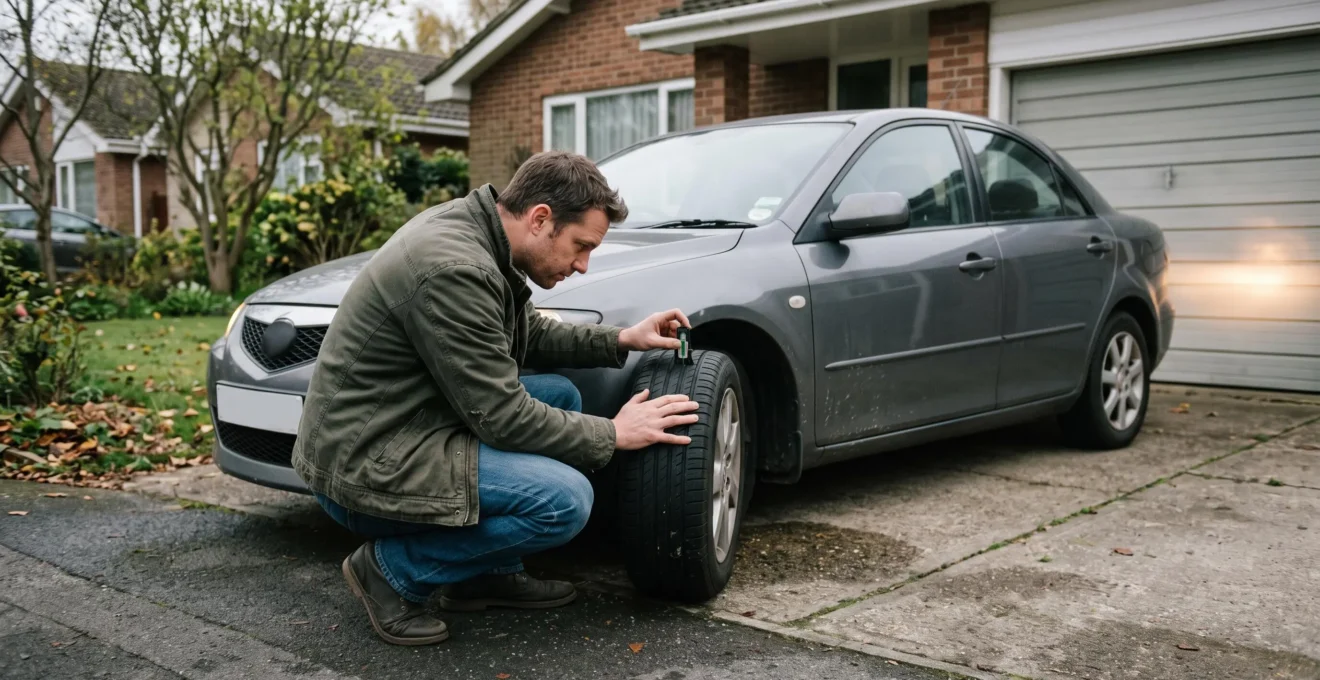
Using a car almost every day creates a particular maintenance challenge. Short commutes, repeated stops, changing weather and busy schedules can gradually increase mechanical wear, even when the vehicle covers relatively few miles. Meanwhile, a small change in how the car is used can affect whether its insurance remains suitable.
Keeping everyday car use safe and economical depends on three things: identifying problems early, adapting maintenance to actual driving conditions and ensuring insurance accurately reflects how the vehicle is used. None requires replacing a reliable car or paying for unnecessary services.
The key is understanding which checks matter before a journey, which repairs should never be postponed and which changes in driving patterns deserve a conversation with the insurer. A driver who mainly makes short urban trips faces different challenges from someone covering longer motorway distances, even if their annual mileage is similar.
These principles apply broadly, but maintenance schedules, roadworthiness rules and insurance conditions vary between vehicles and countries. Where UK or manufacturer-specific requirements are discussed, their scope is identified.
Everyday car safety and cost control: the essentials
- Check visible tyre condition, lights, glass and dashboard warnings before driving, with separate weekly pressure and fluid checks.
- Use the manufacturer’s severe-driving maintenance schedule when frequent short trips, congestion or demanding conditions apply.
- Review insurance whenever commuting, business activities, drivers or other declared circumstances change.
- Why Can Frequent Short Trips Cause More Wear Than Longer Journeys?
- How Can You Check Your Car in 3 Minutes Before a Daily Journey?
- Tyres, Fluids or Lights: Which Checks Matter Most for Everyday Drivers?
- Which Everyday Driving Habits Can Lead to Expensive Repairs?
- When Should High-Frequency Car Use Bring Maintenance Forward?
- Why Does Your Declared Car Use Matter to an Insurer?
- Which Endorsements Should You Check Before Changing How You Use Your Car?
- How Can You Use a Vehicle Off-Road Without Creating Avoidable Damage or Insurance Problems?
Why Can Frequent Short Trips Cause More Wear Than Longer Journeys?
Frequent short trips can create disproportionate mechanical stress because the engine, lubricants and exhaust system may repeatedly operate below their normal working temperatures. Stop-start traffic adds braking and transmission demands, while short journeys may leave insufficient time to replenish the battery. The effect depends on engine type, journey duration, driving conditions and the vehicle manufacturer’s specifications.
During a cold start, the engine’s oil and temperature conditions differ from those during sustained normal operation. Repeatedly stopping the engine before it has warmed sufficiently can contribute to moisture and fuel contamination in engine oil, depending on the powertrain and operating conditions.
Moisture can also accumulate in an exhaust system that does not remain hot long enough to evaporate condensation. Over time, this may contribute to corrosion, although exhaust design, materials and local climate influence the outcome.
Short-distance driving can affect other components:
- Battery: repeated starting and limited charging time can leave a conventional starting battery inadequately replenished.
- Brakes: urban traffic typically demands more frequent braking than steady motorway travel.
- Clutch: manual vehicles driven through congested traffic experience repeated clutch operation.
- Engine oil: sustained low-temperature operation may accelerate contamination or deterioration.
- Exhaust: repeated condensation without sufficient heating may encourage internal corrosion.
These effects do not mean every short journey damages a car or that covering more miles is inherently better. The important distinction is the vehicle’s operating pattern rather than distance alone.
Manufacturer guidance illustrates why this matters. Hyundai‘s severe-use maintenance schedule classifies repeated journeys shorter than 5 miles (8 km) in normal temperatures as severe conditions for the specific vehicle covered by that manual. In freezing temperatures, its corresponding threshold is 10 miles (16 km).
Those are model-specific thresholds, not universal rules. For that documented vehicle, severe use can require oil and filter replacement every 5,000 miles (8,000 km) or six months.
A useful self-assessment is to ask whether most journeys finish before the engine and its fluids fully reach normal operating conditions. If so, check whether the manufacturer’s severe-use schedule applies.
Neglecting these patterns may result in faults discovered at servicing or a roadworthiness inspection, creating unexpected repair costs. Routine mechanical wear is also generally different from damage covered by motor insurance.
The best response is not to drive unnecessary miles simply to warm the car. It is to follow the appropriate maintenance guidance, investigate recurring symptoms and make regular inspections part of the normal routine.
How Can You Check Your Car in 3 Minutes Before a Daily Journey?
A three-minute pre-drive inspection should cover visible tyre condition, working lights, clear windows and mirrors, and dashboard warnings. It is a quick screening routine rather than a complete safety inspection. Identifying an obvious defect before leaving gives the driver an opportunity to address it before encountering traffic or difficult road conditions.
Start outside the parked vehicle, ideally where there is enough space to walk around safely. A consistent sequence helps prevent items from being forgotten on busy mornings.
- First minute — tyres: walk around the vehicle looking for obvious deflation, sidewall cuts, bulges, embedded objects or anything unusual near the wheels.
- Second minute — lights and visibility: check the headlights, indicators and rear lights using their controls and available reflections. Check brake lights with a helper, a safe reflection or another suitable method. Make sure windows, mirrors and number plates are unobstructed.
- Third minute — dashboard and surroundings: after starting the vehicle, check whether warning lights extinguish as expected. Look beneath the parked car for fresh fluid leaks and confirm the route out is clear.
A quick visual inspection cannot establish that tyre pressures are correct, tread depth is legal or every braking component is functioning normally. Some checks require instruments, additional time or professional inspection.
For UK drivers, the Highway Code’s vehicle maintenance guidance recommends weekly tyre-pressure checks with cold tyres and regular fluid-level checks. These are important additions to the daily walk-around.
Keep the distinction between daily and weekly checks clear. During a longer routine, examine oil and coolant levels using the methods specified in the owner’s manual, check screenwash and measure tyre pressures with a reliable gauge.
Modern warning systems help identify certain faults, but they do not replace physical checks. Depending on the vehicle, they may not reliably reveal uneven tread wear, a damaged sidewall, deteriorating brake components or a developing fluid leak.
Roadworthiness rules differ internationally. A vehicle defect may result in enforcement action, and an insurer may consider vehicle condition when assessing a claim. However, an individual defect does not automatically invalidate every insurance policy.
If a serious fault is suspected, do not treat completion of the routine as permission to drive. Investigate the problem and arrange appropriate assistance before using the vehicle.
Tyres, Fluids or Lights: Which Checks Matter Most for Everyday Drivers?
Tyres deserve immediate attention because their condition and inflation directly affect grip, braking and steering. Lights and visibility equipment are equally important when conditions require them, while fluids help prevent overheating, lubrication failures and visibility problems. Rather than following a rigid universal ranking, prioritise any defect that creates an immediate safety risk, then schedule regular preventive checks.
The practical distinction is between faults that make a vehicle unsafe now, conditions that could develop into costly failures and routine maintenance that requires specialist equipment.
Tyres are particularly easy to underestimate. A tyre may appear correctly inflated while still operating at an unsuitable pressure. Tread wear may also be concentrated on an inner edge that is difficult to see from beside the car.
In the UK, the legal minimum tread depth for ordinary cars is 1.6 mm across the central three-quarters of the tread and around its entire circumference. Other countries may apply different requirements. Meeting the legal minimum also does not guarantee adequate performance under every weather condition.
Uneven tread wear should prompt further investigation. It can indicate inappropriate inflation, wheel-alignment problems or faults involving suspension or braking components. Simply replacing the tyre without identifying the underlying cause may allow the problem to recur.
Different checks belong at different intervals. The following grid is a practical organisation method, not a replacement for a vehicle-specific maintenance schedule.
| When to check | Priority items | What to do |
|---|---|---|
| Before driving | Visible tyre damage, lights, glass, mirrors, warning indicators | Identify obvious defects and avoid driving with a suspected serious safety problem. |
| Weekly and before demanding journeys | Tyre pressures, tread condition, engine oil, coolant and screenwash | Use appropriate gauges and follow manufacturer instructions, including cold-tyre pressure guidance. |
| During scheduled servicing or when symptoms appear | Brakes, wheel alignment, suspension, battery health and other mechanical systems | Arrange inspection by a suitably qualified professional when necessary. |
A failed bulb may be inexpensive to replace, but delaying the repair can create a visibility hazard or legal problem. Low screenwash can become a serious issue when road spray obscures the windscreen. Incorrect tyre pressure may worsen wear before the driver notices any change in handling.
Not all defects can be safely handled through a simple top-up. Repeated coolant loss, a persistent oil warning or abnormal braking can indicate a problem requiring investigation rather than continued driving.
Addressing small defects promptly is usually more manageable than allowing them to develop. Nevertheless, a low-cost repair should never be treated as a substitute for diagnosing the reason a fault appeared.
Which Everyday Driving Habits Can Lead to Expensive Repairs?
Everyday habits that repeatedly stress the clutch, brakes, transmission, suspension or engine can gradually increase repair costs. Examples include holding a manual car on a slope with the clutch, braking continuously on long descents, striking potholes at speed and carrying excessive loads. Distracted or fatigued driving adds a separate, potentially more serious accident and insurance risk.
The difficulty is that mechanical consequences often develop gradually. A driver may repeat a damaging behaviour for months before noticing vibration, noise, poor braking or an expensive component failure.
With a manual transmission, holding the vehicle stationary by balancing clutch engagement and engine power can generate unnecessary clutch heat and wear. Use the parking brake or the vehicle’s intended hill-hold system instead, according to the manufacturer’s instructions.
Resting a hand continuously on a manual gear lever may also place unwanted pressure on parts of some shifting mechanisms. The better habit is to complete the gear change and return the hand to the steering wheel.
On long descents, sustained friction braking can overheat brakes. Selecting an appropriate lower gear, where suitable for the vehicle and conditions, can reduce reliance on continuous braking. The correct technique differs between manual, automatic, hybrid and electric powertrains.
Other habits have similarly practical consequences:
- Overloading: carrying more than the vehicle’s permitted load increases demands on tyres, suspension and braking systems.
- Pothole impacts: striking severe road defects at speed can damage tyres, wheels, alignment or suspension components.
- Ignoring warning signs: continuing to drive despite new vibrations, leaks or overheating can allow a manageable fault to escalate.
- Repeatedly running very low on fuel: depending on fuel-system design and vehicle condition, this can contribute to fuel supply or contamination-related problems.
- Harsh acceleration and braking: repeated unnecessary demands can increase tyre and brake wear.
Good driving habits also influence the wider cost of ownership. Brake condition, suspension health and transmission performance matter when assessing whether a vehicle is reliable and worth repairing or selling.
However, mechanical preservation is only part of the picture. Phone distraction and fatigue can increase crash risk, which carries consequences potentially far greater than ordinary servicing expenses.
An at-fault incident may influence future premiums, depending on the insurer, claims history, jurisdiction and other rating factors. There is no universal percentage increase that applies to every claim.
The most economical driving style is therefore not simply the one that consumes the least fuel. It is a predictable, attentive approach that respects the vehicle’s limits and preserves the driver’s ability to respond safely.
Consistent gentle operation helps reduce avoidable mechanical stress, but it cannot eliminate normal wear. Maintenance still needs to reflect the miles driven, operating conditions and any symptoms that develop.
When Should High-Frequency Car Use Bring Maintenance Forward?
Maintenance should be brought forward when the manufacturer’s severe-use schedule applies or when symptoms indicate a developing fault. Frequent short journeys, stop-start congestion, towing, dusty roads and extreme temperatures may justify shorter intervals. The appropriate trigger depends on both elapsed time and distance travelled, so the vehicle’s own schedule should determine when work is due.
Service schedules commonly include both mileage and time limits. A vehicle may require attention because a specified period has elapsed even though it has covered relatively few miles. Other cars may reach the mileage limit first because they are used extensively.
It is therefore misleading to rely on the odometer alone. A low-mileage vehicle regularly making short, congested journeys may need a different service regime from a vehicle driven for sustained longer distances.
Manufacturer definitions of demanding use differ. Some identify repeated short journeys, prolonged idling, heavy traffic, towing, dusty environments or rough roads as reasons for additional maintenance.
For drivers who depend on their car every day, the most important warning signs include:
- New engine or drivetrain noises.
- Changes in brake pedal response or braking behaviour.
- Steering vibration, pulling or unusual handling.
- Persistent burning smells or unexplained fluid spots.
- Repeated difficulty starting, particularly after the car has been parked.
- Warning lights that remain illuminated or appear during driving.
Some signs require immediate action rather than simply booking an earlier routine service. Suspected brake failure, loss of steering control, overheating or critical engine warnings may make continued driving unsafe.
Five actions to build a reliable maintenance schedule
- Identify your exact vehicle specification. Record the model, model year, powertrain and relevant maintenance manual.
- Classify your typical journeys. Write down whether driving mainly involves short trips, urban congestion, towing or other severe-use conditions.
- Find the applicable service intervals. Note the manufacturer’s mileage and calendar limits, including any severe-use requirements.
- Create a maintenance record. Record the last service date, odometer reading, completed work and next scheduled service trigger.
- Document developing faults. Keep a dated note of unusual noises, warnings, leaks or handling changes and arrange inspection when appropriate.
Early diagnosis can sometimes prevent a small defect from damaging related components. Replacing worn brake pads before further damage occurs, for example, may avoid additional repairs. The actual savings depend on the fault and cannot be guaranteed.
Preventive maintenance also reduces the likelihood of disruptive breakdowns, although no schedule can prevent every mechanical failure.
Once the mechanical side of frequent driving is under control, the next concern is whether the vehicle’s regular use remains consistent with its insurance cover.
Why Does Your Declared Car Use Matter to an Insurer?
Your declared car use matters because insurance coverage is based partly on the purposes for which the vehicle is driven. In UK policies, social, domestic and pleasure use, commuting and business use may have different conditions. If actual driving falls outside permitted use, a claim may be affected. The consequences depend on the policy, the circumstances and applicable law.
An insurer needs to understand how a vehicle is used because regular journeys can change exposure to road risk. Mileage, driving locations, work activities and who drives the vehicle may all be relevant to underwriting.
For example, a car used only for personal journeys may not automatically be insured for regular travel to work. Similarly, cover that permits travel to one fixed workplace may not include journeys between multiple business locations.
Drivers should pay particular attention to activities that are easy to overlook:
- Starting a new job that requires regular commuting.
- Using a personal car to visit clients or travel between work sites.
- Running work-related errands during the day.
- Beginning paid delivery or passenger-carrying activities.
- Changing how frequently the vehicle is driven or who drives it.
Carrying work equipment does not necessarily determine insurance classification on its own. What matters is the full activity, the insurer’s definitions and the policy terms.
The Association of British Insurers‘ motor insurance information identifies vehicle use outside the purposes permitted by a policy as a common coverage exclusion. It specifically discusses the need for suitable business-use cover and appropriate insurance for fare-paying passengers.
That does not mean every incorrect declaration automatically makes an entire policy void. Depending on the jurisdiction, policy wording and circumstances, the consequences can differ. A discrepancy may also have a different legal significance depending on when and how it arose.
The most useful precaution is to consult the policy schedule’s permitted-use wording before a change in driving pattern. If the new activity is unclear, describe it accurately to the insurer or broker and request written confirmation.
Keep copies of the question, response and any revised policy documents. Written evidence helps establish what was disclosed and what cover was agreed.
Insurance should reflect how the car is actually used, not merely the purpose for which the policy was originally purchased. The next step is to examine the specific conditions and amendments that may limit that use.
Which Endorsements Should You Check Before Changing How You Use Your Car?
Before changing how you use your car, check endorsements covering permitted drivers, vehicle use, declared mileage, parking and security, modifications, towing and commercial activities. An endorsement is a specific policy amendment, but restrictions can also appear in the general policy wording. Both should be reviewed before assuming a new activity is insured.
A policy schedule summarises key information, while the full wording explains conditions, exclusions and responsibilities. Endorsements may amend either by adding particular requirements or restrictions.
This distinction matters because a condition does not need to be labelled an endorsement to affect cover. A driver who only checks the headline description may miss limitations contained elsewhere in the contract.
For a practical audit, compare the policy with actual driving circumstances:
| Policy detail | Change to examine | Question for the insurer |
|---|---|---|
| Permitted use | New commute, client visits or work-related journeys | Does the existing class of use include these activities? |
| Named drivers | Another person begins driving regularly | Is that person permitted to drive this vehicle? |
| Annual mileage | Substantial change in expected driving distance | Does the mileage declaration need updating? |
| Parking and security | New address, overnight parking location or security arrangements | Are there specific parking or security conditions? |
| Modifications | Mechanical, performance or other relevant vehicle alterations | Must the modification be disclosed or approved? |
| Towing | Regular trailer or equipment towing | What cover and restrictions apply to towing? |
| Paid activities | Deliveries or carrying passengers for payment | Is separate commercial or hire-and-reward cover required? |
Paid delivery and passenger transport require particular care. Ordinary private-use insurance should never be assumed to cover commercial carriage. The necessary policy category and any additional legal requirements depend on the activity and country.
Some policies also contain provisions concerning driving other vehicles. These should not be confused with permission for another person to drive the insured car. Each provision has its own wording, eligibility requirements and restrictions.
When reviewing cover, compare the old and new circumstances rather than relying on assumptions about what a comprehensive policy should include. Comprehensive cover describes a broad category of protection, not an assurance that every activity or driver is covered.
A change in circumstances does not always require a different policy. Sometimes an insurer can confirm that existing cover is sufficient; in other cases, it may issue amended documentation, charge an additional premium or explain that alternative cover is needed.
Whatever the outcome, retain written confirmation. It is more useful than relying on an informal assumption about a conversation whose details may be difficult to establish later.
The principle becomes especially important when a journey involves terrain or locations outside ordinary road driving, where both mechanical demands and insurance conditions can change.
Key takeaways before driving beyond normal roads
- Permission to enter a route and insurance cover for driving on it are separate questions.
- Uneven ground, debris and water can expose components to hazards not encountered during routine commuting.
- Verify route legality, vehicle suitability and policy terms before departure, rather than after damage occurs.
How Can You Use a Vehicle Off-Road Without Creating Avoidable Damage or Insurance Problems?
Occasional off-road driving requires three checks: the route must be lawful, the vehicle must be suitable for the conditions, and the insurance policy must cover the intended activity. Even when all three conditions are satisfied, rough surfaces can accelerate tyre, suspension and underbody wear. Careful preparation and inspection afterwards reduce avoidable problems.
Off-road driving can mean very different things. A maintained private access road, a muddy farm track, a legally accessible green lane and a dedicated recreational off-road course do not necessarily present the same mechanical hazards or insurance requirements.
Do not assume that leaving a surfaced road automatically removes insurance protection, or that every private policy includes unrestricted off-road cover. The policy wording may distinguish between ordinary road use, permitted access routes, recreational off-roading, organised events and track activities.
Ask the insurer about the exact activity and location when coverage is uncertain. Describe whether the vehicle will be used on an unsurfaced public route, private land, a working site or a dedicated course.
Mechanical preparation matters just as much as the insurance discussion. Before setting out, consider:
- Ground clearance: whether ruts, rocks or obstacles could strike the underside of the car.
- Tyres: whether their condition, construction and manufacturer-approved operating pressures suit the surface.
- Vehicle load: whether passengers and equipment remain within permitted limits.
- Water and debris: whether conditions could expose vulnerable electrical, intake or cooling components.
- Recovery arrangements: whether assistance is available if the vehicle becomes immobilised.
Tyre pressure should only be adjusted in accordance with the vehicle and tyre manufacturers’ instructions. Lowering pressure without suitable guidance can create handling or tyre-damage risks, particularly when returning to normal roads.
After driving on rough ground, inspect tyres for cuts or embedded debris, check for visible underbody damage and look for mud or vegetation around accessible cooling areas. Unusual steering, vibration, warning lights or fluid leaks justify further investigation.
Where conditions have been particularly demanding, consult the maintenance guidance to determine whether additional inspection is necessary. A day on rough terrain does not automatically equal a fixed number of road miles or create a universal new service interval.
Route legality is another essential consideration. In England, for example, the Peak District National Park Authority‘s guidance on illegal vehicle use explains that some footpaths, bridleways and restricted routes cannot legally be used by recreational motor vehicles. It also explains that green-lane driving is subject to applicable road-legal requirements.
Those rules relate to the relevant UK legal and geographical context. In other countries, permitted access may depend on different rights of way, landowner permissions, environmental protections or local restrictions.
Having insurance does not grant permission to drive somewhere unlawfully. Likewise, obtaining permission from a landowner does not guarantee that the intended activity is insured.
For your next unusual journey, identify the route, confirm that driving is permitted, review the relevant insurance wording and inspect the vehicle before and after use. That sequence helps avoid preventable damage without turning occasional driving into an unnecessarily expensive maintenance project.
Is it necessary to let a modern car idle before driving?
Follow the manufacturer’s starting and warm-up instructions. Many modern vehicles do not require prolonged stationary idling before ordinary driving, but operating requirements vary by engine and conditions. Avoid high engine loads before the vehicle reaches the appropriate operating temperature, and never idle in an enclosed space where exhaust gases could accumulate.
Can a car be unsafe even if it recently passed its roadworthiness inspection?
Yes. A roadworthiness inspection establishes compliance with the applicable test requirements at the time of assessment. Tyres, brakes, lights and other components may deteriorate afterwards. A valid inspection certificate does not replace ongoing maintenance or the driver’s responsibility to keep the vehicle roadworthy.
Does a low-mileage car still need regular servicing?
Yes, where the manufacturer’s schedule specifies calendar-based maintenance. A vehicle can reach a time limit without reaching the corresponding mileage limit. Frequent short trips and other severe-use conditions may also affect servicing requirements. Follow the schedule for the exact model rather than assuming low mileage means maintenance can be postponed indefinitely.
Does comprehensive car insurance cover ordinary mechanical breakdowns?
Standard comprehensive motor insurance generally does not cover routine wear and tear or ordinary mechanical and electrical breakdown. Those risks are different from insured events such as accidental damage, subject to the contract. Manufacturer warranties, breakdown assistance and separate mechanical protection products may provide different benefits, each with its own terms and exclusions.
Should an insurer be informed if annual mileage increases?
Check whether annual mileage is a declared or contractually relevant detail. If driving patterns change substantially, contact the insurer and ask whether the estimate should be updated. Requirements vary by policy and jurisdiction. Keeping a written record of the updated information and the insurer’s response helps prevent uncertainty if a claim arises later.