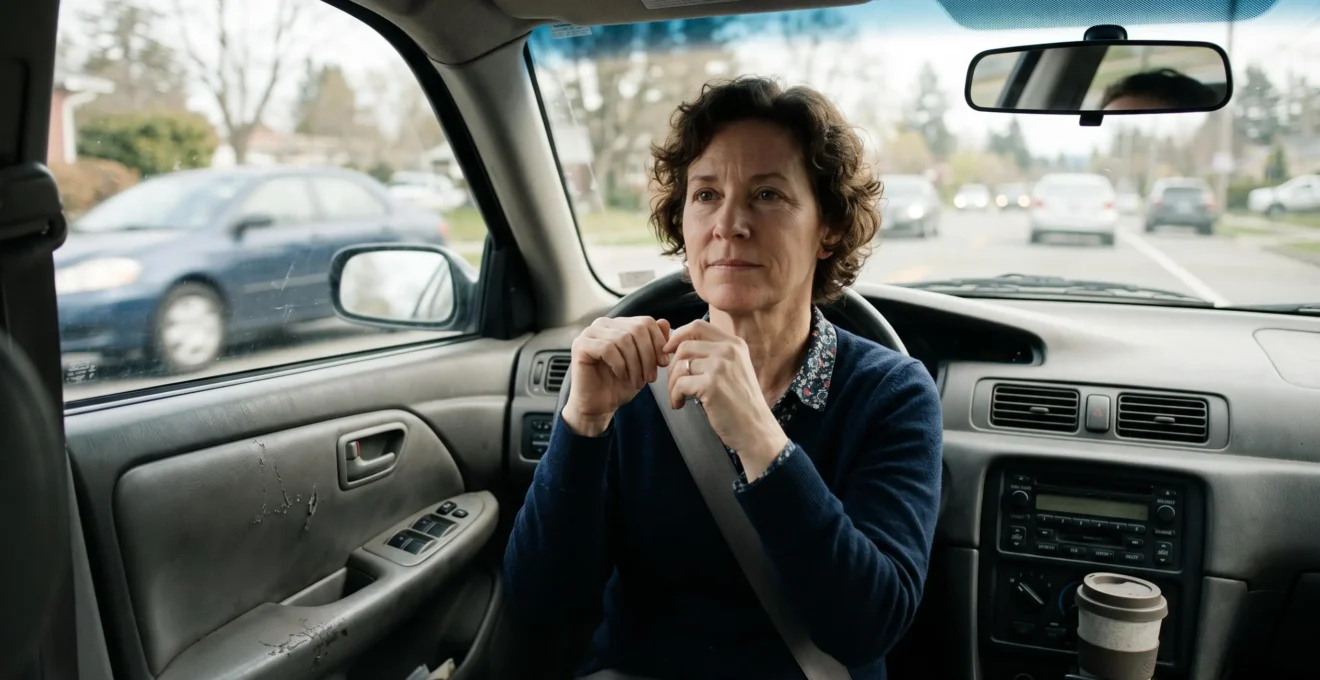
The most avoidable driving risks often arise from ordinary decisions made by otherwise capable motorists. A familiar junction receives less attention than it deserves. A driver accepts a smaller gap because a meeting starts soon. Someone notices a vehicle approaching but misjudges its speed. None of these situations necessarily reflects a lack of basic driving skill.
Human error behind the wheel involves several different processes: attention can drift, perception can fail, judgement can become biased, and emotions can override established safety habits. These failures may also interact. A distracted driver who is already running late has fewer opportunities to recognize and correct a developing hazard.
Improving road safety therefore requires more than knowing traffic rules or accumulating years of experience. It means recognizing the conditions in which otherwise reliable habits become vulnerable, then introducing practical safeguards before an error turns into a collision. The same approach can help reduce at-fault incidents and potentially improve insurance outcomes, although pricing arrangements vary between insurers and countries.
The human errors worth addressing first
- Familiarity, divided attention and incorrect hazard perception can undermine experienced drivers without obvious warning.
- Time pressure, fatigue and emotional reactions turn manageable road situations into unnecessary risks.
- Deliberate scanning, adequate following distance and planned attention checkpoints provide practical safeguards against everyday mistakes.
- Why Do Experienced Drivers Still Make Simple Road Mistakes?
- How Can You Interrupt Autopilot Driving Before It Causes a Mistake?
- Perception Error or Bad Decision: Which Is More Dangerous Behind the Wheel?
- Which Time-Pressure Mistakes Make Otherwise Safe Drivers Take More Risks?
- When Should You Stop Driving Because Your Concentration Is Declining?
- Which Reactions to Other Drivers Make Defensive Driving Less Effective?
- Phone, Passenger or Touchscreen: Which Distraction Demands the Most Attention?
- How Can Defensive Driving Reduce the Risk of Everyday Collisions?
Why Do Experienced Drivers Still Make Simple Road Mistakes?
Experienced drivers make simple mistakes because repeated driving tasks become increasingly automatic. This efficiency reduces the mental effort needed for routine manoeuvres, but it can also weaken conscious monitoring. A driver may operate the vehicle competently while overlooking an unexpected hazard, particularly on familiar roads where little seems to demand active attention.
Driving experience develops useful automatic responses. Checking the road ahead, regulating speed and steering through familiar bends can require less deliberate thought over time. However, automatic processing works best when the situation matches expectations. A pedestrian stepping into an unusual crossing position or a vehicle stopping unexpectedly may require attention that has been directed elsewhere.
Two types of human error help explain the difference between an accidental mistake and a poor choice:
- Skill-based slips: The driver intends to perform the correct action but executes it incorrectly, at the wrong moment or without completing a necessary check.
- Judgement errors: The driver chooses an unsuitable action, such as following too closely or entering a junction without sufficient clearance.
The distinction matters for prevention. A slip may call for a stronger checking routine, while a judgement error requires reconsidering how the driver evaluates risk. In insurance claims, the evidence of what occurred and the applicable liability rules matter more than the psychological label assigned to the mistake.
Familiarity is an important contributing factor. In Yanko and Spalek’s driving simulator study on route familiarity, published in 2013, drivers on familiar routes followed vehicles more closely and took longer to detect approaching pedestrians than those travelling on unfamiliar routes. The experimental findings suggest that knowing a route can reduce active attention, although they do not establish how frequently such mistakes cause real-world collisions.
This helps explain why a routine commute deserves the same deliberate observation as an unfamiliar journey. Familiar surroundings can create confidence without guaranteeing that traffic conditions remain predictable.
Insurance history provides another incomplete measure of driving quality. Someone may have avoided claims for years while regularly leaving inadequate following distance or reacting late to hazards. Conversely, a single collision does not necessarily define a driver’s overall competence.
Usage-based insurance can supplement historical records with observations of driving behaviour, although it cannot directly measure every lapse of attention or establish whether a driver was lucky.
The practical goal is not to distrust experience, but to prevent confidence from replacing observation. That starts with identifying occasions when driving has become automatic and deliberately bringing attention back to the road.
How Can You Interrupt Autopilot Driving Before It Causes a Mistake?
Autopilot driving can be interrupted by attaching deliberate attention checks to predictable road features. Approaching a roundabout, merging lane or changing speed limit provides a natural cue to reassess hazards, vehicle position and escape space. Brief mental commentary can also expose attention drift before it results in an unnoticed change in road conditions.
Rather than trying to maintain maximum conscious concentration throughout every journey, establish moments when deliberate observation becomes mandatory. The most useful checkpoints are places where several road users may interact or where the driver’s existing expectations are likely to become unreliable.
For example, before entering a roundabout, consciously identify approaching traffic, pedestrians near crossings, the intended exit and the position of surrounding vehicles. At a lane merge, review the available gap and the movements of vehicles behind and alongside rather than relying solely on a habitual glance.
A complementary method is commentary driving, used in advanced driver training. The driver briefly describes relevant hazards, possible developments and safe responses, either quietly aloud or internally. A useful commentary might identify a vehicle waiting at a side road, an obscured pedestrian crossing and the need to preserve stopping space.
The commentary should remain short and directly related to driving. Elaborate self-talk can itself become distracting. Its purpose is to reconnect observation with action, not to narrate every visible detail.
Long, monotonous journeys create another challenge. A driver may cover a familiar stretch with little recollection of particular features. This can prompt a useful awareness check, but poor route recall alone is not a validated fatigue test. If it accompanies repeated yawning, lane drifting or difficulty maintaining attention, the appropriate response is to stop safely rather than increase mental effort.
There is also a practical insurance connection. Telematics systems may observe braking, acceleration and cornering patterns, potentially providing feedback about driving smoothness. They generally cannot confirm whether a driver performed a conscious hazard scan or used commentary driving.
Five attention habits to put into practice
- Identify three recurring hazards on a regular route and record them as specific attention checkpoints.
- Choose one observation cue for each checkpoint, such as scanning approaching traffic before a roundabout, and write down the cue.
- Practise a short hazard commentary on a suitable journey and note one risk you identified early.
- After parking, record any missed turn, unexpected braking event or moment of noticeable attention drift.
- Review the observations after several journeys and write one adjustment to your scanning or journey-planning routine.
Attention checkpoints reduce reliance on habit, but they cannot compensate for serious fatigue or impairment. Once active observation has been restored, the next challenge is distinguishing hazards that went unnoticed from risks that were consciously accepted.
Perception Error or Bad Decision: Which Is More Dangerous Behind the Wheel?
Neither perception errors nor poor decisions are universally more dangerous. A perception error occurs when a driver fails to notice or correctly interpret a hazard, whereas a judgement error involves choosing an unsafe response despite relevant information being available. The consequences depend on speed, traffic conditions, available recovery time and the vulnerability of other road users.
A driver may look towards an intersection yet fail to register a cyclist approaching from the side. Another driver may recognize a vehicle approaching but deliberately accept an inadequate gap. Both situations can produce a collision, but they require different corrective strategies.
Perception failures are particularly difficult to address because the driver may not realize what was missed. If an unseen pedestrian never enters the driver’s conscious awareness, there may be no immediate feedback that scanning was inadequate.
Judgement errors can be easier to recognize retrospectively. A driver who overtakes with limited visibility may later acknowledge that the decision left insufficient safety margin. Recognition alone, however, does not ensure future improvement, especially when the risky behaviour repeatedly goes unpunished.
The following comparison provides a practical way to identify which habit deserves attention.
| Driving situation | Likely error mechanism | Useful corrective habit |
|---|---|---|
| Failing to notice a cyclist at an intersection | Incomplete scanning or failure to detect a visible hazard | Systematically check concealed and peripheral areas before entering |
| Misjudging an approaching vehicle’s speed | Incorrect perception of speed or available time | Wait for a clearly sufficient gap instead of relying on a borderline estimate |
| Following closely in traffic | Choosing an inadequate safety margin | Increase following distance and resist pressure to match aggressive traffic flow |
| Changing lanes despite limited space | Unsafe gap acceptance, potentially combined with incomplete observation | Plan the manoeuvre earlier and abandon it when sufficient space is unavailable |
Errors clustered around intersections or lane changes suggest that visual scanning, gap perception and hazard anticipation deserve attention. Problems occurring mainly in moving traffic may point towards following distance, impatience or excessive confidence in other drivers’ reactions.
These patterns are practical indicators rather than a diagnostic classification. A single collision can involve both error types, while road design, vehicle visibility and other environmental conditions may contribute independently.
Insurance liability usually depends on evidence, legal duties and the circumstances of the incident. Deliberate unsafe manoeuvres may provide clearer evidence of a breach of driving duties, but an inadvertent perception failure can also establish fault. There is no universal insurance rule assigning greater liability to one psychological category.
The essential question is not whether a mistake reflects a bad driver, but whether the hazard was missed, misunderstood or knowingly accepted. Time pressure can make all three possibilities more likely by narrowing the opportunity for careful assessment.
Which Time-Pressure Mistakes Make Otherwise Safe Drivers Take More Risks?
Time pressure can push otherwise cautious drivers into accepting smaller gaps, approaching changing traffic lights too quickly, planning lane changes too late and skipping familiar observation routines. The underlying problem is often not driving ability but an attempt to recover lost time through decisions that reduce safety margins.
Consider a hypothetical driver who leaves for work later than intended. At the first junction, the driver accepts a gap that would normally be rejected. A few minutes later, an approaching amber light creates another decision influenced by the desire not to lose time.
Neither action necessarily feels like a major risk in isolation. Together, however, they illustrate how urgency repeatedly shifts decisions towards narrower margins.
A common planning problem is underestimating journey duration while treating delays as exceptional. Traffic congestion, parking difficulties and unexpected stops are foreseeable possibilities, yet travel plans may leave no allowance for them.
The solution begins before departure:
- Add a realistic time buffer based on the variability of the actual journey rather than the fastest previous trip.
- Decide in advance that arriving late is preferable to making an unsafe manoeuvre.
- Plan necessary lane changes early enough to avoid sudden moves across traffic.
- Accept that missing a turn or traffic-light cycle may be safer than forcing an opportunity.
Drivers can also establish personal non-negotiable rules. For example, never attempt an overtake when visibility is inadequate, never accelerate solely to beat a changing signal, and never enter a pedestrian crossing without sufficient clearance. Local traffic-light rules still apply; the commitment is to avoid urgency-driven choices, not to replace road regulations with a personal formula.
Time pressure can have financial consequences when a collision follows an unsafe manoeuvre. A traffic violation and poor gap judgement may appear together in the same claim investigation, making responsibility difficult to dispute when the evidence is clear.
However, lateness itself does not automatically determine liability or insurance pricing. Claims are evaluated according to the conduct, evidence, applicable law and policy terms.
Accepting a delay protects decision-making capacity. When urgency combines with fatigue or reduced concentration, though, even carefully chosen rules may become harder to follow, making fitness to continue driving the next priority.
When Should You Stop Driving Because Your Concentration Is Declining?
Stop driving as soon as it is safe to do so when concentration problems begin affecting vehicle control, hazard detection or decision-making. Repeated lane drifting, unexpectedly late braking, missed road information or difficulty staying awake are important warning signs. The appropriate response may be rest, medical advice or a formal driving assessment, depending on the cause.
Concentration can decline temporarily because of insufficient sleep, illness, stress or medication. It may also change gradually because of vision problems, health conditions or changes in cognitive processing. These situations should not be treated as interchangeable.
Observable warning signs include:
- Crossing lane markings unintentionally or repeatedly correcting the vehicle’s position.
- Missing familiar exits, road signs or turns despite intending to follow them.
- Braking unexpectedly because a developing hazard was noticed late.
- Struggling to maintain a consistent response to surrounding traffic.
- Receiving repeated, credible observations from passengers about missed hazards or delayed reactions.
One missed exit is not proof of impairment. The concern increases when several indicators occur together, repeat across journeys or involve a direct loss of safety margin.
644
Deaths in US crashes classified as drowsy-driving-related in 2024, according to the National Highway Traffic Safety Administration. The figure reflects identified cases and may not capture the full contribution of fatigue.
Sleep deprivation deserves particular attention because serious fatigue can cause microsleeps and impair reactions even when a driver intends to remain alert. NHTSA recommends prioritizing adequate sleep and checking whether prescribed or over-the-counter medication may cause drowsiness.
If sleepiness becomes significant while driving, find a safe place to stop. A short rest may provide temporary relief, but it is not a substitute for sufficient sleep. Do not resume if alertness remains inadequate; arrange another driver or a different means of transport where necessary.
Progressive concentration changes require a different approach. An older driver who finds night-time glare, dense junctions or fast-changing traffic increasingly difficult may benefit from a medical review, vision assessment or qualified driving evaluation.
Temporarily avoiding demanding routes, night journeys or lengthy trips may reduce exposure while the problem is assessed. Such restrictions are not a substitute for evaluation when driving ability is materially impaired, and age alone does not establish whether someone is fit to drive.
Medical reporting and insurance obligations vary across jurisdictions. Some conditions may need to be declared to a licensing authority or insurer, and failure to meet an applicable disclosure obligation can have legal or contractual consequences. Drivers should check the rules and policy terms relevant to their location instead of assuming that every diagnosis must be reported in the same way.
Stopping when concentration becomes unreliable is a practical safety decision, not a judgement about competence. Preserving that same objectivity becomes especially important when another road user’s behaviour provokes frustration or anger.
Which Reactions to Other Drivers Make Defensive Driving Less Effective?
Defensive driving becomes less effective when frustration leads to retaliation, competition or attempts to enforce another driver’s behaviour. Accelerating to block a merging vehicle, responding aggressively to a horn or braking to punish a tailgater can turn a manageable hazard into a confrontation. The safer response is to preserve space, reduce escalation and maintain predictable vehicle control.
The central mistake is shifting attention from managing road risk to proving who is right. A driver may have priority at an intersection yet still be exposed to a collision if another motorist fails to yield.
Having the legal right of way does not remove the need to recognize danger and take reasonable evasive action. Defensive driving therefore combines knowledge of traffic rules with the expectation that other road users may misunderstand or disregard them.
Emotional counter-reactions often involve behaviours that drivers would otherwise recognize as unsafe:
- Closing a gap to prevent another vehicle from merging.
- Accelerating after being overtaken because the manoeuvre felt disrespectful.
- Using the horn repeatedly as punishment rather than as a necessary warning.
- Following an aggressive driver to continue a confrontation.
- Brake-checking a tailgater to communicate dissatisfaction.
A more effective response follows a simple principle: create separation instead of seeking correction.
When another driver behaves aggressively, avoid hostile gestures and prolonged eye contact. Allow additional room for unpredictable movement. If a vehicle is following too closely, increase the space ahead so that any necessary braking can be more gradual. Where safe and lawful, allow the following vehicle to pass.
Do not respond to dangerous proximity by suddenly braking. If the situation becomes threatening, avoid confrontation, travel towards a suitable safe public location and contact local emergency services when appropriate.
Insurance consequences depend on the event rather than merely on the presence of anger. Intentional harmful conduct may be treated differently from ordinary negligence under some policies. However, it would be inaccurate to assume that every incident involving road rage automatically invalidates cover.
Dashcam footage may help establish vehicle positions, signalling and sequences of events, but it does not necessarily reveal a driver’s intentions or settle liability without other evidence.
The safest response to another person’s mistake is usually the one that gives everyone more room to recover. That same principle applies to competing demands inside the vehicle, where attention can be diverted without any visible conflict.
Phone, Passenger or Touchscreen: Which Distraction Demands the Most Attention?
Phones frequently create particularly demanding distractions because they combine visual, manual and cognitive tasks. Built-in touchscreens can create similar attention conflicts when drivers navigate complex menus, while passenger conversations vary according to their emotional and mental demands. No single ranking applies to every situation; the key concern is how long attention leaves the driving task.
Three types of distraction help explain why seemingly harmless activities can become hazardous:
- Visual distraction: Looking away from the road to read a message or inspect a screen.
- Manual distraction: Removing a hand from vehicle controls to handle a device or interact with another object.
- Cognitive distraction: Diverting mental attention towards a conversation, decision or task unrelated to driving.
A smartphone interaction may involve all three at once. Reading a notification requires visual attention, selecting an option may require manual input, and interpreting the message adds cognitive demand. Mental attention may remain occupied after the immediate interaction ends.
Touchscreen controls present a related problem. Their integration into a vehicle does not guarantee that every function is safe to operate while moving. A navigation adjustment involving several menus can demand repeated glances away from the road.
The screen’s location and the task’s complexity matter more than whether the interface is built into the dashboard or provided by a phone.
Passenger conversations are more situational. A familiar, uncomplicated exchange may demand relatively little attention, whereas an emotionally charged discussion or a complicated explanation can compete with hazard assessment. Young passengers may also introduce unpredictable noise, questions or requests requiring the driver’s response.
The appropriate strategy is to reduce the demands that compete with driving. Configure navigation and audio before departure, silence unnecessary notifications, and postpone detailed conversations when traffic becomes complex. If a device requires sustained interaction, stop in a safe, permitted location before using it.
3,522
Estimated deaths in US traffic crashes attributed to distracted driving in 2021, representing approximately 8% of all traffic fatalities that year. These are historical US estimates, not current global totals.
NHTSA’s distracted driving research and guidance, citing National Center for Statistics and Analysis data.
The NHTSA evidence identifies multiple forms of distraction but does not establish a universal risk ranking between phones, passengers and touchscreens under identical conditions.
Legal consequences also vary. Handheld phone use may be prohibited or restricted, while rules governing hands-free interaction, built-in screens and general distracted driving differ between countries and regions.
Following a collision, evidence of distraction may influence liability or policy treatment where legally relevant. It does not follow that a phone-related incident automatically voids motor insurance. Policy exclusions, statutory insurance protections and insurer procedures must be considered individually.
Removing unnecessary demands protects the mental capacity needed for early hazard detection. Combined with emotional control, adequate rest and better decision-making, it creates the foundation for an everyday defensive driving routine.
Key takeaways for safer everyday driving
- Build safety margins before hazards appear; do not depend on fast reactions to recover from preventable mistakes.
- Match the corrective habit to the underlying problem: observation for missed hazards, patience for poor choices and stopping for impairment.
- Review actual driving behaviour over time rather than using experience or a claim-free history as proof that no improvement is needed.
How Can Defensive Driving Reduce the Risk of Everyday Collisions?
Defensive driving reduces exposure to everyday collisions by creating time and space to respond when human judgement, perception or attention fails. Its practical foundations are adequate following distance, continuous hazard scanning, predictable decisions and an escape option when another road user acts unexpectedly. These habits make driving more resilient without requiring perfect concentration or flawless behaviour from others.
Defensive driving is best understood as a system of safeguards rather than a general instruction to be careful. Each safeguard addresses a recognizable failure mechanism.
Extended following distance compensates for delayed hazard recognition and reduces the need for abrupt braking. Looking beyond the nearest vehicle helps identify developing queues, crossings and approaching junctions earlier.
At intersections, observing escape space and checking for conflicting traffic addresses both perception failures and other drivers’ possible errors. Planned attention checkpoints interrupt the automatic routines that can develop on familiar roads.
Drivers can translate these principles into a simple operating framework.
| Human error | Defensive habit | Practical benefit |
|---|---|---|
| Autopilot and route familiarity | Use deliberate observation checkpoints | Improves attention to changing road conditions |
| Late hazard perception | Scan further ahead and preserve escape space | Creates more opportunities to detect and respond to danger |
| Unsafe gap acceptance | Maintain adequate following distance and wait for sufficient gaps | Reduces dependence on precise timing and other drivers’ reactions |
| Urgency-driven choices | Plan journey buffers and accept delays | Protects safety margins when schedules change |
| Fatigue or declining concentration | Stop safely and reassess fitness to drive | Prevents continued exposure while attention is impaired |
| Anger and distraction | De-escalate conflict and remove competing tasks | Keeps attention focused on vehicle control and road hazards |
These habits also matter during low-speed travel. Parking manoeuvres, junction approaches and stop-start traffic involve frequent interactions with other vehicles and vulnerable road users. Although individual low-speed insurance claims may be less severe than high-speed crashes, frequent minor incidents can still generate repair expenses, deductibles and potential premium consequences.
The available sources do not establish that low-speed incidents account for most claims in every insurance market. Their importance should therefore be understood as an everyday exposure concern, not as a universal numerical ranking.
Insurance programmes increasingly provide another reason to examine driving behaviour. According to the NAIC‘s telematics and usage-based insurance overview, updated September 1, 2026, participating insurers may collect mileage, driving times, GPS information, rapid acceleration, harsh braking and cornering data.
Such information can contribute to individualized insurance pricing and may allow some drivers to benefit financially from safer recorded behaviour. However, telematics cannot directly establish the quality of every judgement or observation, and a discount is not guaranteed.
Drivers considering usage-based insurance should review the monitored variables, privacy provisions, rating methodology and whether their premium could increase as well as decrease. Availability and regulation differ across countries and insurers.
The wider financial benefit of defensive driving lies in reducing opportunities for avoidable collisions, vehicle damage and at-fault claims. Its value is not dependent on qualifying for an insurer’s reward programme.
Choose one journey you make regularly and identify a specific hazard, decision or attention problem to address. Practise the corresponding defensive habit, review what happened after parking and refine it over subsequent journeys. Small, repeatable improvements in observation and judgement offer a more practical route to safer driving than relying on experience alone.
Can a driver be unsafe despite never having made an insurance claim?
Yes. A claim-free record indicates that no relevant claims have been recorded during the period considered, but it does not establish that every driving decision was safe. Near-misses, habitual close following and distraction may occur without producing a claim. Reviewing behaviour provides additional information about possible risks.
Is forgetting part of a familiar drive proof that concentration is impaired?
No. Limited recollection of routine journey details can indicate reduced conscious engagement, but it is not a validated standalone test for dangerous impairment. Greater concern is warranted when it accompanies drowsiness, lane drifting, repeated missed hazards or delayed reactions. These signs justify stopping safely and reassessing fitness to continue.
Can defensive driving prevent collisions caused by other motorists?
Defensive driving cannot prevent every collision or control another person’s actions. It can, however, improve the opportunity to avoid or reduce the consequences of predictable mistakes. Maintaining space, checking intersections carefully and avoiding retaliatory manoeuvres provide additional time and options when another road user behaves unexpectedly.
Does using hands-free technology eliminate distracted driving?
No. Hands-free technology may reduce some manual demands, but conversation, voice commands and complex information processing can still divert cognitive attention from driving. The safest approach is to postpone mentally demanding interactions, particularly in difficult traffic conditions, and follow local laws on device use.
Will improving driving habits automatically reduce motor insurance premiums?
Not automatically. Some insurers offer telematics-based programmes or other incentives that take recorded driving behaviour into account. Eligibility, monitored behaviours, discounts and possible premium increases depend on the provider, policy and jurisdiction. Better habits can still reduce collision exposure even when no direct premium reward is available.