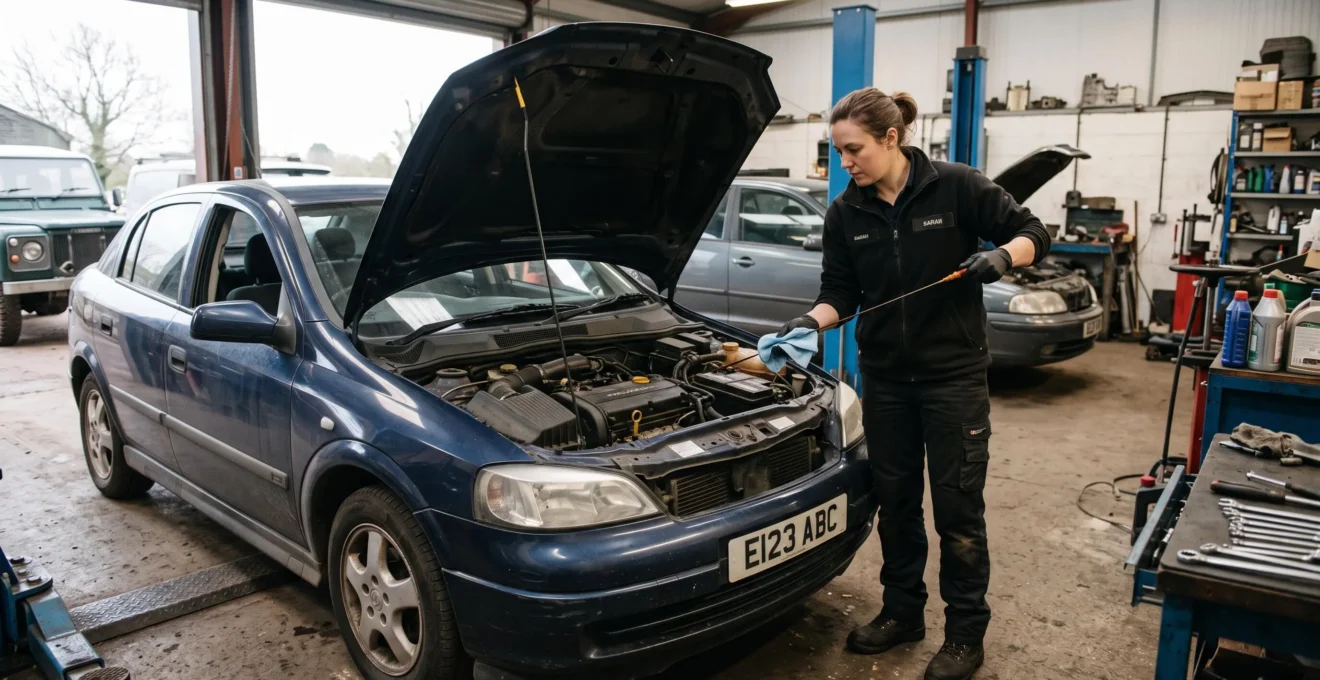
The most valuable preventive car maintenance tasks are those that prevent dangerous defects, protect expensive mechanical components and reduce the likelihood of unexpected breakdowns. Checking tyres and brakes, maintaining engine oil and coolant, and replacing time-sensitive components according to manufacturer instructions can prevent relatively manageable problems from becoming serious repairs.
Not every maintenance task deserves equal urgency. A dangerously damaged tyre needs immediate attention, while an ageing battery may justify testing before a long journey. A delayed oil change or unresolved coolant leak can threaten major engine components, even if the vehicle initially appears to drive normally.
Effective preventive maintenance therefore requires more than following a generic mileage checklist. It involves understanding the vehicle’s service schedule, adapting inspections to actual driving conditions and distinguishing essential work from unnecessary early replacements.
For drivers balancing safety, reliability and repair budgets, the objective is straightforward: spend predictably on maintenance that matters rather than repeatedly paying to address preventable failures.
Preventive car maintenance: the essentials
- Prioritise safety: investigate dangerous tyre defects, braking problems and other conditions that make the vehicle unsafe before considering lower-risk maintenance.
- Protect expensive systems: follow manufacturer requirements for engine oil, cooling systems, timing belts and transmission servicing where applicable.
- Plan around actual use: track both time and mileage, account for demanding driving conditions and investigate warning signs rather than waiting for the next service.
- Why Can Skipping Small Maintenance Jobs Lead to Major Repair Bills?
- How Can You Create a Preventive Maintenance Schedule for Everyday Driving?
- Tyres, Brakes or Fluids: Which Maintenance Should You Prioritise First?
- Which Maintenance Delays Most Often Turn Into Expensive Repairs?
- When Should You Service a Car Earlier Than the Standard Schedule?
- When Should High-Frequency Car Use Bring Maintenance Forward?
- Which Low-Cost Repair Shortcuts Can Lead to a Bigger Bill Later?
- Why Do Vehicle Repair Costs Vary So Much Between Similar Jobs?
Why Can Skipping Small Maintenance Jobs Lead to Major Repair Bills?
Small maintenance jobs can prevent major repair bills because vehicle components depend on one another. Deteriorated engine oil can accelerate internal wear, while an unresolved coolant leak can lead to overheating and substantial engine damage. The eventual expense may involve several affected components rather than the relatively inexpensive maintenance task originally postponed.
Engine oil provides a practical example. Its lubrication and protective properties deteriorate with use and operating conditions. When oil is not changed according to the manufacturer’s requirements, the risk of accelerated wear increases. A scheduled oil service is a relatively predictable expense; repairing damaged internal engine components is substantially more complex.
Cooling-system problems illustrate the same pattern. A minor leak may initially appear manageable because the engine continues to operate. However, persistent coolant loss can eventually compromise temperature control. Repeatedly adding coolant without diagnosing the leak does not eliminate the underlying fault.
The FTC‘s Auto Repair Basics consumer guidance explains that neglected routine maintenance can contribute to unreliable operation and costly breakdowns. It also recommends following the manufacturer’s servicing instructions rather than accepting additional maintenance automatically.
There is another financial distinction: planned maintenance costs are predictable, but breakdown costs are not. An unexpected failure can create several expenses beyond the original repair:
- Vehicle recovery or towing when the car cannot be driven safely.
- Urgent diagnostic work and potentially inconvenient repair arrangements.
- Replacement transport while the vehicle is unavailable.
- Missed work, appointments or income-generating journeys.
Car insurance should not be treated as a substitute for maintenance. Standard motor insurance generally excludes ordinary wear, routine servicing and mechanical failure unrelated to an insured incident. Roadside assistance may help with recovery, while separate mechanical breakdown protection may cover certain eligible failures. Both depend on the terms and exclusions of the individual agreement.
Waiting for symptoms is also unreliable. Oil deterioration, brake wear and some cooling-system defects can develop before drivers notice a clear change in performance. Scheduled inspections identify these problems earlier and make repairs easier to plan.
The most effective way to control these risks is to establish a maintenance routine that identifies both upcoming service requirements and developing faults.
How Can You Create a Preventive Maintenance Schedule for Everyday Driving?
A preventive maintenance schedule should begin with the vehicle manufacturer’s instructions and account for both elapsed time and distance travelled. Divide maintenance into regular owner checks, scheduled professional servicing and inspections triggered by component condition or warning signs. Recording completed work and upcoming requirements helps prevent missed services without encouraging unnecessary early replacements.
The owner’s manual or official manufacturer maintenance system is the primary reference. A generic servicing calendar may provide reminders, but it cannot establish the correct interval for every engine, transmission or operating environment.
Time matters alongside mileage. A vehicle driven relatively little may still require oil, brake-fluid or other servicing because certain maintenance requirements are based on age or elapsed time. Conversely, vehicles covering substantial distances may reach mileage-based milestones sooner.
Manufacturer systems can also use operating conditions to determine servicing needs. For example, Honda‘s Maintenance Minder service instructions for the 2021 Odyssey describe engine-oil monitoring and maintenance items covering brakes, transmission fluid, coolant and other components.
Those instructions also contain time-based requirements and adjustments for particular driving conditions. They demonstrate why an interval suitable for one vehicle must not automatically be transferred to another.
A practical schedule can be organised into three categories:
| Maintenance category | Typical activities | Reminder method |
|---|---|---|
| Routine owner checks | Tyre pressure, visible fluid levels, lights and obvious leaks | Recurring calendar reminders |
| Scheduled professional servicing | Oil and filter changes, specified fluid replacement and manufacturer-required inspections | Date and mileage tracking based on the owner’s manual |
| Condition-based attention | Tyre deterioration, brake wear, unusual noises, vibration and warning indicators | Immediate observation log and appropriate inspection booking |
Keep a simple maintenance record showing the service date, odometer reading, work performed, next applicable interval and any observations requiring attention. Invoices and inspection reports provide useful supporting records.
Build your maintenance tracker in five steps
- Identify the official schedule: locate the maintenance instructions for the vehicle’s exact model, year and engine, and save a copy or reference.
- Record the starting position: note the current odometer reading, today’s date and last documented service.
- List outstanding requirements: create a record of each relevant maintenance item, its last completion and next manufacturer-recommended milestone.
- Set separate reminders: add calendar alerts for owner checks and upcoming workshop services, with a distinct list for faults needing diagnosis.
- Review and consolidate: create a planned garage-visit list combining compatible work while keeping urgent safety issues separate.
When a workshop suggests work earlier than the manufacturer’s schedule, ask whether the recommendation follows documented severe-use requirements, inspection findings or measured wear. A useful recommendation should explain what condition justifies the additional expense.
Once the schedule is established, the next decision is which tasks deserve attention first when several maintenance needs compete for the same budget.
Tyres, Brakes or Fluids: Which Maintenance Should You Prioritise First?
Prioritise maintenance according to immediate safety risk, potential mechanical damage and the likelihood of a breakdown. Dangerous tyres and impaired brakes require urgent attention. Oil and cooling-system problems may threaten expensive engine components, while battery or charging faults can leave a vehicle stranded. The correct order depends on actual condition, not a universal ranking.
Tyres deserve frequent attention because their inflation, tread condition and structural integrity directly affect vehicle safety. Underinflation, visible damage and uneven wear may indicate problems requiring correction or professional assessment.
Braking performance takes comparable priority. Worn friction components can eventually damage related parts, while a change in pedal response or suspected brake-fluid failure may signal an immediate safety concern.
Engine oil and coolant serve a different protective function. Their condition and availability influence whether major mechanical systems can operate reliably. A significant oil-pressure warning or overheating condition may require stopping the engine rather than continuing towards a garage.
Battery and charging-system checks are particularly useful when the main goal is avoiding inconvenient non-starting or roadside failures. Battery problems do not necessarily carry the same progressive engine-damage risk as severe overheating, but they can still cause significant disruption.
The following comparison shows why maintenance priorities change with the fault discovered.
| Component | Main concern | Appropriate response |
|---|---|---|
| Tyres | Unsafe tread, structural damage or incorrect inflation | Address unsafe conditions before driving; check routine pressure and wear regularly |
| Brakes | Reduced stopping performance or deteriorated components | Obtain urgent professional assessment if braking is impaired |
| Engine oil | Inadequate lubrication and progressive internal wear | Follow service requirements; investigate low oil level or pressure warnings |
| Cooling system | Coolant loss and engine overheating | Investigate leaks promptly; stop safely if overheating occurs |
| Battery and charging system | Non-starting or unexpected electrical failure | Test when starting difficulties or charging warnings appear |
Some basic checks are suitable for drivers, provided they follow the owner’s manual and appropriate safety precautions. Tyre pressure, visible tread condition and accessible fluid reservoir levels can often be inspected without specialist tools. Brake hydraulics, charging-system faults and concealed leaks generally require professional diagnosis.
The NHTSA‘s TireWise tire safety and maintenance information recommends checking tyre pressure at least monthly, including the spare tyre. The guidance also emphasises regular inspection of tread condition.
4,700 miles
The additional average tyre life associated with proper inflation, as reported by the US National Highway Traffic Safety Administration. This is an average benefit, not a guaranteed extension for an individual vehicle.
US National Highway Traffic Safety Administration, TireWise tyre maintenance guidance.
For drivers working within a limited budget, a useful decision rule is to address unsafe conditions first, investigate faults that could cause escalating damage second, and then complete overdue scheduled servicing. Cosmetic and comfort-related work generally follows once essential safety and reliability needs are covered.
After urgent issues have been addressed, particular attention should go to maintenance delays capable of damaging other components and multiplying repair costs.
Which Maintenance Delays Most Often Turn Into Expensive Repairs?
The maintenance delays most likely to produce expensive repairs are those that allow one failing component to damage a larger mechanical system. Examples include overdue timing-belt replacement on susceptible engines, neglected brake-pad wear, unresolved cooling-system faults and missed transmission-fluid servicing where required. Consequences depend on vehicle design, operating conditions and the specific failure.
Timing belts deserve particular attention because some engines can suffer severe internal damage if a belt fails. On an interference engine, a loss of timing can allow internal components to collide, potentially requiring extensive engine repairs.
However, timing-belt requirements are not universal. Some engines use timing chains, and their maintenance specifications differ. Replacement intervals and associated component requirements must be established from the exact manufacturer’s instructions rather than assumed from mileage alone.
Brake-pad neglect can also multiply costs. Friction material progressively wears during normal use. If replacement is postponed until the backing material contacts the brake disc or rotor, additional components may require replacement or repair.
Grinding noises, unusual pedal behaviour and inspection findings justify prompt professional attention. The precise cause still needs diagnosis: not every braking noise means that pads and discs must both be replaced.
Cooling-system failures can be especially consequential because overheating threatens the engine itself. Leaking hoses, a faulty thermostat, cooling-fan problems or persistent coolant loss may begin as relatively contained defects. If these problems compromise temperature regulation, the resulting damage can be much more extensive.
A driver who repeatedly tops up coolant without identifying the source of the loss may delay proper repair while the underlying problem continues. Persistent loss should be investigated, and an overheating warning should not be treated as an invitation to continue driving normally.
Transmission servicing requires similar attention to manufacturer specifications. Conventional automatic transmissions, continuously variable transmissions and other drivetrain designs do not necessarily use the same fluid or service intervals.
Where fluid replacement is prescribed, the correct specification and procedure matter. An unsuitable fluid or prolonged neglect can contribute to transmission problems, but it would be misleading to recommend the same replacement frequency for every vehicle.
The financial connection is that these tasks help protect components whose failure may require substantially more labour and replacement work than routine servicing.
Scheduled replacement is only part of that protection. Actual driving conditions can sometimes justify bringing inspections or maintenance forward before the normal interval expires.
When Should You Service a Car Earlier Than the Standard Schedule?
Service a car earlier when the manufacturer specifies shorter intervals for demanding operating conditions, or when inspections reveal deterioration that should not wait. Frequent short journeys, prolonged idling, dusty environments, towing and extreme temperatures may justify adjustments. New warnings, leaks or changes in performance require assessment independently of the next scheduled service date.
Many drivers associate severe operating conditions with unusually fast or aggressive driving. Manufacturers may define them differently. Repeated cold starts, short journeys that limit normal operating temperatures and extended low-speed use can create servicing demands that ordinary mileage does not fully describe.
The appropriate response is to consult the vehicle’s normal-use and severe-use instructions. If the actual driving pattern matches a documented severe-use condition, follow the relevant maintenance guidance rather than applying an arbitrary reduction to every interval.
Some symptoms justify attention regardless of whether a service is due:
- Recurring oil, coolant or other fluid loss.
- New dashboard warnings or persistent abnormal indicators.
- Unexpected vibrations, steering changes or unusual mechanical noises.
- Burning smells or visible signs of overheating.
- Changes in brake response, pedal feel or stopping performance.
These symptoms do not all require the same response. Serious braking impairment, severe overheating or a critical oil-pressure warning can make continued driving unsafe or risk major damage. Stop safely and arrange appropriate assistance. Less urgent symptoms may permit a prompt professional diagnostic appointment, depending on their severity.
Seasonal changes and major journeys provide another reason for targeted inspections. A vehicle preparing for an extended motorway journey or extreme temperatures may benefit from checks focused on tyres, cooling-system condition and battery reliability.
A targeted pre-journey inspection does not necessarily mean paying for a complete service ahead of schedule. It means assessing components most likely to be affected by the planned driving conditions and addressing relevant findings.
For example, if a long journey is approaching and the coolant level has repeatedly fallen, investigating the loss is more useful than simply replacing unrelated service items early. A professional may need to inspect the cooling system to establish whether there is a leak or another cause.
Vehicle age also deserves context. Older components may warrant closer inspection, but age alone does not justify replacing every part prematurely. Documented deterioration, manufacturer requirements and actual faults provide stronger reasons for changing the maintenance plan.
The same approach becomes particularly important for vehicles used frequently, where engine operating hours and daily workload can tell a different story from mileage alone.
When Should High-Frequency Car Use Bring Maintenance Forward?
High-frequency vehicle use should bring maintenance forward when operating patterns create additional wear or match the manufacturer’s severe-use criteria. High mileage alone is not enough to determine servicing needs. Repeated urban stopping, delivery work, prolonged idling and sustained motorway driving place different demands on the vehicle, even when total distance travelled is similar.
A driver covering long motorway distances may accumulate substantial mileage while maintaining relatively steady operating conditions. Another driver travelling the same distance through congested streets may experience more frequent braking, acceleration and low-speed operation.
These differences affect which components deserve closer monitoring. Repeated stop-start journeys can increase demands on brakes, tyres and some drivetrain systems. Extended engine idling adds operating time without equivalent movement on the odometer.
Drivers engaged in deliveries, ride-hailing or other intensive urban activities should therefore assess their routines against the manufacturer’s applicable operating-condition guidance rather than assuming that every commercially used vehicle needs identical servicing intervals.
Where the vehicle is essential for earning income, maintenance planning should also consider the consequences of downtime. A breakdown may interrupt scheduled deliveries or customer journeys, and suitable replacement transport may not be available immediately.
A workload-based maintenance record can include:
- Weekly distance travelled and changes in driving volume.
- Engine operating hours where reliable information is available and relevant.
- The balance between urban journeys, motorway driving and prolonged idling.
- Upcoming service milestones and unresolved inspection observations.
- Periods when vehicle unavailability would be especially disruptive.
Consider a hypothetical delivery driver whose vehicle develops a recurring starting problem before a particularly busy working period. Testing the battery and charging system during a planned appointment could identify an underlying fault. Repeatedly relying on jump-starts would leave the risk of another interruption unresolved.
Insurance and assistance arrangements also require attention. A policy intended for ordinary personal use may not automatically provide the same protection for delivery or other business activities. Drivers should confirm that their declared usage matches the actual work performed and check any relevant breakdown-assistance restrictions.
For high-dependency drivers, the value of preventive maintenance includes continuity of work as well as mechanical reliability. Planned servicing can be arranged around operational commitments, whereas an unexpected breakdown removes much of that flexibility.
However, controlling maintenance costs also requires attention to repair quality. A seemingly inexpensive shortcut can undermine the benefits of an otherwise well-planned servicing routine.
Which Low-Cost Repair Shortcuts Can Lead to a Bigger Bill Later?
Low-cost repair shortcuts become expensive when they conceal symptoms without addressing the cause of a fault. Replacing the same failed component repeatedly, using unsuitable parts or clearing warning codes without diagnosis can produce additional labour charges and progressive damage. Economical repairs are valuable when they resolve the problem reliably, not simply when the initial invoice is smaller.
A repeatedly discharged battery provides a useful example. Replacing it may be appropriate if testing confirms deterioration, but recurrent charging problems could indicate a fault elsewhere in the electrical system. Installing another battery without investigating that possibility may fail to resolve the problem.
The same principle applies to coolant loss. Adding the correct coolant can sometimes be necessary as a temporary measure, provided the manufacturer’s safety instructions are followed. However, repeated top-ups are not a completed repair for an active leak.
Part selection should consider total repair value, not purchase price alone. Manufacturer-approved, quality aftermarket, remanufactured and used components can differ in compatibility, condition, warranty provisions and expected reliability.
A lower-cost alternative is not automatically unsuitable. Its value depends on whether it meets the required specifications, is appropriate for the application and offers an acceptable level of confidence in the completed repair.
Labour also matters. A component that costs less initially may offer poor overall value if an early failure requires the same complex installation work to be repeated.
Temporary repair products and diagnostic shortcuts present additional risks. Clearing a fault code does not establish that the cause has been corrected. Likewise, suppressing a dashboard warning can remove an important indication of a developing mechanical problem.
A temporary measure intended to reach professional assistance should never be presented as a verified repair suitable for unrestricted continued driving.
Before approving a low-cost repair, ask four practical questions:
- Has the underlying cause been identified rather than the symptom alone?
- Does the replacement part or repair method meet the vehicle’s required specifications?
- Does the estimate include necessary diagnostic work and installation labour?
- How will the workshop verify that the repair has resolved the original problem?
These checks are particularly important for faults affecting braking, steering, engine temperature or essential electrical systems. An incomplete repair may create a safety problem as well as further expense.
The best financial outcome is not always associated with the cheapest quotation. It is associated with work that is appropriately scoped, completed to the necessary standard and unlikely to require repetition because the original fault was overlooked.
That distinction leads to a final budgeting challenge: understanding why two workshops or vehicle models can have substantially different prices for work that initially sounds identical.
Key takeaways before comparing repair costs
- Compare the complete repair scope, including diagnosis, parts and labour, rather than choosing by headline price.
- Confirm that the proposed work addresses the underlying problem and includes a suitable method of verification.
- Keep predictable servicing costs separate from a reserve for unexpected repairs, especially as the vehicle ages.
Why Do Vehicle Repair Costs Vary So Much Between Similar Jobs?
Vehicle repair costs vary because apparently similar jobs can require different parts, diagnostic procedures and labour time. Component accessibility, vehicle design, workshop rates and the extent of damage all influence the final invoice. Comparing quotes accurately requires matching the complete scope of work rather than assuming that identical repair descriptions represent identical services.
Start by separating the main elements of a repair estimate. Parts costs depend on component type, specification, quality and availability. Labour charges reflect both the workshop’s rates and the time required to access, remove, install and test components.
Diagnostic work may be charged separately, particularly where the cause of a fault is not immediately apparent. Workshop operating expenses and applicable taxes can also affect the total, with rates and consumer requirements differing across jurisdictions.
Vehicle design can make a substantial difference. A component that is straightforward to reach on one model may require additional dismantling on another. The repair description may sound the same even though the actual labour involved is different.
Scope is equally important. Consider two hypothetical brake-service quotations. One covers brake pads because the discs remain serviceable. Another includes replacement discs and additional work because inspection reveals further deterioration. Comparing the headline totals without considering those findings would be misleading.
Cooling-system repairs present similar difficulties. An accessible damaged hose may be straightforward to identify, while a concealed leak may require more extensive diagnostic testing before an accurate estimate is possible.
To compare garage quotations on equal terms, request:
- An itemised written estimate showing parts, labour, diagnostics and applicable taxes.
- The specification and type of replacement components proposed.
- Clarification of which inspection or diagnostic findings justify the work.
- Details of parts and labour warranties, including relevant conditions.
- Agreement on how additional repairs will be communicated and authorised.
A second opinion can be worthwhile when a diagnosis is uncertain, an estimate is unexpectedly substantial or different workshops propose materially different repairs. However, immediate safety defects should not remain unresolved simply to obtain more quotations.
Preventive maintenance budgeting should reflect this variability. Keep predictable recurring costs, such as scheduled servicing, separate from a contingency reserve for unexpected faults and age-related deterioration.
Use the vehicle’s own repair history, forthcoming manufacturer-specified maintenance and quotations from relevant local workshops to estimate future needs. Generic average repair figures may offer context but cannot reliably predict the cost of work on a particular model.
Ordinary mechanical wear also remains fundamentally different from an insured accident. As explained in Progressive‘s explanation of mechanical problems and car insurance, standard US auto insurance typically does not cover unrelated mechanical breakdowns or normal wear and tear. Coverage in other countries and under specific products must be checked against the applicable policy.
Review the vehicle’s maintenance history, identify any overdue safety or engine-protection tasks, and request itemised estimates for work that needs professional attention. This creates a practical basis for prioritising expenditure before small problems become larger repairs.
Can preventive maintenance completely eliminate unexpected car breakdowns?
No. Preventive maintenance reduces exposure to avoidable failures but cannot prevent every unexpected defect. Components may fail without obvious warning, and external damage or unforeseen faults can still occur. Following manufacturer recommendations, inspecting essential systems and investigating unusual symptoms improves reliability without guaranteeing uninterrupted operation.
Should a car still receive servicing if it covers very few miles?
Yes, when the manufacturer’s requirements specify time-based maintenance. Certain fluids and components have servicing or inspection requirements based on elapsed time, not simply distance travelled. Check the exact owner’s manual rather than assuming low mileage means that scheduled maintenance can always be postponed.
Is it better to replace ageing components before they fail?
It depends on the component. Some parts have manufacturer-defined replacement requirements, while others should be assessed through condition, testing and inspection findings. Replacing a component early may be justified by documented deterioration, but automatically replacing every ageing part can create unnecessary costs.
Does a dashboard warning always mean the vehicle must stop immediately?
No. Warning indicators differ in urgency. Critical oil-pressure warnings, serious overheating and braking faults can require stopping safely and arranging assistance. Other warnings may call for prompt diagnosis without indicating the same immediate danger. Follow the vehicle’s manual and avoid continuing to drive when a critical condition is suspected.
Is a manufacturer-approved maintenance plan always cheaper than extra servicing?
Not necessarily in every individual situation, but it provides a sound starting point for deciding which work is required. Additional servicing can be appropriate when severe-use conditions or inspection findings justify it. Unexplained early replacements, however, should not be assumed to improve reliability or offer worthwhile financial savings.